

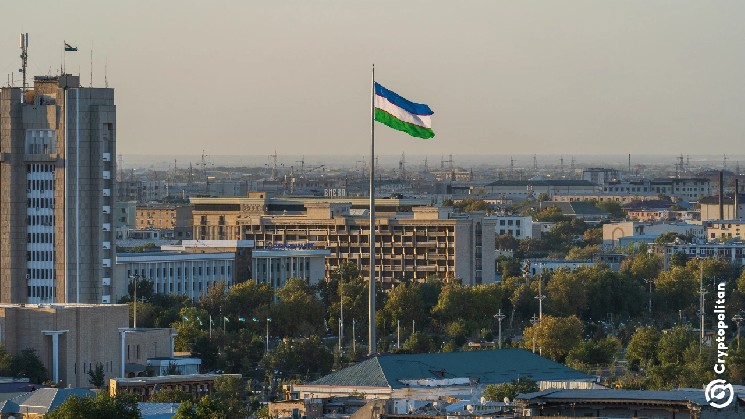
The government of Uzbekistan is creating a “cryptocurrency mining valley” in one of the regions bordering Kazakhstan, a mining powerhouse in Central Asia.
Miners will be given almost a decade of tax exemptions as part of the country’s efforts to catch up with neighboring countries that are already ahead in industry development.
Bitcoin miners profit from Uzbekistan’s new cryptocurrency valley
The authorities of Uzbekistan have established a special economic zone in the Autonomous Republic of Karakalpakstan called the Beskara Mine Valley.
The region is located in the northwest of the country and borders Kazakhstan, which until recently accounted for about 13% of the world’s Bitcoin hashrate.
The zone was established by a new decree signed by President Shavkat Mirziyoyev, the government’s legal information portal announced on Tuesday.
According to a Telegram post cited by leading Russian-language cryptocurrency news outlet Bits.media, the income of cryptocurrency miners operating there will be exempt from tax.
The tax incentives, along with other incentives for mining companies based in the region, will be in place until January 1, 2035, according to the document.
The valley’s residents are promised unhindered access to Uzbekistan’s unified electricity grid, which is increasingly dependent on renewable energy resources.
The remaining electricity required for the mining equipment will be provided by a hydrogen power plant built in Karakalpakstan itself.
Miners will be empowered to sell the extracted digital assets on domestic and international crypto trading platforms, the report further details.
Companies engaged in Bitcoin-related business activities obtain a license from the National Agency for Future Projects (NAPP).
To obtain the right of residence, an application must be submitted to the authority responsible for the Bescara Mine Valley.
Will Uzbekistan become Central Asia’s next Bitcoin mining hotspot?
The establishment of a special economic zone in Karakalpakstan is connected to Uzbekistan’s new efforts to create favorable conditions for the cryptocurrency mining sector.
In February, the country issued its first mining permit, joining the club of former Soviet republics in Central Asia where the industry has gained a foothold.
The permit was granted to a local company called NexaGrid, which plans to use it to set up a mining facility in southwestern Bukhara.
At the time, one of the founders said the license would end months of uncertainty, Cryptopolitan reported at the time.
This regulatory move comes more than two years after NAPP adopted regulations regarding the issuance of mining permits.
As one of the agency’s top officials admitted, there were no legal cryptocurrency farms registered in the country during that period.
Uzbekistan still has a lot of work to do to move closer to being the leader in crypto mining in Central Asia, but it may have an opportunity to catch up.
For example, Kazakhstan was once one of the top three mining destinations in the world, but lost that position when its government introduced higher electricity prices for crypto farms.
This was to address growing energy shortages caused by an influx of mining companies following China’s decision to enforce a ban on the activity several years ago.
As a result, Kazakhstan has lost some of its attractiveness for miners. However, Astana lifted some mining restrictions last fall as part of a new strategy to become Eurasia’s crypto hub.
Kyrgyzstan halted all mining on its territory this winter, citing power shortages, but the government later indicated it would resume minting coins in the spring because of the profits.
Competition in this region is likely to accelerate further. Uzbekistan’s southern neighbor Turkmenistan legalized cryptocurrency mining and trading in a law that took effect in January.
Tashkent is gradually opening up the country to digital money. Cryptocurrency payments remain prohibited, but Uzbekistan announced this year that it would allow the use of stablecoins for payments.


