

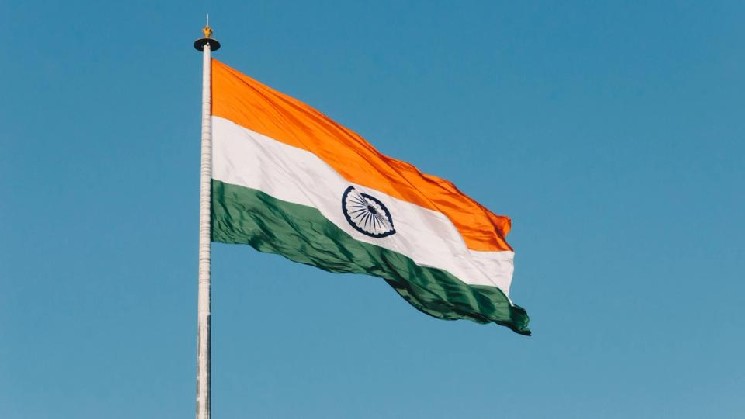
India is turning to welfare payments to facilitate the adoption of central bank digital currencies as it prepares to spotlight CBDCs at the BRICS summit later this year.
The Reserve Bank of India is implementing around 10 pilot programs to finance part of the country’s roughly $80 billion welfare system through electronic rupees, Reuters reported on Thursday. The initiative aims to reduce leakage and corruption in subsidy programs, while giving a clear use case for CBDCs, which have been slow to roll out.
In Poornagar village in Maharashtra, farmers receive a programmable subsidy that covers up to 80% of drip irrigation costs, but the subsidy can only be used with approved contractors. Another pilot in Gujarat aims to effectively use targeted transfers to scale up adoption and reach all 7.5 million households eligible for supplementary food by June.
This push highlights a core challenge for CBDCs around the world: usage. The number of e-rupee users has increased from about 7 million at the beginning of this year to about 10 million, but the cumulative transaction value since its introduction in December 2022 is only $3.6 billion. This is still small compared to India’s Unified Payments Interface, which processes about $300 billion every month.
Early adoption efforts are sometimes deliberate. CoinDesk reported in 2024 that several large banks, including HDFC, Kotak Mahindra, and Axis Bank, deposited employee salaries into CBDC wallets to help the system cross 1 million transactions per day in December 2023, but this milestone did not last.
The domestic experiment in India comes as policymakers consider the technology’s larger geopolitical role. The Reserve Bank of India has asked governments to advance proposals to link CBDCs across the economies of Brazil, Russia, India, China and South Africa at the bloc’s 2026 meeting, with the aim of streamlining cross-border trade and reducing dependence on the US dollar.
That ambition comes with political risks. The likelihood of a coordinated financial effort has increased as President Donald Trump has threatened to impose tariffs on BRICS countries seeking alternatives to the dollar and has already imposed tariffs on Indian imports, in part related to purchases of Russian oil.
Updated (April 24 90:27 UTC): Rewrite the heading to explain the CBDC acronym.


