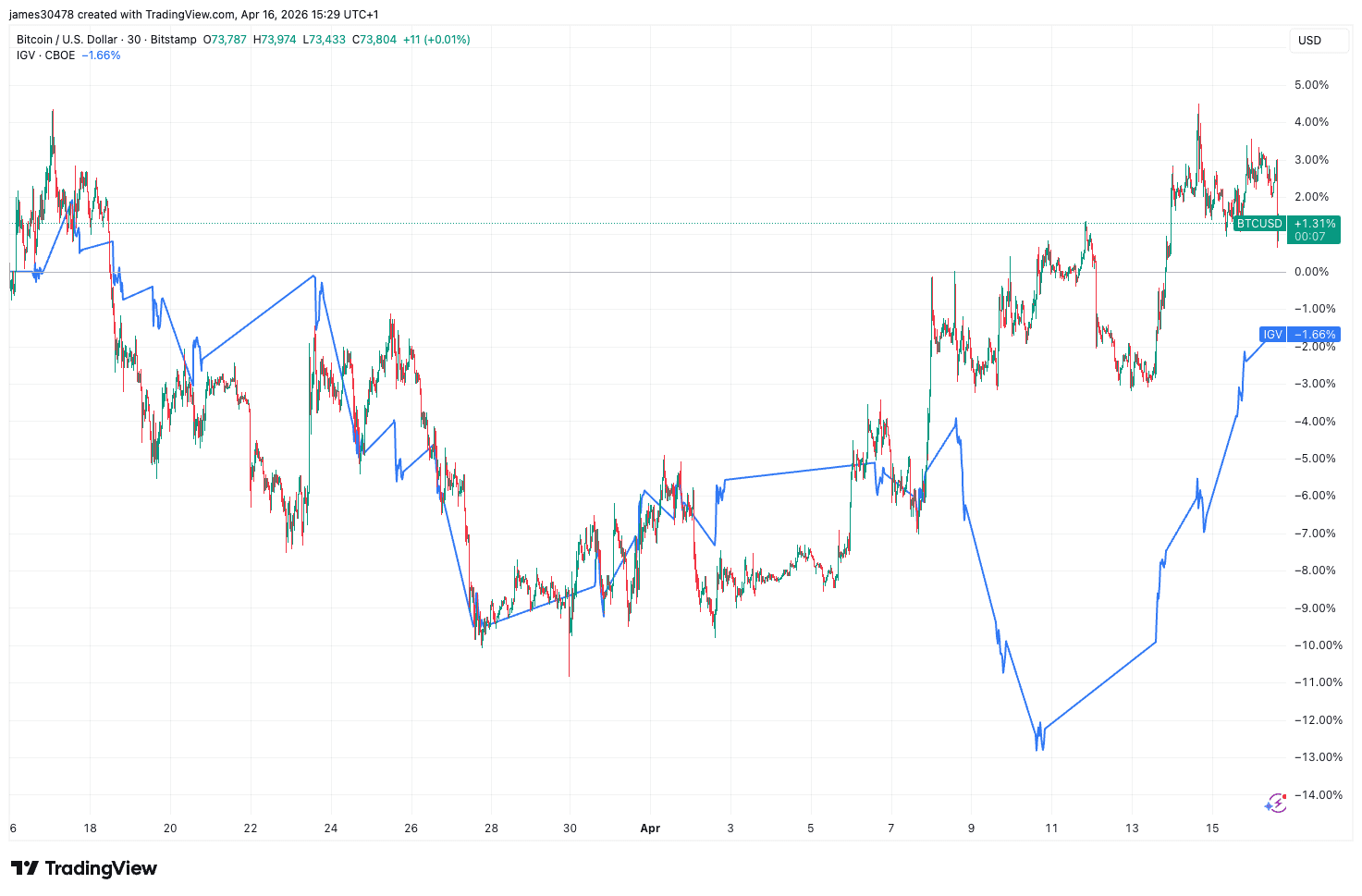
Bitcoin quickly pulled back in U.S. morning trading on Thursday, dropping 2% in minutes after once again failing to break through solid resistance.
The largest cryptocurrency fell to around $73,500 during U.S. morning trading and is now down more than 1% over the past 24 hours. The move came after the cryptocurrency rose above $75,000 before pulling back again.
This also paused the breathtaking stock market rally that drove the Nasdaq and S&P 500 to record highs yesterday. A little more than an hour into trading, both indexes were down about 0.1%.
Cryptocurrency-related stocks also fell across the board. Coinbase (COIN), Strategy (MSTR), Robinhood (HOOD), and Circle (CRCL) all fell about 2-3% in morning trading.
Meanwhile, oil prices rose about 2%, regaining the $90 level, as geopolitical tensions continued to underpin supply concerns.
The $75,000 to $76,000 range will be key for Bitcoin. This is because Bitcoin was trading at levels before the market crash on February 5, when it fell to $60,000. A rise above this level could signal a larger move that could bring Bitcoin back to its early-year levels of around $90,000.
Software catches up with Bitcoin
Before the Middle East conflict at the end of February, Bitcoin stocks and software stocks were trading almost in lockstep, with an almost 1:1 correlation. Bitcoin outperformed IGV, a software ETF, during this period.
Since the dispute began in late February, Bitcoin has risen more than 11% and IGV has risen about 2%, fueling theories that Bitcoin is starting to decouple from software stocks.
However, over the past five days, IGV has been catching up, gaining ~11% while Bitcoin has been flat. This suggests that, rather than a clean decoupling, the software may have simply been lagging behind Bitcoin, but is now catching up.
On Thursday, IGV rose 1%, while Bitcoin fell 1.5%.