

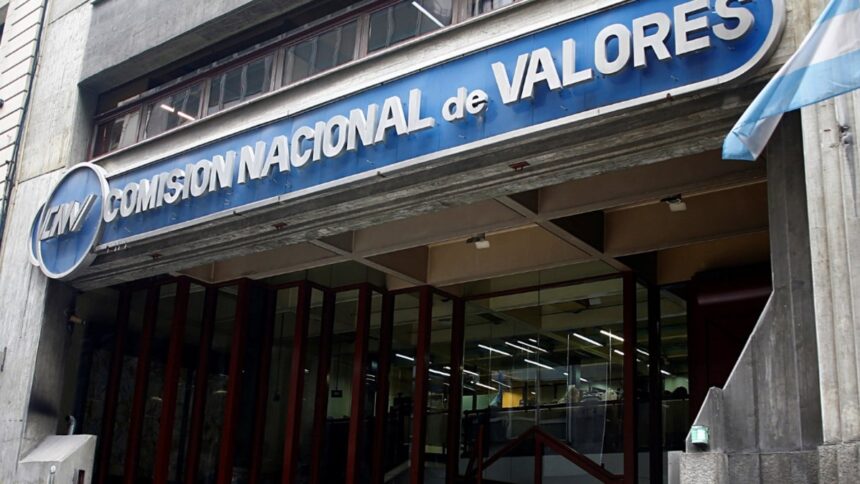
Argentina’s National Securities Commission (CNV) has filed General Resolution No. 1137 to expand the Real World Asset (RWA) tokenization regime and allow a greater variety of financial products to operate in the country through distributed ledger technology.
This new regulatory project, which is entering public consultation, proposes to extend the possibility of tokenizing securities to securities issued under almost all automatic authorization regimes provided for in the CNV Regulation.
Until this announcement, the current legal framework only supported the digital representation of certain instruments, such as shares, negotiable debt, and issued financial trust participation certificates. Under medium impact schemes or frequent issuers.
The reform incorporates a low-impact regime and a recently created expanded medium-impact regime. This change eases entry requirements for issuers, providing unprecedented technical and administrative flexibility. Funds can be raised through digital currencystreamlining posting times and reducing traditional intermediary costs.
One of the most significant changes is in the treatment of closed-end mutual funds. Previously, tokenization was limited to closed-end credit fund stocks only. This resolution removes this restriction, and if a closed-end common investment fund has automatic public offering approval, Can be migrated to digital asset format.
However, the regulation maintains an explicit exclusion of open co-investment funds, and currently the most liquid products in the retail sector are excluded from this process.
For smaller issuers operating under a low-impact regime, CNV has designed an optional mechanism. In such cases, the presentation of the issue prospectus is not mandatory, but those who wish to take advantage of the advantages of digital representation may voluntarily prepare an issue prospectus and request the corresponding permission.
This point is controversial given that, although it provides legal certainty, it increases administrative burden and may delay adoption in the SME sector.
moreover, This resolution establishes an expanded regulatory sandbox. Until December 31, 2027. This space of controlled experimentation is essential for fintech companies to test new business models related to digital currencies and Bitcoin technology without a complete rigidity of traditional regulatory frameworks, and allows regulators to observe the behavior of digital assets before mass adoption.
This advance comes after a precedent set in October 2025, when the CNV approved General Resolution No. 1087. At the time, the regulator had already extended the original scheme to support digital representation in the medium-impact and frequent issuer regime.
As reported by CriptoNoticias, this update allows products such as shares, transfer obligations, and certificates of participation in financial trusts to begin the process of integrating with the new technology.
According to the agency itself, the reforms aim to further simplify these processes and remove barriers to entry for a wider range of market participants. Roberto Silva, president of the organization, emphasized: The aim is to generate more agile and modern accessreducing operational barriers through digitalization.
(Tag Translation) Argentina


