


Wall Street is turning its attention to technology stocks, and the impact may extend beyond traditional markets. Hedge funds have aggressively reduced their exposure to the U.S. information technology sector, posting net declines in six of the past eight weeks.
According to Loading profile preview This is the largest eight-week total decline in technology exposure in at least a decade, and also outpaces the pace seen during the 2022 bear market, according to Prime Brokerage data.
The selling is not limited to one corner of the sector. Software, semiconductor and hardware companies were all caught up in the easing, making technology the top selling sector in the US last week.
Technology exposure hits multi-month low
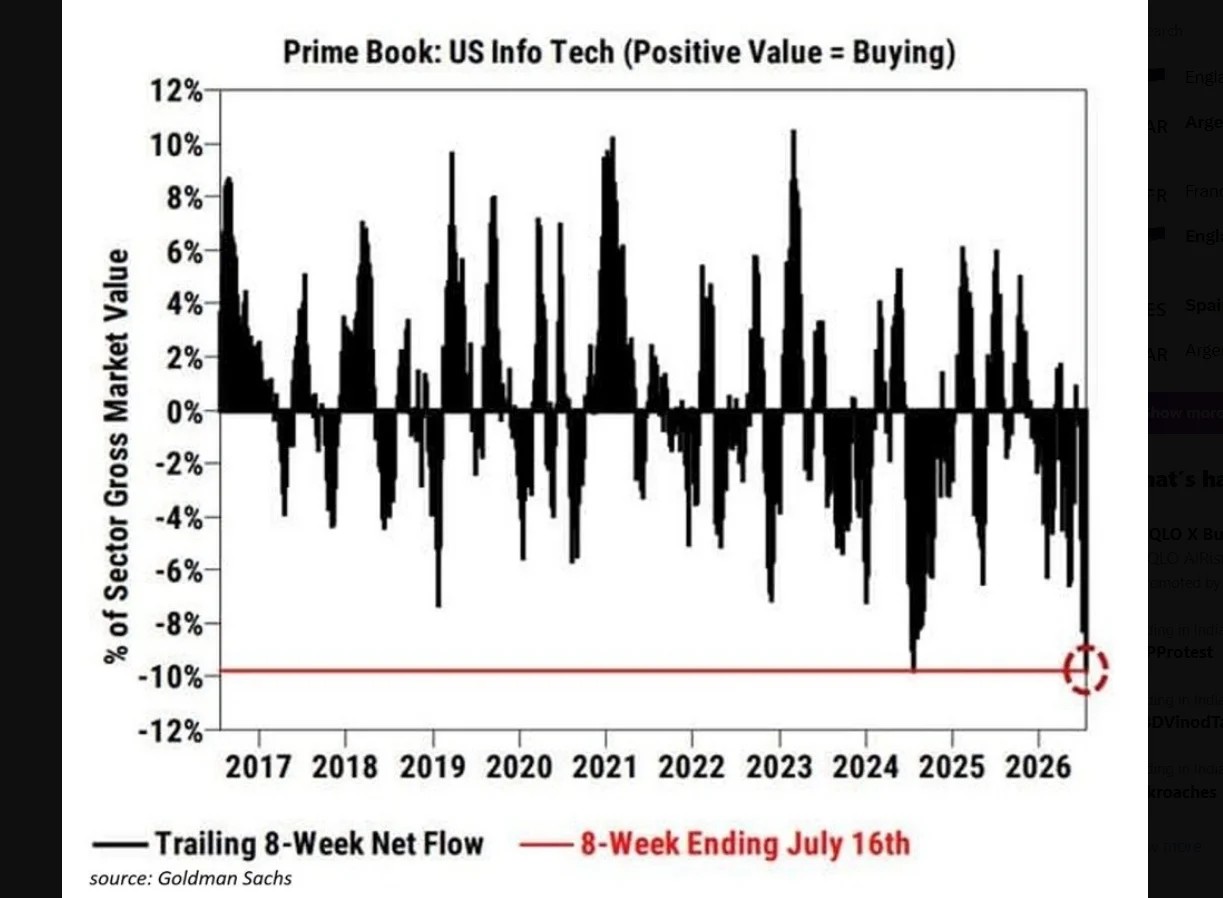
The numbers paint a very pretty picture here. Hedge funds’ net exposure to U.S. tech has fallen by nearly 10 percentage points compared to their overall U.S. exposure, to about 15.5%. This is the lowest level since February 2026 and effectively wipes out most of this year’s position gains.
What is surprising is the speed of the reversal. Technology had recently been one of the busiest trades on Wall Street, buoyed by optimism surrounding artificial intelligence and semiconductor companies. Financial institutions now appear to be reevaluating whether soaring AI valuations and corporate spending can realistically justify future returns.
If this pace continues, hedge funds’ overall exposure to the technology sector could fall to its lowest level in at least five years as early as next week.
Concerns about AI evaluation gain attention
The broader context suggests this is more than just routine profit-taking. Hedge funds have reportedly increased their bearish positions across the market to the highest level in a decade as they trim the long side of tech stocks. This shift reflects increased vigilance toward risky assets rather than individual stock selection.
The move reignites debate about whether the frenzy around artificial intelligence is pushing valuations beyond what underlying earnings can currently support.
AI Crypto Sector Faces Huge Pressure
If institutional investors’ risk appetite continues to decline, the macro impact could extend to digital assets as well.
Many high-beta cryptoassets have historically fluctuated in line with broader market liquidity conditions. In an extended risk-off environment, funds typically move away from the speculative sector first.
That leaves decentralized AI projects especially at risk. AI infrastructure, computing, and agent-centric networks such as Bittensor (TAO); $NEAR Protocol ($NEAR), RENDER, and the Alliance for Artificial Superintelligence (FET) could face further pressure if institutional investors continue to reduce their exposure to the technology. Based on the data provided, these assets could be forced to retest long-term structural support levels if liquidity remains tight.
Loading article prices


