

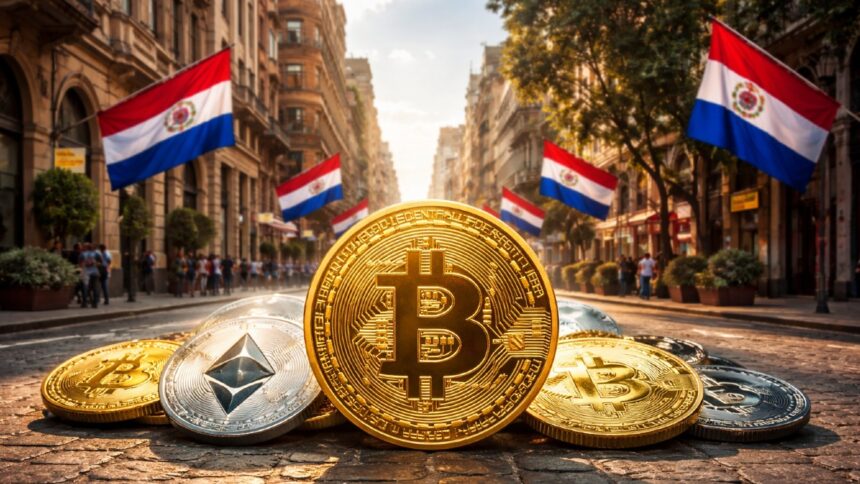
Paraguay has taken a decisive step in modernizing its financial infrastructure by doubling the limits for instant bank transfers.
The Central Bank of Paraguay (BCP), through its updated payment system (SIP), Mobilize up to 10 million yen You instantly receive (approximately $1,400) for each transaction. The measure strengthens a resolution approved in March, a promise to replace the use of cash in favor of a more agile digital economy.
For the general public, its usefulness is immediately obvious and very easy to understand. Because until recently, if someone wanted to buy a fancy TV or pay for professional services that cost more than $50,000, they faced a wall. I had to choose whether I wanted to make the payment through the slower channel. It may take up to one business day for your funds to arrive, and you may have to send your payment in two or three installments. Use different ones for several days to avoid exceeding the daily limit.
Now, with a new cap of 10 million guarani (approximately $1,400), that obstacle has been removed.Medium-sized purchases clear in seconds, 24 hours a day.
Indeed, the adoption of stablecoins such as Tether (USDT) in Paraguay has largely responded to capital mobility needs. Speed that cannot be imitated by local financial systems.
However, by providing Guarani with this same immediacy, BCP reduces the incentive to use digital assets in medium-sized domestic transactions. However, this increase in the efficiency of the SIP system has far from hurting Bitcoin (BTC) and the cryptocurrency ecosystem. Ultimately it acts as a logistics facilitator.
Aiming for an interoperable financial system using virtual currencies
This improvement in the banking network optimizes entry and exit points. Sellers and investors will be able to liquidate their crypto assets and instantly deposit large amounts of security into their bank accounts, reinvigorating the relationship between Bitcoin and cryptocurrency exchanges and traditional banking.
This is a technological integration that moves the gears of asset transformation in a race to speed.
Despite this national progress, cryptocurrencies hold competitive advantages that traditional banks cannot yet imitate. At this point, it is important to distinguish between assets such as: Bitcoin provides complete sovereignty over your fundsas long as the user chooses to keep the private key themselves.
Under this system, individuals become the sole owners of their wealth, and there are no intermediaries who can prevent them from doing so. Regarding stablecoins, although they are centralized, Will remain as a regular product For cross-border remittances and hedging against regional inflation.
However, increased operating limits coexist with extreme regulatory environments. As reported by CriptoNoticias, while the BCP facilitates the movement of deposits, authorities are tightening reporting requirements and compliance protocols for any operations related to crypto assets.
This regulatory pressure sometimes leads to preventive closures of bank accounts and surveillance that many describe as stifling; Continues to show wide divergence on freedom of trade It defines a world that revolves around Bitcoin.
Paraguay is scheduled for the May release of QR Hub, an interoperability platform that will make any QR code compatible with all banking applications. Technology update cycle ends This is to modernize the banking system.
The goal is to make the national financial system one of the most liquid in the region by mid-2026, albeit under a state oversight regime that is in fundamental contrast to the decentralization that digital assets propose.
The main tension after this implementation is regulated efficiency and decentralized innovation. More modern, high-capacity fiat payment systems directly compete with the speed and accessibility advantages of stablecoins in payments. In the long term, coexistence will depend on how open the transition between both systems is and on the evolution of Paraguay’s regulations.
(Tag translation) Cryptocurrency


