

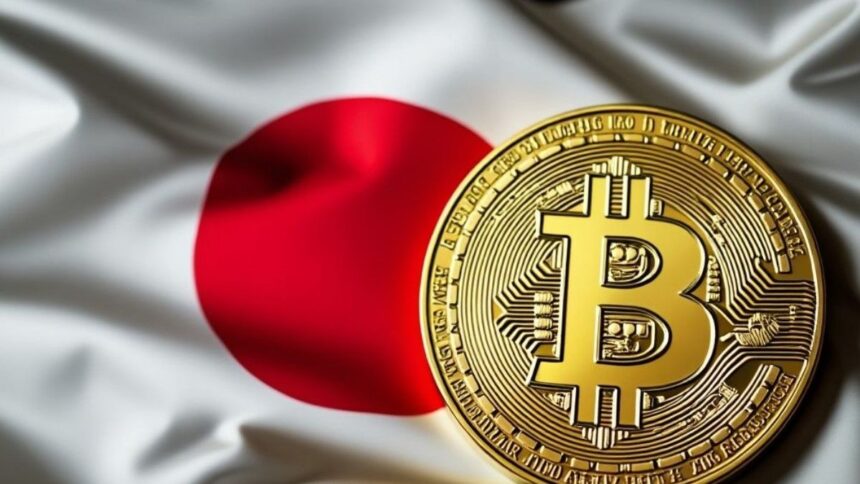
The Bank of Japan (BOJ) may make decisions that have implications far beyond its borders.
The bank will hold a new monetary policy meeting on June 15 and 16, one of eight meetings it holds each year to decide the direction of interest rates. Markets expect central banks to raise funds The base interest rate will go from 0.75% to 1.0%, a level not seen since 1995.
This measure is aimed at curbing the inflationary pressures faced by Japan. However, it could also impact global liquidity and impact assets considered to be at risk, such as Bitcoin (BTC).
Expectations for monetary tightening are already reflected in the Japanese market. As seen in the chart below, the 10-year Treasury yield recently reached its highest level since April 2008.
There is also something special about this meeting. Bank of Japan Governor Kazuo Ueda will not attend for the following reasons. He remains hospitalized for treatment of an infected liver cyst.. But analysts don’t think his absence will change the agency’s policies.
“Ueda’s absence will not affect the Bank of Japan’s institutional decision to focus on rising inflation risks rather than growth risks from the Middle East conflict,” said Saisuke Sakai, senior economist at Mizuho Research Institute.
Carry trades are risky
The market’s interest is not in the interest rate hike itself, but in the impact it will have on so-called financial institutions. carry trade.
As previously explained by CriptoNoticias, this strategy consists of requesting loans in yen (historically one of the currencies with the lowest interest rates in the world). The idea is to invest that money in assets that yield higher returns in other countries.
Over the years, this mechanism has helped drive global liquidity and demand for assets considered risky, such as stocks, bonds, and BTC.
However, if Japan’s interest rates rise, the profitability of that strategy will decline. the result, Some investors choose to exit their positions, sell assets and repatriate their capital to Japan.
Financial market analyst Albert Edwards warned about this scenario in May 2025. “If Japanese banks’ high yields cause Japanese investors to return home, there will be a reversal in interest rates.” carry trade “It could cause a huge suction in U.S. financial assets,” he said.
For this reason, investors should pay special attention to the evolution of the Japanese market, he added. “Most importantly for investors right now, I would consider trying to understand and track the long-end rally in the Japanese market,” he said.
Inflation becomes a priority again
The possibility of a rate hike reflects a change in approach within the Bank of Japan. After decades of fighting economic stagnation through extraordinary financial stimulus, the company now faces risks associated with inflation. Among them are Soaring energy prices, rising import costs due to the weak yen, and labor shortages.
Japan’s inflation It slowed slightly from April to May from 1.5% to 1.4%.the central bank believes that inflationary pressures remain.
For this reason, the market will be especially looking for signs about the pace of the rally going forward when Deputy Governor Shinichi Uchida holds a post-meeting press conference. Nobuyasu Atago, chief economist at Rakuten Securities Economic Research Institute, said, “Mr. Uchida is seen as one of the moderates on the board, but I think he will try to be quite proactive to avoid inviting an unwanted depreciation of the yen.”
Possibility of relief from the Middle East
Geopolitical conditions may also influence the Bank of Japan’s future decisions and market reactions.
On June 13th, US President Donald Trump I am confident that the deal with Iran will be signed this weekend. The Strait of Hormuz was expected to reopen to maritime traffic shortly thereafter.
The relevance of this sea route is enormous. Before the conflict between the US, Israel and Iran, about a quarter of the world’s maritime oil trade and 20% of liquefied natural gas circulated through Hormuz.
An effective economic restart would help alleviate some of the inflationary pressures that central banks, including Japan’s, are currently concerned about. This potential bailout has already seen a positive response in the market. As proof of that, As of the publication of this article, BTC is still above $64,000.
For now, the market appears to be taking a cautious stance. And while many investors’ attention remains focused on the U.S. Federal Reserve, the Bank of Japan’s next decision could be its next. This is one of the most important factors for global liquidity in the second half of 2026.


