

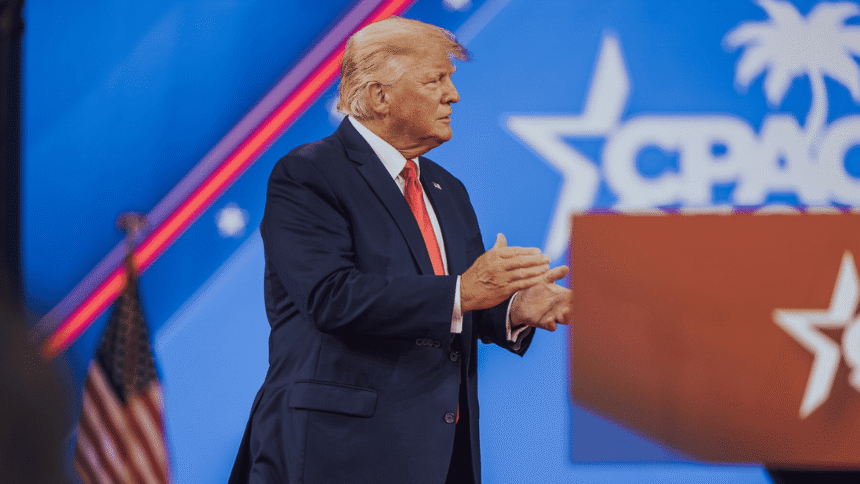
US President Donald Trump wrote on the TruthSocial platform today, June 13, 2026: “The agreement will be signed tomorrow and immediately after it is signed, the Strait of Hormuz will be open to all.”
By saying this, Trump is referring to the long-awaited agreement with the Islamic Republic of Iran. It would put an end to the war conflict that has been going on since February 28 last year.
In his statements, President Trump has repeatedly criticized the relationship with Iran maintained by President Barack Obama’s administration. He described the former US president’s actions as “an easy and smooth path to nuclear weapons, which Iran had six years ago and would have used much earlier.”
The American president further asserted that, “At the appropriate time, when everything is calm, and thanks to our great B-2 bombers and their excellent pilots, we will go in and retrieve the nuclear dust buried deep in the majestic submerged granite mountains and dismantle and destroy it, whether it’s Iran or the United States.”
Nevertheless, Trump has used his posts to warn Iran of possible consequences if things don’t go his way.
We look forward to working with Iran and the entire Middle East for many years to come. We hope that this process develops quickly, easily and without setbacks. If not, here’s the ultimate alternative that you’ll want to never have to use again.
Donald Trump, President of the United States.
Why is opening the Strait of Hormuz important?
The Strait of Hormuz is one of the most important energy arteries on Earth. Before the war between the United States and Israel against Iran, about 25% of the world’s seaborne oil trade and 20% of liquefied natural gas passed through this route. The lockdown, which has been in place since February 28, therefore represents one of the biggest energy supply shocks in recent decades.
The inflationary effects of the blockade were already being felt from the beginning of the conflict, when a barrel of oil cost more than $100.
Nevertheless, prices did not soar to the most catastrophic levels initially feared. One explanation is that an astonishing amount of crude oil managed to evade the double blockade through so-called “secret spills” – oil tankers that turn off their transponders to avoid detection.
However, I would like to clarify that Immediate reopening does not mean an immediate return to normalcy.. Even if Hormuz were restored today, it could take four to five months for affected oil fields to return to normal production levels, while full restoration of refinery capacity and the region’s energy infrastructure damaged by Qatar’s LNG facilities could take years, says financial expert Anna Marta Czarczynska.
Bitcoin price shows market caution
Despite the enthusiasm conveyed by President Trump’s message; Market reaction has been muted. Bitcoin (BTC) remains at around $64,000Same price as this morning, as reported by CriptoNoticias.
This action stands in contrast to past episodes in which digital asset prices fluctuated sharply due to escalation of conflict or announcements of detente.
The current relatively calm situation could be read as a sign that the market is waiting for confirmation before reacting strongly. According to a report by Reuters, President Trump and mediator Pakistan said an initial deal to end the war would be signed on Sunday, but Iran did not confirm the date.
Iran’s Foreign Ministry spokesperson said the country should be cautious when commenting on the process and clarified that the signing of the memorandum would not happen immediately as proposed by the US, but did not rule out the possibility of it happening within days.
Adding to the uncertainty, sources consulted by the intelligence agencies mentioned above say that Iran will require charging for transportation services in the Strait of Hormuz as part of the deal, justifying President Trump’s promise to open it completely free of charge “to all.”
Add to this that Israel will not be a party to the memorandum, and that its Prime Minister Benjamin Netanyahu has already expressed his disagreement with the US government regarding calls for military action in Lebanon.
In this regard, it is not the first time that the two sides have reached an initial agreement but it appears that it will not materialize, and this would explain why. Markets including Bitcoin choose a “wait and see” attitude before completely discounting the end of the conflict and its impact on global energy supplies.


