

Investors who bought SpaceX (NASDAQ:SPCX) stock at its initial public offering (IPO) price a month ago have seen modest gains despite significant volatility since the company’s market debut.
Along these lines, a $1,000 investment made at SpaceX’s June 11, 2026 IPO price of $135 per share would now be worth about $1,076, reflecting a gain of about 7.6% based on the closing price of $145.30.
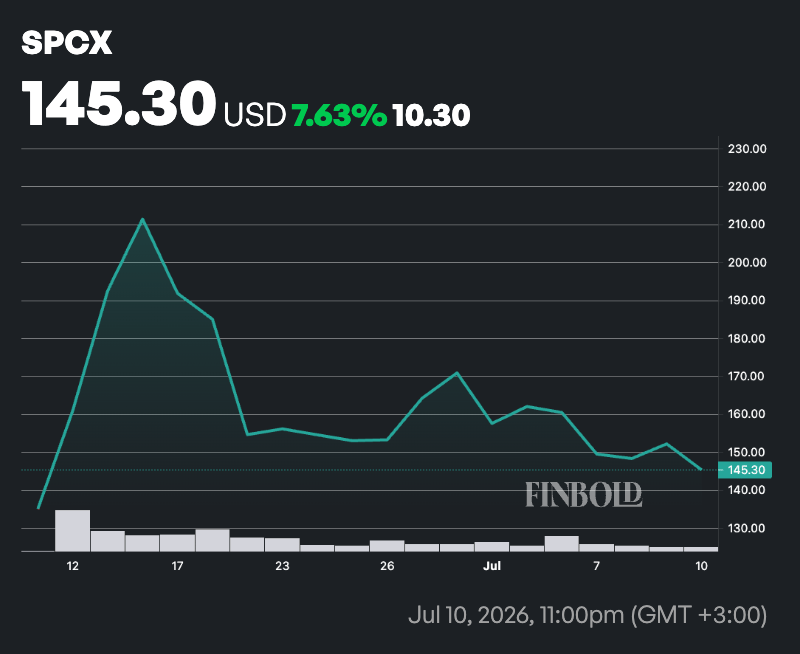
The return comes after a rocky first month of trading for the aerospace giant, whose long-awaited public debut became the largest IPO in history.
SpaceX raised about $75 billion in its IPO and debuted at an initial valuation of about $1.77 trillion.
Investor demand was strong, with the stock starting at around $150 and ending its first trading day at around $161, giving the company a market capitalization of more than $2 trillion.
The rally continued in subsequent trading, with SPCX reaching an intraday high of nearly $225, before falling back due to overall market weakness and profit taking.
Despite the decline, the stock price remains above its IPO price, allowing early investors to profit even though the stock price is well below its post-IPO high.
While early IPO participants still made money, investors who bought SpaceX stock at the end of the first trading day experienced a different outcome.
A $1,000 investment made at an opening day closing price of about $161 is now worth about $902, representing a decline of nearly 10% over the same period.
SpaceX stock fundamentals
Investor interest in SpaceX remains tied to several key growth drivers. The company continues to dominate the commercial launch market through its Falcon rocket program, while rapidly expanding its Starlink satellite internet business, which has become a major source of revenue.
At the same time, investors are closely monitoring the progress of Starship, the company’s fully reusable spacecraft designed to significantly reduce launch costs and support future missions to the Moon and Mars.
Further growth expectations relate to potential artificial intelligence infrastructure projects and broader space-based communications initiatives.
However, these opportunities come with execution risks. SpaceX continues to invest heavily in next-generation technology, and delays in major programs could weigh on future results.
The company’s first month as a public company has already proven how quickly investor sentiment can change when expectations are unusually high.
The company is scheduled to report its first public financial results later this year, and investors will be looking for evidence that SpaceX can translate its technology leadership into financial performance that supports a multitrillion-dollar valuation.


