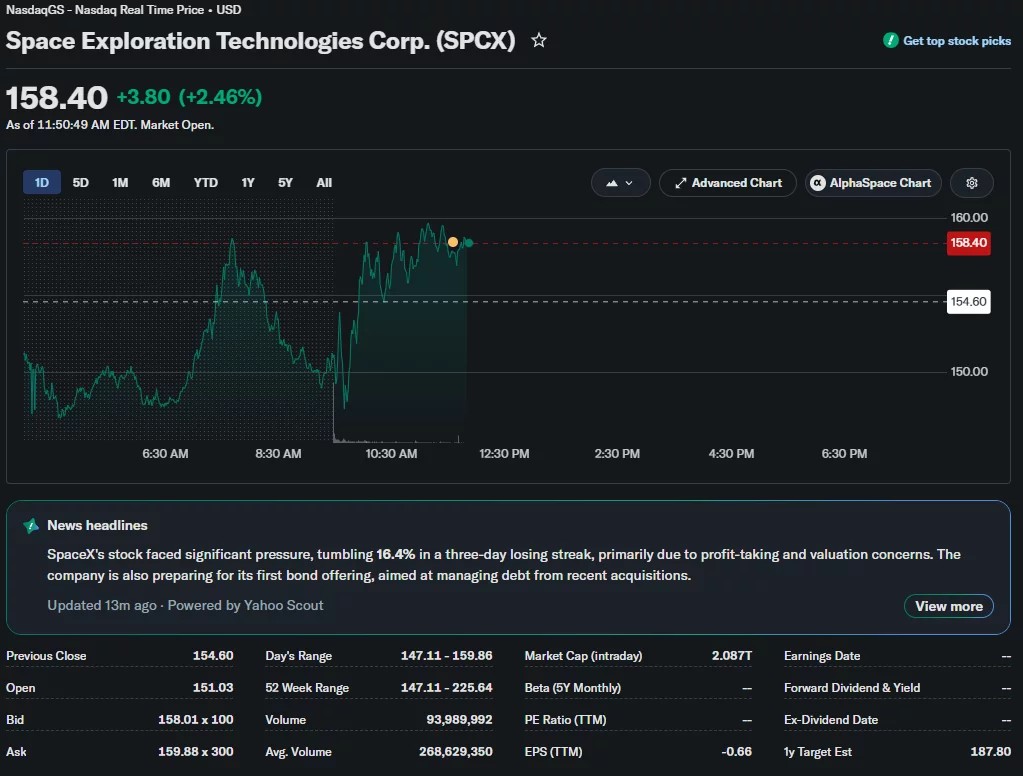
SpaceX stock remains under pressure since Susquehanna initiated coverage with a $170 price target, warning that the company’s valuation is dependent on aggressive growth assumptions.
According to Susquehanna’s research note, the brokerage gave SpaceX a neutral rating and set a price target of $170, as the stock continues to trade below its opening price of $150 following a sharp rise and subsequent fall after going public.
Susquehanna begins coverage on $SPCX with neutral rating and PT $170
Analysts commented: “Over the period 2025 to 2028, we project SpaceX’s revenue to grow at a CAGR of 81% and adjusted EBITDA to grow at a CAGR of 76%. In our view, SPCX’s key competitive advantages include:
(1)… pic.twitter.com/4r0LJT3tYb
— Wall Street Engine (@wallstengine) June 23, 2026
The company projects SpaceX’s revenue to grow at a compound annual growth rate of 81% from 2025 to 2028, and adjusted EBITDA to grow at a CAGR of 76% over the same period. Even with these expectations, Susquehanna cautioned that the current stock valuation warrants a premium multiple and leaves room for multiple outcomes, as some of the company’s businesses still operate in relatively untested markets.
The brokerage said that at current levels, it would wait for a more attractive entry point before becoming more positive on the stock.
Analysts remain cautious despite pointing to growth drivers
In his report, Susquehanna highlighted four factors that support the company’s long-term case. First, SpaceX has a leading position in the rocket launch industry and continues to provide a competitive advantage over its rivals.
Beyond launch services, analysts identified Starlink as a key source of future growth. The report also noted the company’s early-stage artificial intelligence efforts and ability to build large-scale AI infrastructure. Rounding out the list is CEO Elon Musk, whom Susquehanna described as a proven executive with a track record of building and growing businesses.
Still, the brokerage argued that much of the expected growth may already be reflected in current valuations.
As reported by crypto.news, KeyBanc analysts adopted a similar stance on Monday, beginning coverage of SpaceX with a neutral rating. The cautious outlook for both companies comes as the company reportedly aims to raise up to $20 billion through its first bond issue.
Investor attention has also turned to how other high-profile private market assets have traded after gaining broad access to individual participants. For example, Antropic’s pre-IPO futures have fallen 9% since its debut on Coinbase, even though the artificial intelligence company announced a partnership with Micron Technology. The decline suggests traders continue to focus on future valuation risks rather than recent business developments.
Supply concerns add pressure to stocks
Economist Peter Schiff also expressed concern about future supply trends in stock prices in an X post on June 23.
Schiff argued that the relatively small public float helped fuel SpaceX’s explosive first-day profits. However, he cautioned that the number of shares available for trading could increase significantly over time. Schiff said the free float could grow from about 640 million shares to 7.5 billion by Dec. 8, an increase of nearly 12 times.
“This is oversupply for stocks that are priced for perfection and are already falling.”
Despite these concerns, some institutional investors continue to add exposure. As previously reported by crypto.news, ARK Invest bought over 210,000 shares of SpaceX stock, worth approximately $32.5 million, following the recent selloff.
SpaceX stock fell below its debut price of $150 in early trading, but has since recovered. At press time, the stock was hovering around $158.40, up 2.4% on the day, but still down more than 17% over the past five trading sessions, according to Yahoo Finance data.