

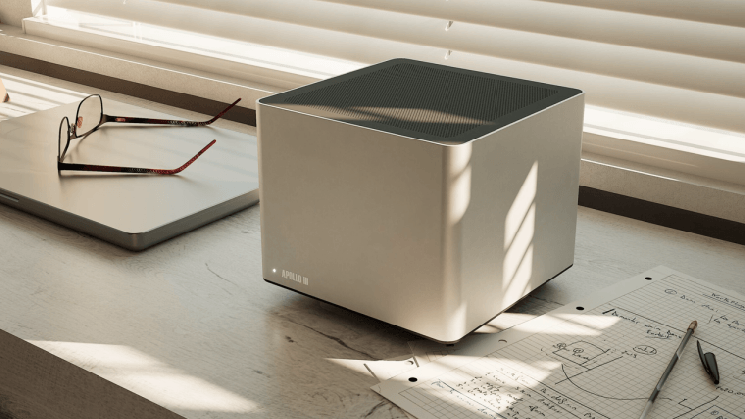
Solo Bitcoin miners running desktop-sized hardware are still discovering full blocks in 2026, and data from several active solo mining pools makes it clear that this is no longer a fluke.
Important points:
- CKPool Solo has facilitated at least 40 verified Bitcoin block acquisitions since mid-2023, including three in early 2026.
- Umbrel’s public pool has seen 7 solo Bitcoin block wins, the most recent being on May 6, 2026 with a block height of 948146.
- Futurebit Apollo miner recorded 3 solo block wins since October 2024, paying 3.125 each $BTC Plus fee.
Recent solo wins bring renewed attention to home mining
Recently, a solo miner hit a Bitcoin block and collected the full amount of 3.125 Bitcoins. $BTC The total payment, which includes the subsidy plus transaction fees, is typically between $200,000 and $300,000 at current prices. The winner kept all Satoshis. There is no pool division. There is no pro rata distribution. Just make payments directly to your Bitcoin address.
This result is the beauty of solo mining, achieved on a device small enough to sit on your desk.
pool makes it possible
Some services act as Stratum proxies, allowing small miners to participate in single block attempts without having to run a full Bitcoin node for 24 hours. Block data retrieved from Coinbase tags for each pool on mempool.space shows verified wins across a small number of services.
CKPool Solo (solo.ckpool.org) It has the longest track record and the most wins. According to block data, at least 40 solo blocks have been discovered through CKPool dating back to mid-2023, most recently at heights 951408 (May 28, 2026), 944306 (April 9, 2026), and 943411 (April 2, 2026). This pool charges a 2% fee on block rewards and does not require nodes from miners. Regional Stratum endpoints serve Europe, Singapore, and Australia in parallel with the main server.
Public pool (public-pool.io) It has zero fees, is completely open source, and miners frequently run it through their Umbrel home nodes. Coinbase tag data shows 7 blocks confirmed through Umbrel’s public pool, the most recent being May 6, 2026 with a height of 948146, and previously dating back to March 2025 with heights of 947073, 943466, 937218, 928985, 920440, and Found in 888989.
Brains Solo (solo.stratum.brains.com) recorded three confirmed solo blocks with heights 951771 (May 30, 2026), 947128 (April 29, 2026), and 938092 (February 24, 2026). Brains is the longest-running Bitcoin pool operator and the team behind Brains OS, giving this option institutional credibility with easy setup.
Parasite Pool (parasite.space)a hybrid “plebs Eat first” service launched around 2025 found two blocks with heights 945601 (April 18, 2026) and 938713 (February 28, 2026). The Coinbase tag verifies the pool’s identity. Unlike true solo pools, Parasite distributes regular payments to contributing miners, making it a middle ground between a pure lottery and steady accumulation.
future bit soloassociated with the Apollo hardware line, shows three confirmed blocks in the Coinbase tag data: height 888737 (March 21, 2025), 867760 (October 28, 2024), and a third attributed to the 256 Foundation with height 881423 (January 29, 2025). These blocks contain tags that identify Apollo hardware and Solo FutureBit mining IDs.
Some of the hardware behind the victory
The machines that perform this task are compact, quiet, and made for home and office use.
of Vitax Gamma 601 is an open source option. A single BM1370 chip runs at about 1.2 TH/s, consumes about 17 watts, and retails for between $89 and $150. AxeOS firmware is maintained by the community and updated frequently. Multiple Bitaxe units can be stacked to increase your lottery ticket while managing power consumption.
of Canaan Avalon Nano 3S delivers 6 TH/s at 140 watts in a plug-and-play form factor and is priced between approximately $249 and $299. It also works as a small heater and requires no technical setup other than a WiFi connection and a Bitcoin address.
of Future Bit Apollo III A more expensive option. Eco mode with full Bitcoin nodes generates 10-12 TH/s, enabling true sovereign solo mining without external pool proxies. Prices start at around $899 and will be available in early 2026.
Of course, solo miners can also run traditional Bitcoin mining machines, including older models from manufacturers such as Bitmain, Canaan, and MicroBT. Built by major application-specific integrated circuit (ASIC) manufacturers, these veteran units still offer meaningful hashrates, making them a viable option for home-based mining enthusiasts.
Older miners and even the newer compact models mentioned above can be found on the secondary market and on auction sites like Ebay.
What this means for your network
Once Bitcoin’s network hash rate exceeds 900 EH/s, a solo win from a low TH/s device becomes a truly low-probability event. But the data shows that it continues to occur from time to time. CKPool alone has facilitated the discovery of over 40 solo blocks in about 3 years. The total number of confirmed solo wins is well over 50 across all five pools tracked by The News Desk since June 9, 2023.
Each discovery represents a home-based miner walking away with a six-figure payout. Each is also a block produced outside of the industrial mining ecosystem, which is important for those who consider decentralization to be part of Bitcoin’s value.


