

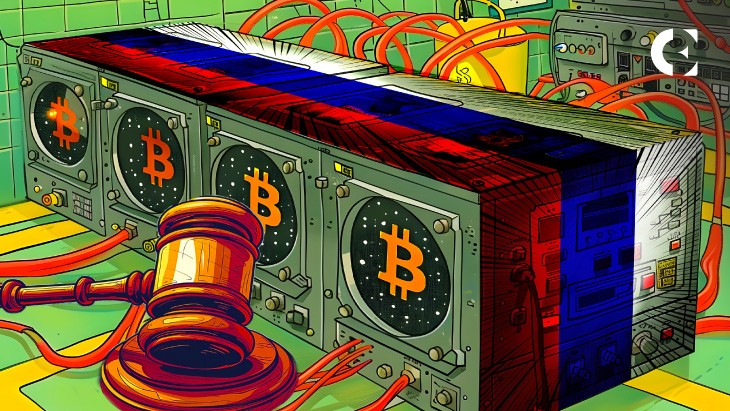
Russia plans to expand restrictions on cryptocurrency mining under a draft law that would ban activities in Moscow, the Moscow region, and parts of the Kursk region from July 1, 2026. The Department of Energy said the proposed restrictions would continue until Dec. 31, 2032, as authorities seek to ease pressure on the region’s power grid.
The proposal follows recommendations from the Government Commission on Power Development. Deputy Energy Minister Evgeny Grabchak previously said officials supported extending mining restrictions to several regions, including parts of Moscow and Kursk. The draft also includes Belovsky, Grushkovsky, Kolenevsky, Rilsky, Sujansky, Lugov and other municipalities.
Energy demands create new limitations
Local officials say crypto mining is increasing pressure on local power grids. According to government estimates, 65 data centers are operating in Moscow and the surrounding region, with a total capacity of 734 megawatts. 19 of these facilities have been installed in the Moscow region alone, with a capacity equivalent to 233 MW.
Related: Thailand targets cryptocurrency mining network in $28 million power theft case
Russia has steadily tightened regulations on cryptocurrency mining over the past two years as electricity demand increases. The government has approved a year-round mining ban in the Republic of Buryatia and the Zabaikalsky region starting from April 2026. It also banned mining in several Russian-controlled regions of Dagestan, Chechnya, Ingushetia, North Ossetia and Ukraine until 2031.
Authorities have introduced additional restrictions in southern Irkutsk, including seasonal mining restrictions during peak electricity demand periods. The latest proposals build on these measures as authorities aim to protect electricity supplies for homes and businesses.
Growing global scrutiny of virtual currency mining
Russia’s proposal comes as governments around the world are increasing their oversight of cryptocurrency activity. Earlier this month, the European Commission proposed new sanctions that would allow the European Union to restrict virtual currency service providers suspected of helping Russia evade sanctions. The proposal also targets 11 crypto platforms.
The UK has also imposed sanctions on virtual currency services. In Georgia, authorities have begun installing smart electricity meters in Mestia to curb illegal cryptocurrency mining and reduce pressure on the local power grid.
Related: Could your crypto exchange lose access to the EU after July 1st?


