


Robinhood announced plans to cut about 290 jobs, or about 10% of its full-time workforce, and record about $28 million in related costs, as the online brokerage moves to simplify its management structure.
Robinhood said the layoffs are part of its efforts to operate more efficiently by reducing layers of management and building a leaner organization. The company announced it would also close a small number of remaining positions.
Robinhood CEO Vlad Tenev said in a message to employees shared on X that the company is embarking on its restructuring from a position of strength.
Our CEO Vlad Tenev shared the following memo with the Robinhood team today:
robin parker,
We made the difficult decision today to say goodbye to some of our team members. Retirees have been notified and we are providing full support through this transition.
— Robinhood Comms (@RobinhoodComms) June 16, 2026
“Robinhood’s business has never been stronger,” Tenev wrote, adding that the company cannot continue to operate as a layered organization and needs to remain focused.
“We are proactively making this change because our financial position is strong. Our goal is to maximize our talent density and ensure our culture is defined by absolutely elite performance standards and superlative commitment to our customers (…) We also continue to make strategic hires, invest significantly in top talent, and leverage frontier technologies to further drive our business execution.”
Investor reaction was positive, with Robinhood shares up nearly 3% in premarket trading. Despite the gains, the stock has fallen 13% since the beginning of the year through Monday’s close.
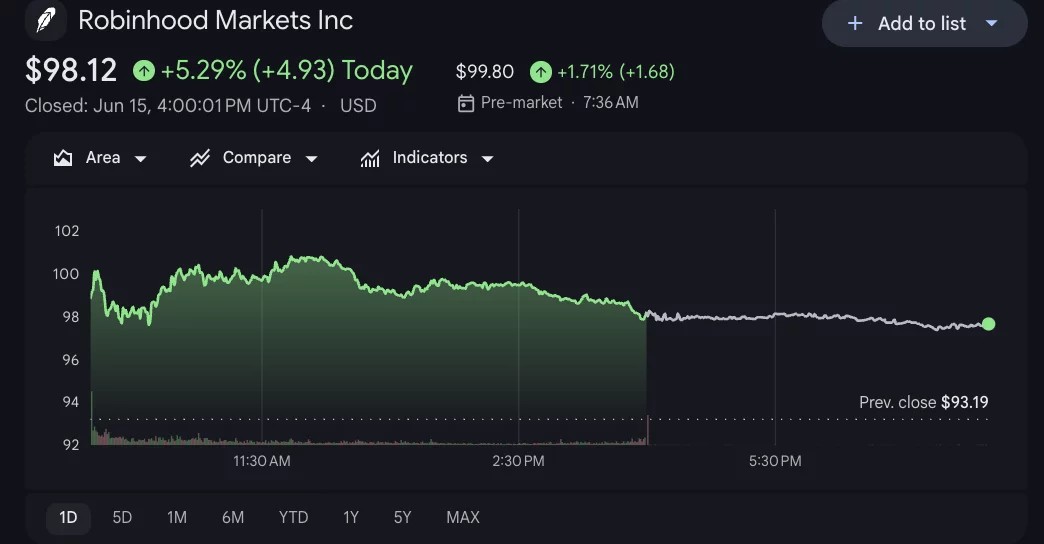
Robinhood employed about 2,900 full-time employees as of Dec. 31, according to regulatory filings cited by the company. Management expects to record approximately $20 million in severance and benefit expenses and approximately $8 million in stock-based compensation expense. This charge is expected to be recognized during the second quarter.
Trading activity recovers from sluggish first quarter
While Robinhood announced the layoffs, it pointed to strong trading activity across its platform. The company announced that month-to-date average daily volume in June has reached record levels in stocks, options and prediction markets.
These numbers contrast with the situation earlier this year. In its first-quarter earnings report in April, Robinhood missed Wall Street’s profit expectations as weak crypto trading weighed on results.
According to the company’s earnings report, revenue from virtual currency trading in the January-March period fell 47% year-on-year to $134 million, but trading-based revenue was $623 million, lower than analysts expected.
Several analysts pointed to crypto trading as the main source of pressure in the quarter. Morningstar described the sector as a “particular pressure point,” and analysts at Raymond James said volume had become uneven and there were signs of fatigue among retail investors.
At the time, Robinhood also faced a more difficult operating environment due to falling crypto prices and slowing retail participation. KBW analysts noted that both digital asset exchanges and traditional financial companies are expanding their services, increasing competition across the crypto trading industry.
Market conditions have improved since then. Robinhood cited easing tensions in the Middle East and strength in stock markets as factors supporting retail trading activity in recent months.
To reduce the impact of volume fluctuations, the company continues to expand beyond its core brokerage business. Retirement accounts, wealth management services and credit card products are part of Robinhood’s efforts to build additional revenue streams that are less dependent on market activity.
Earlier this month, Robinhood expanded its international footprint by launching stock and options trading services in Canada through the acquisition of Canadian cryptocurrency platform WonderFi. The move brings the company’s investment products to Canadian users for the first time and strengthens its efforts to grow beyond its core U.S. retail trading business.


