

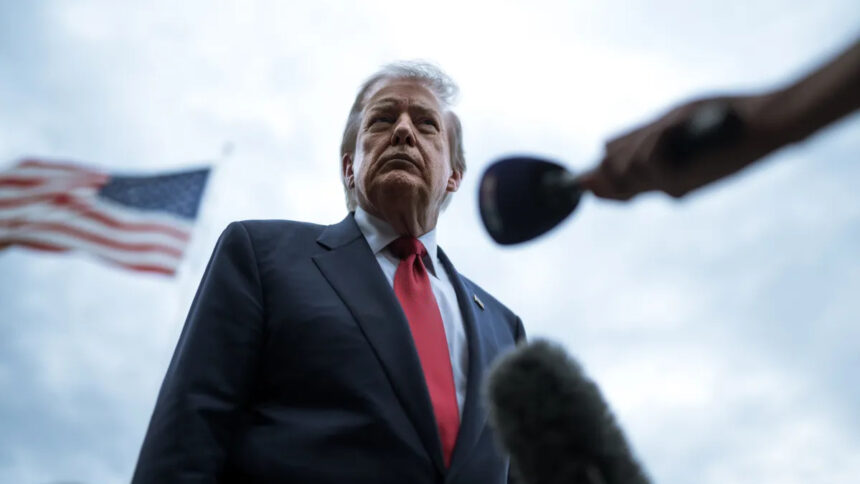
US President Donald Trump has signed an executive order aimed at reshaping the country’s regulatory environment to allow for the direct introduction of distributed ledger technology and the use of Bitcoin, along with other digital assets, into traditional financial services and national payment systems.
A government order signed on Tuesday, May 19, 2026, requires major federal financial regulators to evaluate and change their current processes. Focus on removing operational and administrative obstacles What impacts the financial technology company known as fintech.
According to an official document issued by the White House, the initiative responds to the need to maintain the North American nation’s global technological leadership as the development of financial solutions based on the digital environment accelerates.
The president described current regulations as “overly burdensome and piecemeal” and argued that they act as unfair barriers to entry. They primarily favor traditional banking institutions.
The measure sets strict deadlines for federal agencies to implement the requested structural reforms. In addition to the Securities and Exchange Commission (SEC) and the Commodity Futures Trading Commission (CFTC), the executive order also requires the Consumer Financial Protection Bureau (CFPB), National Credit Union Administration (NCUA), Federal Deposit Insurance Corporation (FDIC), and Office of the Comptroller of the Currency (OCC) to conduct a comprehensive review.
Within 90 days, the directors of each supervisory authority must complete a thorough analysis of its internal regulations and guides with the aim of identifying overlapping provisions that prevent strategic collaboration between the agencies. fintech Prevents obtaining a commercial banking or federal custodial, insurance, or brokerage license.
The Federal Reserve would then be required to submit a legal viability report within 120 days. Allow direct access to cryptocurrency service providers and signature fintech Connect to central bank payment accounts and real-time payment networks.
Once the 180-day goal is achieved, financial regulators should implement the final regulations resulting from the preliminary assessment, with the aim of promoting broad-based economic competition.
As reported by CriptoNoticias, the announcement of the decree was made during a debate in Congress, shortly after the Senate reported significant developments on the Clarity Act project, which was approved by the Senate Banking Committee on May 14.
The White House’s approach through executive orders could serve as a strategic mechanism to accelerate changes in Washington’s bureaucracy before the final legal text is approved. The above seeks to balance technical openness in payment methods with the imperatives of legal security, institutional solvency, and legitimate consumer protection.
With the issuance of this executive order, the U.S. government plans to transform Wall Street’s operational architecture and traditional systems by relaxing entry requirements into the financial ecosystem.
The medium-term outlook aims at integration that redefines the mechanisms for storing, publishing and processing collections under a unified digital scheme. Reducing market costs for cryptocurrency users within U.S. territory.
(Tag Translate)Banking and Insurance


