

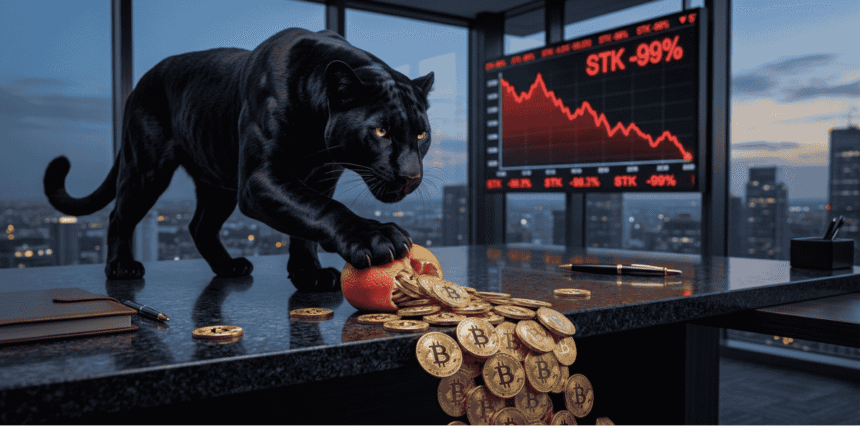
Pantera Capital is pressuring Satsuma Technology to completely liquidate its Bitcoin (BTC) holdings and return cash to shareholders as its stock price plummets 99%. The information was announced on April 23, 2026 and marks a new shift in the London-listed company’s financial strategy based on digital assets, according to a report by Bloomberg.
deterioration Occurred in the context of a decline in the virtual currency marketas reported by CriptoNoticias, Bitcoin has fallen nearly 50% from its recent highs. This amendment had a direct impact on companies with corporate exposure to this asset, particularly those using it as a primary store of value.
In Satsuma’s case, the company holds around 646 BTC worth around $50 million after selling 579 BTC in December. but, The market is penalizing that business model. The share price has fallen from £14 in June 2025 to £0.21, a 99% decline that reflects not only the volatility of the underlying asset, but also the loss of confidence in corporate strategy related to Bitcoin.
A key point of deterioration is that Satsuma’s market capitalization has fallen below the value of its Bitcoin reserves, a sign of extreme discounting that the market typically interprets as a decline in the credibility of its business model. this mismatch There is increasing pressure from investors to reconsider the company’s strategy.
Among them is Pantera Capital’s DAT Opportunity Fund. Controls approximately 6.7% of the company And they are leading calls for a complete liquidation of digital assets and the return of capital to shareholders.
The situation is made worse by internal instability.CEO Henry Elder resigned in March. In addition, Satsuma had previously raised £164m through convertible debt backed by sector investors before the market downturn.
Satsuma acknowledged that it had received requests for capital returns and said it was considering various options to accommodate shareholders without compromising the general interest.
This lawsuit opens a new debate on corporate strategy based on Bitcoin. In an environment of high volatility, Direct exposure to assets can magnify losses Rather than act as a hedge, especially when combined with governance tensions and loss of market confidence.


