

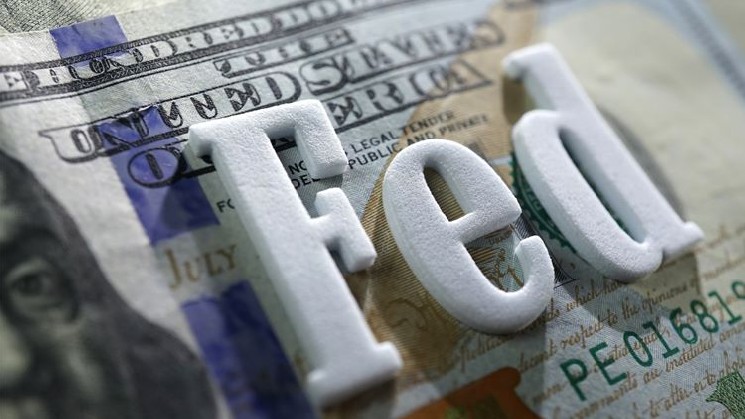
Economists say inflationary pressures from rising energy prices after the Iran war will be temporary, as expectations grow that the Fed will not cut interest rates this year.
A majority of economists expect the Fed to keep interest rates at current levels through 2026, according to a Reuters poll conducted May 14-19. Of the 101 economists surveyed, 83 expected the federal funds rate to remain stable between 3.50% and 3.75% through the end of the third quarter. Last month’s poll showed just over half of them.
The survey results showed that market expectations have changed significantly. Last month, more than two-thirds of economists expected at least one rate cut this year, but that number has fallen by more than half in the latest survey. Nearly half of participants believe the Fed will take no action until 2026. About a third expect a standalone rate cut at the end of the year, primarily in December. Four economists predicted at least one rate hike.
Meanwhile, futures markets are starting to price in a 25 basis point rate hike by the end of January. The yield on the 10-year U.S. Treasury bond also exceeded 4.6%, the highest level in a year.
Aditya Bhave, head of U.S. economics at Bank of America, said both rate hikes and rate cuts are on the table, but the base case is a “wait and see” approach. Beebe said if the Fed’s next move is to cut interest rates, it’s more likely to happen next year than this year.
At the Fed’s April meeting, three policymakers voted against removing language suggesting a rate cut, but one member directly called for a rate cut. But since then, Fed officials have increasingly tended to keep interest rates steady, citing uncertainty created by the ongoing war between the United States and Iran.
Economists believe that incoming Federal Reserve Chairman Kevin Warsh is unlikely to cut rates as aggressively as President Donald Trump has called for.
Related news Altcoins announce they are ready for the quantum era following latest update
The personal consumption expenditures (PCE) price index, the Federal Reserve’s preferred measure of inflation, was most recently reported at 3.5% year over year. This is the highest level since May 2023 and remains well above the Fed’s 2% target.
Economists expect PCE inflation to fall to 3.9% in the second quarter, 3.7% in the third quarter and 3.4% by year-end. These forecasts are about 25 basis points higher than last month, marking the third consecutive upward revision.
However, about 86% of economists surveyed maintain their view that current inflationary pressures are temporary. Scott Anderson, chief economist at BMO Capital Markets, noted that economists have recently been unable to accurately predict inflation and warned that the global economy may be entering a new phase in which it may face more frequent shocks.
The survey found no significant changes in unemployment rates or growth projections. The U.S. unemployment rate is expected to remain around 4.3% over the next few years, while economic growth is expected to average around 2%.
*This is not investment advice.


