

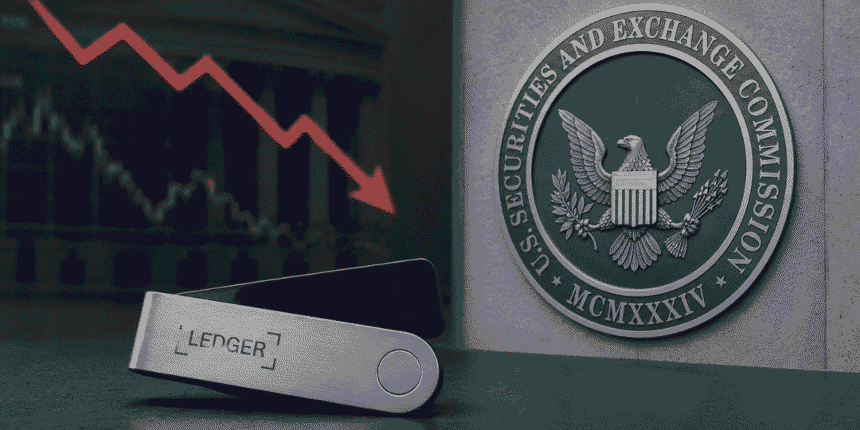
Hardware wallet company Ledger has canceled plans to go public in the United States, citing unfavorable market conditions. This news was announced on May 13, 2026, amidst a climate of volatility that has reduced investor appetite for companies related to the crypto ecosystem. The French company was considering an initial public offering (IPO) that would value it at nearly $4 billion.
According to published reports, Ledger has decided to temporarily halt the process. Reassessing the right time to enter the public markets. Notably, the company had not yet filed a confidential draft of its S-1 form with the U.S. Securities and Exchange Commission (SEC), the first formal step in launching an IPO.
Also, before suspending the IPO, The company was accelerating its expansion in the United States. In March, it named former Circle Internet Group executive John Andrews as chief financial officer and opened an office in New York focused on institutional clients and their leisure enterprise platform. The company later assured that the expansion would involve millions of dollars in investment and new jobs.
Rumors about a possible IPO began circulating at the end of 2025. Then, in January, CriptoNoticias reported that Ledger was working with Goldman Sachs, Jefferies, and Barclays. To evaluate a New York listing that could be completed in 2026.
Ledger’s case is not isolated. Kraken also would have canceled its plans to go public this year, despite filing confidential documents with the SEC in 2025. Meanwhile, BitGo, one of the few native crypto companies to debut on the stock market in 2026, demonstrated the industry’s difficulty maintaining Wall Street’s initial enthusiasm.
BitGo raised about $213 million in its IPO in January, and its stock price rose more than 20% in its listing on the New York Stock Exchange. but, momentum rapidly weakened And it is currently trading around 36% below its starting price.
Ledger’s suspension indicates that the market still maintains reservations about crypto companies despite increasing institutional interest in digital asset infrastructure. In this scenario, some companies in this space may choose to postpone their listing plans. rely on private funds Until the liquidity and stability of cryptocurrency-related IPOs improves.


