

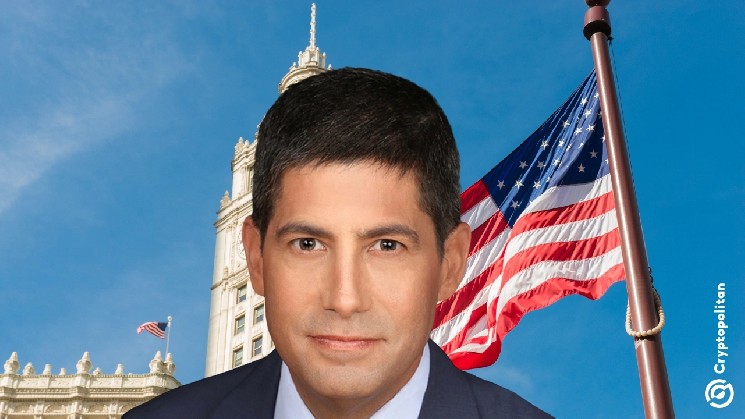
Kevin Warsh will be in Congress for the first time as chairman of the Federal Reserve, and lawmakers are pressuring him on interest rates, prices and central bank independence. His first month on the job was quiet. Kevin said little about the economy.
The House Financial Services Committee will question Kevin in Washington at 10 a.m. Tuesday after the Bureau of Labor Statistics releases June consumer inflation figures. He is scheduled to appear before a Senate panel on Wednesday after the agency releases producer price data during both scheduled appearances this week.
Lawmakers look to Kevin for answers as interest rate forecasts rise
The Atlanta Fed Market Probability Tracker puts the chance of a rate hike by September at 70%. Treasury yields have been rising since January, with traders pricing in higher borrowing costs.
Kevin refused to give the usual clues. Earlier this month, he said, “We’re not going to provide forward guidance because we’re meeting in six weeks, but we have an update. We’re meeting in four weeks.”
He said discussions within the Fed would take place behind closed doors. “We want to have a good fight as a family…When we get in that room and close the door, we’re going to have a good argument. But I don’t want anything more from you than that.”
Friday’s Fed report said inflation remains too high. Rising energy costs related to the Middle East conflict remain part of the problem. Tariffs have increased the prices of household goods. Strong demand for chips and other components used in data centers is adding further pressure.
Prices for services have also increased, but officials said they do not expect the increases to continue.
One of the Fed’s policy formulas indicates that the federal funds rate will rise above its current range of 3.5% to 3.75% because inflation is rising. Officials warned against reading this too literally.
“However, these prescriptions should be interpreted with caution because they ignore that the economy would have developed differently had policy rates followed either of the paths prescribed by the rules,” the report said.
Congress asks Kevin about inflation, AI and Fed independence
The annual consumer price index inflation rate is expected to be 3.8% in June, down from 4.2% in May. The decline in crude oil prices is expected to provide a tailwind. Those prices fell after President Trump reached a deal with Iran, but that deal now appears to have lost much of its value.
Core inflation, which excludes food and energy, is expected to be 2.8%, compared with 2.9% last month. Kevin will almost certainly be asked what these numbers mean for interest rates. His recent style suggests he may narrow the answer.
Minutes from the Fed’s June meeting show two possible paths for the rest of the year. If inflation cools, authorities could keep interest rates the same or lower them. If price pressures remain stubborn, the Bank may raise interest rates again.
Kevin is more comfortable talking about the five task forces he has launched. It will evaluate the Federal Reserve’s communication strategy to the public. The other considers balance sheet policy. The other three assess the impact of artificial intelligence on data quality, inflation forecasting, and employment and productivity.
Lawmakers are expected to test Kevin on whether the White House can influence the central bank. While the Federal Reserve is trying to curb inflation, President Trump is pushing to lower interest rates.
Kevin mentioned the issue last week. “We’ve been an independent central bank for a very long time. We intend to be an independent central bank at this point, but I don’t think you’ll see any change in that.”
AI is another topic. Congress could ask whether spending on chips, electricity and data centers could accelerate inflation. Kevin didn’t give a clear answer last week. He said the demand for AI is already there, adding: “I’m confident there will be supply at some point.”


