


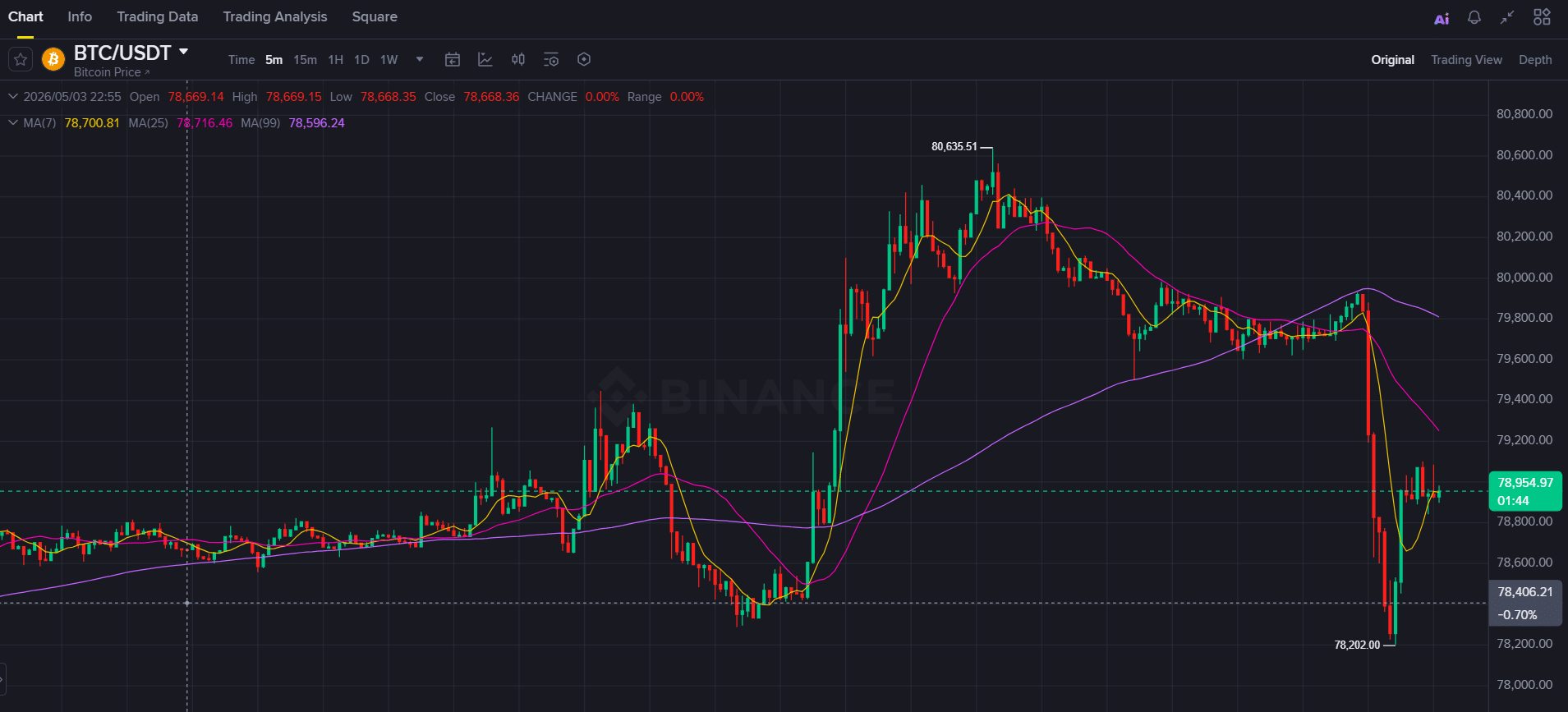
Overnight, the optimism that had seen Bitcoin briefly climb above $80,600 disappeared after news broke that an Iranian missile had targeted a U.S. Navy ship near the Strait of Hormuz.
Iran’s state-run Fars news agency reported that the US navy ship ignored warnings from the Revolutionary Guards Corps (IRGC) and was forced to turn back after being hit by two missiles.
The allegations arose as President Trump announced Project Freedom, a mission scheduled to begin on Monday to guide ships stranded in the Strait of Hormuz. U.S. Central Command announced it would mobilize 15,000 military personnel, more than 100 aircraft, warships and unmanned aircraft to support the effort.
After announcing the mission, the Iranian military warned that a U.S. entry into the strait could trigger an attack.
Axios reported that a senior US official denied claims that US ships were attacked.
Bitcoin has experienced intense volatility since the escalation of the conflict between the US and Iran with the launch of Operation Epic Fury on February 28th. The digital asset hit a historic high of $126,186 in late 2025, but its post-conflict range is defined by a low near $60,000 in February and a recent rally towards psychological resistance at $80,000.
At press time, the leading crypto asset was trading near $79,000 as investors weighed geopolitical risks against strong inflows in institutional ETFs.
Last week, the U.S. Bitcoin Spot ETF recorded net inflows of approximately $163 million, according to Pharcyde Investors. There were about $630 million in inflows on Friday alone, offsetting huge outflows earlier in the week.


