

Zack Pandle says Bitcoin could bottom out if the Fed avoids further interest rate hikes
Grayscale says the Bitcoin bear market may be closer to an end than historical trading patterns suggest, arguing that macroeconomic conditions are becoming more important than the cryptocurrency’s traditional four-year cycle.
Zach Pandle, head of research at Grayscale, outlined two competing views on when the economic downturn will bottom out. The first treats Bitcoin’s halving schedule as the primary driver of its boom-bust pattern.
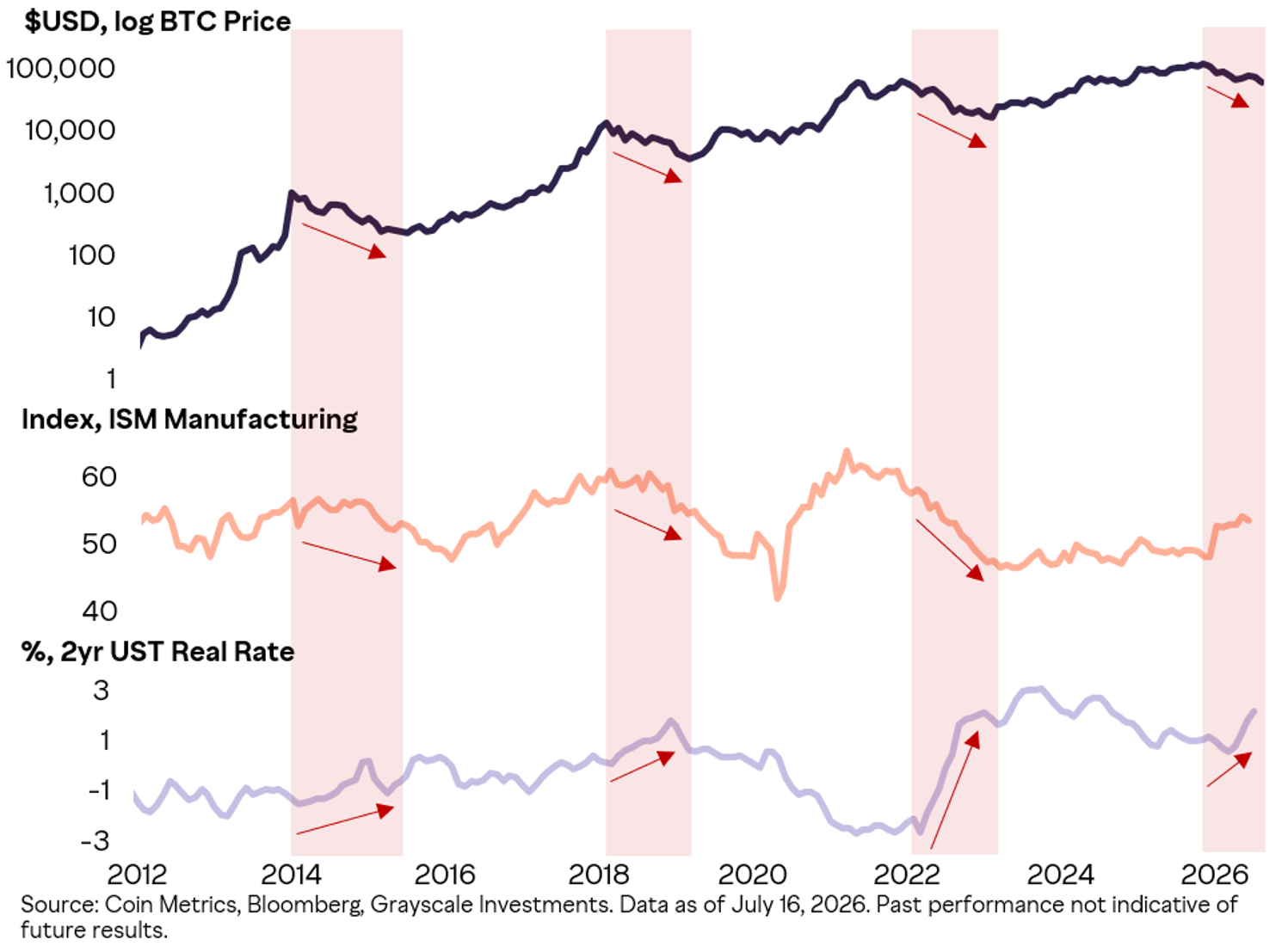
Previous bear markets typically reached their lowest points about a year after the cycle’s peak and about two and a half years after the halving. Grayscale said these economic downturns resulted in an average loss of nearly 80%.
Under that framework, Bitcoin may need to fall further before bottoming in September or October.
Historical cycles suggest further weakness
Proponents of the four-year model predict that the reduction in supply due to Bitcoin’s halving will cause a cycle of expansions and contractions.
This view assumes that the current decline roughly follows previous cycles. A similar outcome would expose the market to falling prices before a sustained recovery begins.
“From a four-year cycle perspective, we expect the lows in Bitcoin prices to fall even further,” Pandol said.
Still, as Bitcoin’s investor base and market structure evolve, relying on past cycles becomes more difficult. Institutional funds, exchange-traded products and changing financial conditions are now playing a greater role in determining demand. Grayscale believes these developments may have weakened the impact of halving.
Fed policy may provide better signals
The company supports a macroeconomic framework that treats Bitcoin like any other major asset class.
Past crypto bear markets often coincided with slowing economic growth and rising real interest rates. The current economic downturn has coincided with a tightening of Federal Reserve policy expectations and a rise in inflation-adjusted yields.
If these pressures ease, Bitcoin could recover without repeating the full drawdown seen in previous cycles.
“If the Fed holds off on raising interest rates and economic growth remains strong, Bitcoin prices may have already bottomed out,” Pandle said.
That outlook depends largely on the resilience of the U.S. economy. A renewed rise in interest rates or a sharp slowdown in growth could put new pressure on risk assets, including Bitcoin.
Grayscale’s analysis does not rule out further declines. Rather, it suggests that investors should look beyond the halving calendar when evaluating the market.
This discussion reflects Bitcoin’s changing position in global finance. Its supply continues to be governed by norms, but its price is increasingly shaped by the same forces that drive stocks, bonds and other risk-sensitive assets.


