

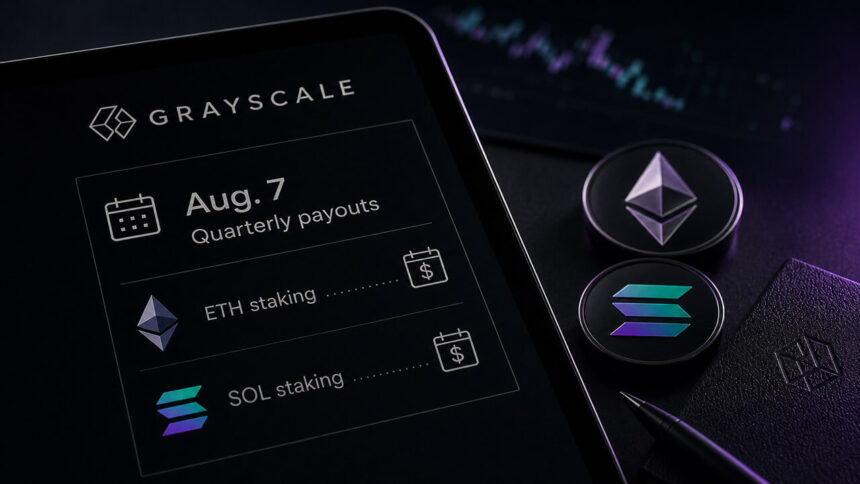
Grayscale hopes to convert staking rewards from its Ethereum and Solana funds into cash payments at least once a quarter starting around August 7th. That would give investors an easy way to compare what each fund actually offers.
In a July 17 SEC filing for the Grayscale Ethereum Staking ETF and the Grayscale Solana Staking ETF, the asset manager said it intended to amend the trust agreements for both. If implemented, each trust would convert the ETH or SOL received as staking rewards into cash at least quarterly and promptly distribute the proceeds, net of expenses not borne by the sponsor.
This requirement establishes a minimum amount and does not establish a fixed payment date or refund amount. Grayscale allows each payment to be distributed more frequently depending on the staking rewards actually received during the period. Because these amounts cannot be predicted with certainty, the regularity applies to the process, not the outcome, the filing said.
From one payment to equal payouts
The proposed structure would result in a periodic cash distribution mechanism that ETHE used earlier this year. igcurrencynews reported in January that on January 6, the fund paid approximately $0.083 per share, or a total of $9.39 million, from staking rewards earned and sold for cash between October 6, 2025 and December 31, 2025.

That January dividend showed staking rewards converted into cash for shareholders. Adding GSOL and minimum schedules creates a similar baseline for comparing actual net cash payments, disclosed cost drag and timing across Ethereum and Solana, rather than determining structure from a single ETHE event.
This design also reflects the IRS framework for staking within eligible grantor trusts. Revenue Procedure 2025-31 allows compliant trusts to consistently distribute net staking rewards more frequently than quarterly after in-kind or cash sales. Grayscale’s proposed deal specifically opts for cash, requiring the trust to sell native asset awards before passing on net proceeds to shareholders.
Cash distributions do not defer all tax consequences until payment. According to the ETHE and GSOL disclosures, subject to the grantor trust treatment, U.S. holders will recognize their pro rata share of staking rewards as taxable income when the trust receives them, regardless of when the cash is later distributed. Selling ETH or SOL as payment funds may result in proportional capital gains or losses.
The investor’s benefit is comparability, or regular cash records across the two assets. The remaining trade-offs are the variable compensation, expenses, conversion, and owner-specific tax implications behind each payment.
(Tag translation) Featured


