


Forget the stereotype that young investors chase meme trading. According to Binance Research, Gen Z investors are entering the financial markets faster than previous generations, and they’re doing so with remarkable discipline. Rather than relying on speculation, many are building their portfolios around established technology companies, while increasingly embracing TradFi products offered through crypto-native platforms.
Start changing your financial habits with early investment.
According to the report, 30% of Gen Z investors started investing in college or early adulthood, compared to 15% of Millennials, 9% of Gen X, and just 6% of Baby Boomers. More importantly, 77% said they received formal financial education before investing.
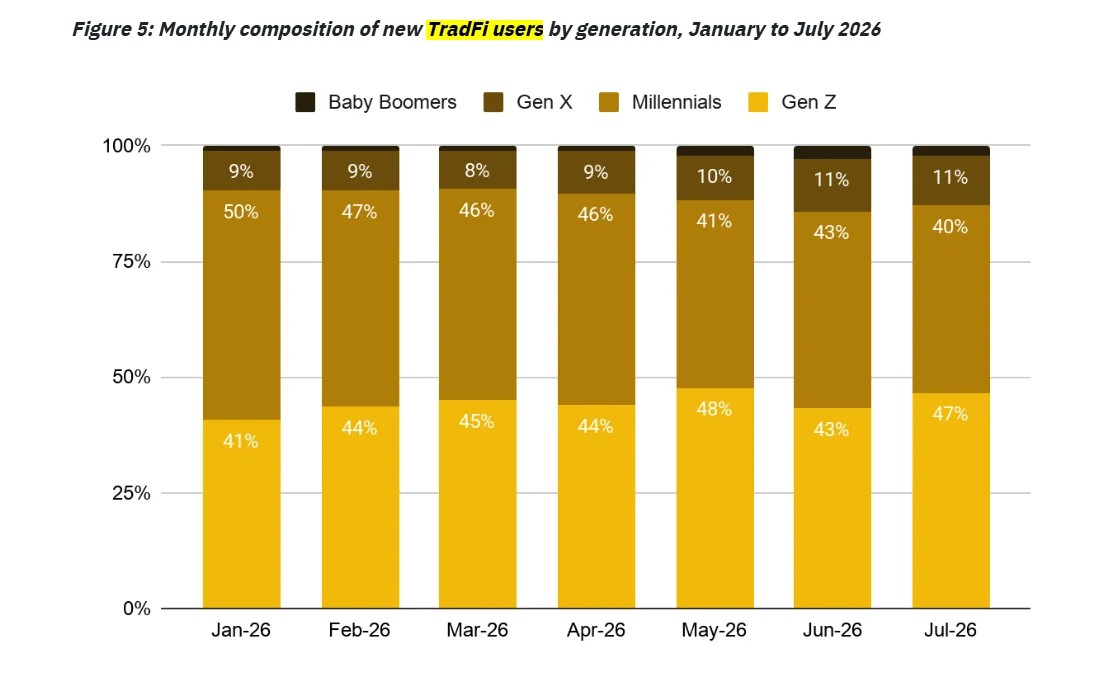
It appears that this preparation is leading to recruitment. Gen Z now makes up 44% of both users Loading profile preview Direct Stocks and bStocks account for 48% of users engaging with all three TradFi products. The share of newly registered TradFi users also steadily increased from 41% in January 2026 to 47% by July 2026.
Emerging markets take the lead
This change is occurring primarily outside traditional financial hubs. More than 90% of TradFi users of all generations are from emerging markets, including 95% of Gen Z users.
Among them, Binance has identified a growing segment called Next Generation Users, who are investors with less than USD 2,000 in equity assets. Despite limited capital, the group has generated USD 80 billion in TradFi trading volume since the beginning of the year, growing at a monthly rate of 24%.
Technology always beats guesswork
Perhaps the biggest surprise is portfolio construction. Leveraged ETFs account for just 5.9% of Gen Z’s trading volume, the lowest of all generations. Instead, the most common first investment for next-generation users is NVIDIA at 20%, followed by Micron at 8%.
Gen Z investors, with around 60% of their portfolios allocated to information technology and communications services, appear to be more interested in long-term exposure to AI and semiconductor companies than short-term speculation, highlighting the increasing role of crypto platforms as gateways to traditional financial markets.


