

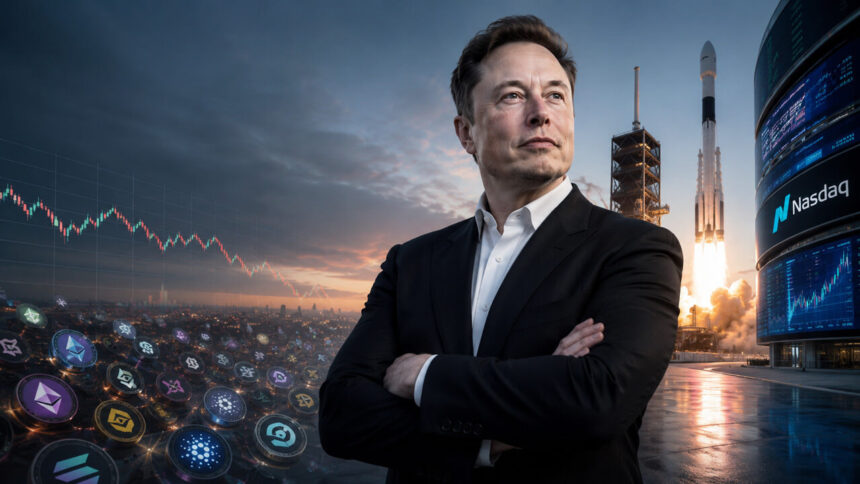
Elon Musk crossed a historic threshold on Friday, becoming the first person in modern history to have a personal net worth of more than $1 trillion, following SpaceX’s record-breaking public market debut.
The technology executive’s total wealth now stands at $1.11 trillion, according to the Bloomberg Billionaires Index.
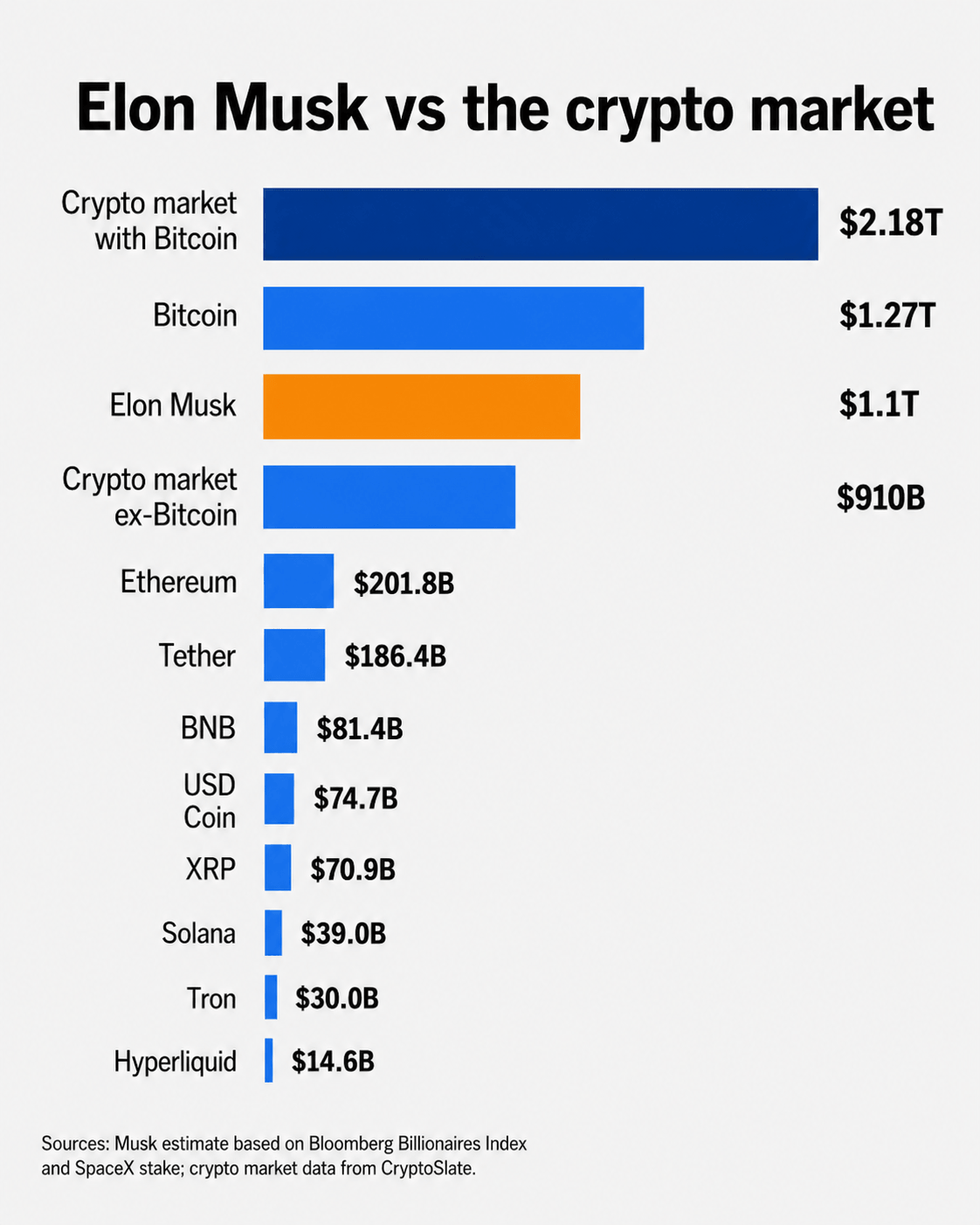
Given the unprecedented size of this capital, Musk’s net worth now exceeds the market capitalization of the global crypto sector, excluding Bitcoin. Including the world’s largest digital assets, his assets account for exactly half of the value of the entire cryptocurrency industry.
The financial milestone immediately reignited the global debate over concentration of wealth, as Mr. Musk’s financial footprint now exceeds the gross domestic product of some developed countries.
SpaceX IPO breaks records
The immediate catalyst for Musk’s meteoric rise in wealth was SpaceX’s much-anticipated listing on the Nasdaq stock exchange.
The rocket, telecommunications, and artificial intelligence company achieved a staggering $2.2 trillion valuation upon entering the public markets.
The underwriters initially priced the offering at $135 per share, successfully raising $75 billion before going public.
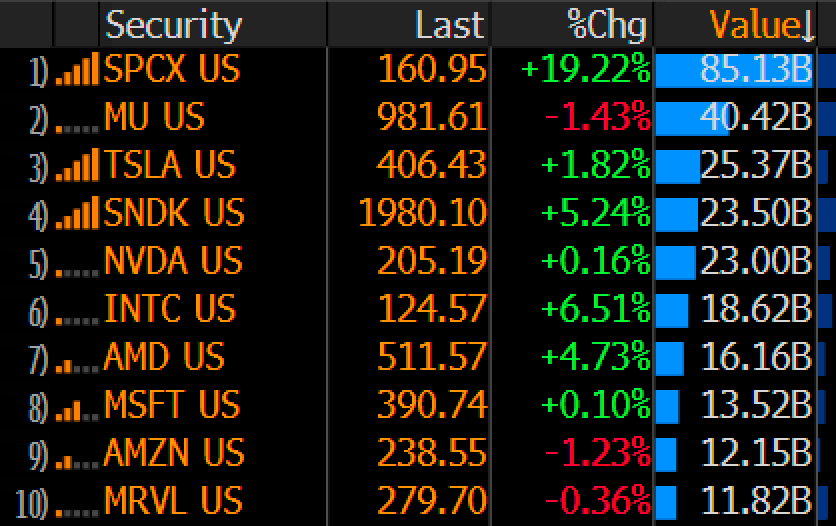
However, huge investor appetite for the commercial space sector and Musk-related ventures pushed the opening trade to $150. The stock soared to an intraday high of $176.50 and settled at $161 at Friday’s close.
Market participants noted that the stock’s debut created unprecedented liquidity.
Bloomberg ETF analyst Eric Balchunas noted that the stock had $85 billion in volume on its first day. This set an IPO record, ranked among the top 10 single-day trading volumes for an individual stock in market history, and surpassed Apple’s peak daily trading volume over the past 40 years.
Meanwhile, Musk owns 42% of the Hawthorne, California-based company. This stock position gives him essentially unilateral voting power over the company’s operational and strategic decisions.
Mr. Musk’s virtual currency relationship
Comparing Mr. Musk’s fortune to the digital asset market highlights significant changes in capital allocation over the past year.
Musk’s $1.11 trillion paper wealth comfortably exceeds the estimated $880 billion market cap of all alternative cryptocurrencies tracked by TradingView’s TOTAL2 index.
Even under broader metrics from data provider CoinGecko, which values the total cryptocurrency market at nearly $2.27 trillion and Bitcoin at $1.28 trillion, the rest of the altcoin sector is below the SpaceX CEO’s personal net worth.
This divergence highlights how far the broader altcoin market has strayed from previous cyclical valuations. According to TradingView data, the market capitalization of crypto assets excluding Bitcoin peaked at over $1.7 trillion in October 2025.
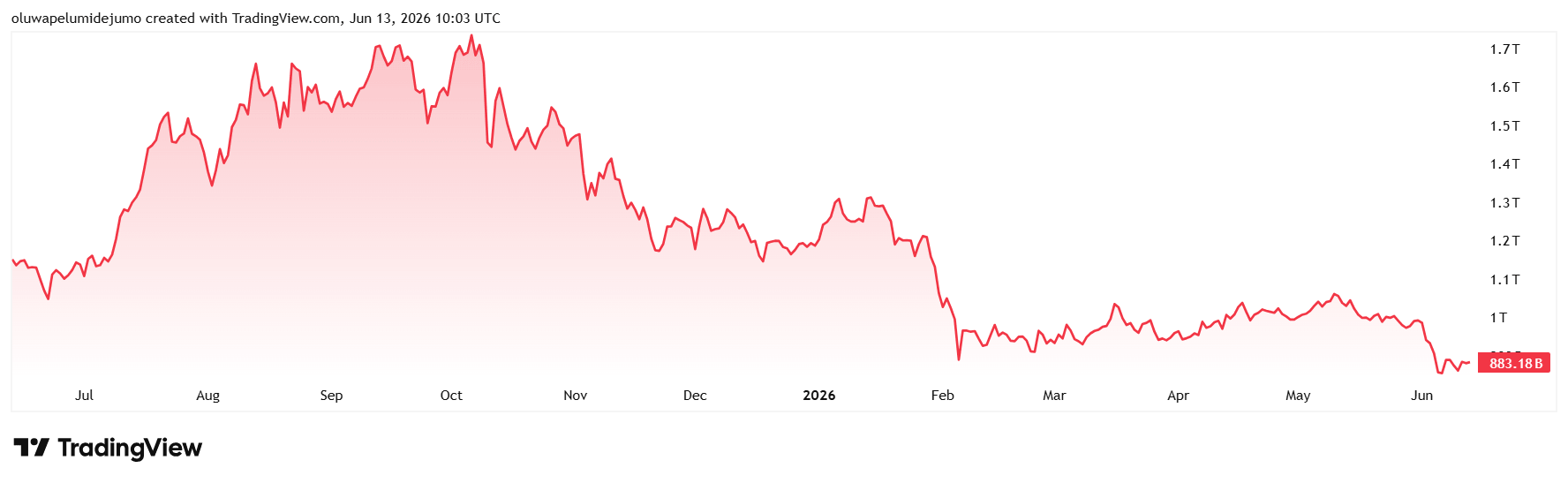
The stock has since fallen by about half, reflecting declining liquidity in digital assets and broader institutional investor rotation into large-cap technology and artificial intelligence stocks.
Despite his personal wealth dwarfing the altcoin economy, Musk remains structurally tied to the digital asset network through both his personal portfolio and corporate balance sheets.
Musk has publicly admitted that he personally owns Bitcoin, Ethereum, and Dogecoin. Although his private balances remain private except for a legacy statement in 2018 regarding a gift of 0.25 Bitcoin, his legal entity has an institutional footprint.
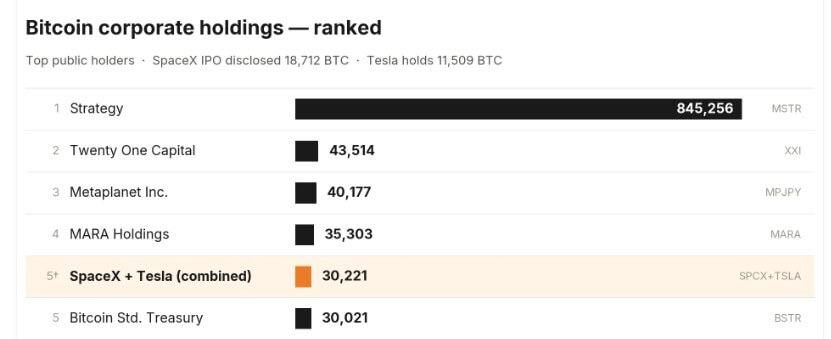
Post-IPO regulatory filings revealed that SpaceX maintains corporate financial reserves of 18,712 Bitcoin. This is an allocation worth more than $1.3 billion. This strategy is in line with his electric car maker Tesla, which continues to hold 11,509 Bitcoin as part of its liquid financial reserves.
If the two companies merge, they will rank as the fifth-largest public company among holders of top cryptocurrencies.
Additionally, Musk leveraged his $44 billion acquisition of social media platform X to incorporate financial data tools directly into the public sphere. The platform’s “Cashtag” feature provides real-time market prices for traditional stocks and digital assets.
While X’s statement makes clear that the platform will function strictly as a data utility rather than a direct intermediary or digital currency exchange, the integration serves to further connect Musk’s media and corporate ecosystem to the day-to-day workings of financial markets.
Ultimately, the scale of Mr. Musk’s fortune highlights the deep concentration of personal wealth around the tech monopoly that founders control, and emphasizes that this historic net worth is closely tied to stock market prices rather than liquid cash.
(Tag Translation)Bitcoin


