

Latest developments: Hardware wallet maker Ledger and Metamask developer ConsenSys are among the crypto companies that have delayed their IPO plans.
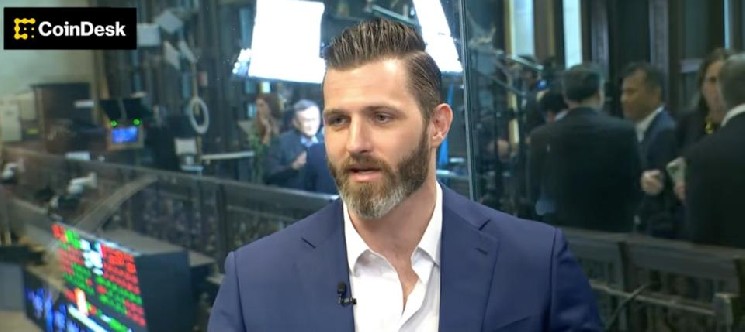
- Sean Farrell, head of digital asset strategy at Fundstrat, told CoinDesk’s Jennifer Sanasy on PublicKey that crypto trading volumes have fallen by about 75% since the beginning of the year, weighing on valuations across publicly traded crypto companies.
- Farrell said companies are reluctant to go public in a down market because IPOs are important fundraising opportunities and companies want to maximize valuations for existing investors.
- Mr. Ledger had reportedly named Goldman Sachs, Jefferies and Barclays in a planned $4 billion New York Stock Exchange listing before suspending his plans.
- Farrell said many of the crypto IPO processes are already “70% to 80% of the way through,” putting companies in a position to act quickly once the market recovers.
contrast: AI companies continue to find strong demand in the public markets.
- Farrell said the current IPO market is “wide open” for emerging technology companies related to artificial intelligence.
- He pointed to broad-based stock gains driven primarily by AI stocks, even as other sectors face macroeconomic headwinds.
- Farrell said investors continue to pour money into AI infrastructure as hyperscalers race to expand computing power despite concerns about inflation and interest rates.
- This divergence highlights how crypto companies remain exposed to falling token prices and weak retail trading activity.
What this means: Bitcoin miners, which have pivoted to AI infrastructure, have become one of the best-performing sectors of the cryptocurrency market.
- Farrell said many miners control valuable energy infrastructure and power purchase agreements that can be repurposed for AI data center demand.
- He said these companies are generating higher profits by leasing power and infrastructure capacity to AI companies, rather than relying solely on Bitcoin mining.
- Farrell said investors are increasingly evaluating some miners as “digital REITs” because of their exposure to infrastructure.
- He added that AI-related crypto infrastructure names were “a great place to hide” during the broader crypto market downturn.
Macro background: Farrell said interest rates and inflation remain major hurdles for crypto IPO activity.
- He said strong labor market data and overheating inflation are reducing expectations for short-term interest rate cuts from the U.S. Federal Reserve.
- Farrell warned that continued pressure on long-term Treasury yields could weigh on risk assets in the coming months.
- Farrell said he expects monetary easing will eventually occur once AI-driven productivity gains spread throughout the economy and labor market weakness flares up again.
- Until then, he expects crypto companies to remain cautious about entering public markets.
Worth a look: Farrell highlighted HyperLiquid as one of the few crypto ecosystems that will outperform in 2026.
- Farrell said HyperLiquid has since generated approximately $850 million in revenue in the 12 months and recently partnered with Coinbase to make USDC the platform’s official stablecoin.
- He estimated that the partnership with Coinbase could increase non-cyclical revenue by approximately $150 million annually.
- Farrell also pointed to increased interest in Hyperliquid’s pre-IPO trading market, including deals tied to companies such as Cerebras and SpaceX.
- Farrell said these markets could be the main narrative and revenue driver for the protocol.
Complex issues: Regulatory oversight remains the biggest risk facing Hyperliquid.
- CME Group and Intercontinental Exchange have reportedly asked regulators to take a closer look at HyperLiquid’s offerings.
- Farrell acknowledged that regulators may target products related to U.S. stocks and commodity trading.
- Still, he also argued that this oversight shows that traditional exchanges view HyperLiquid as a competitive threat.
- Farrell said the partnership between HyperLiquid and Coinbase could help the protocol more effectively navigate Washington as U.S. cryptocurrency regulation evolves.


