


Bitcoin rose about 2% to more than $63,000 in the past 24 hours as falling oil prices and softening U.S. Treasury yields improved sentiment towards risk assets, even as the crypto market remains under extreme fear.
According to data from crypto.news, Bitcoin ($BTC) traded at around $63,250 on Thursday after recovering along with other major cryptocurrencies as geopolitical concerns related to Iran eased. The move comes as oil prices have retreated from recent highs and U.S. Treasury yields have fallen, often prompting investors to return to riskier assets.
Although the recovery has pushed Bitcoin higher, investor confidence remains fragile. The Crypto Fear and Greed Index remained in the extreme fear zone at 22, only a slight improvement from 19 a week ago. The numbers suggest that traders remain cautious despite stable prices.
Technical signals showing improved momentum
Beyond the macro context, Bitcoin’s recent price trend is starting to show signs of a technical recovery. On the 4 hour chart, $BTC It has regained the 61.8% Fibonacci retracement level near $62,077 and is testing resistance near the 78.6% retracement around $63,235.
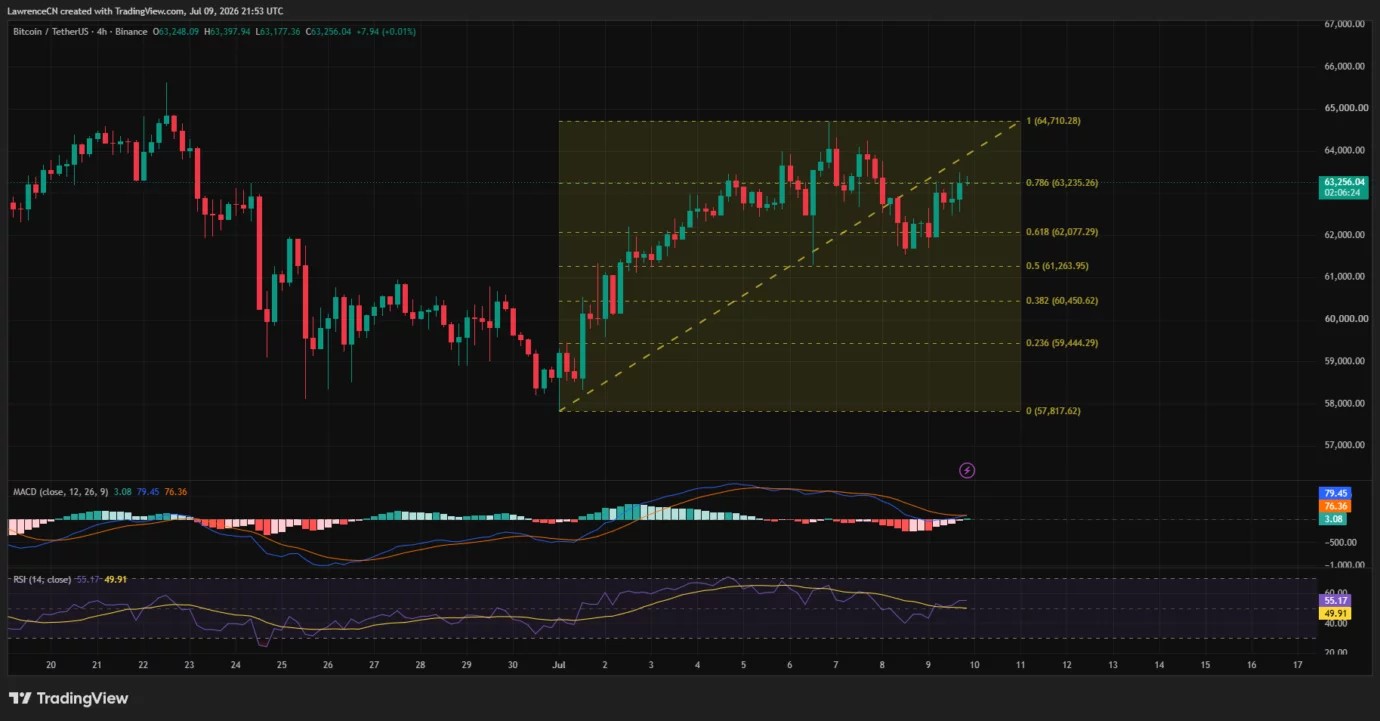
The chart also shows that Bitcoin continues to trade above the uptrend line that formed after the rebound in early July. Momentum indicators also improved along with the price movement. The relative strength index has recovered to around 55, above the neutral 50 level. Meanwhile, the MACD histogram turned positive and the MACD line approached a bullish crossover.
Taken together, these indicators suggest that buying pressure is building, although there is still no confirmation of a sustained breakout.
A successful move above the current resistance zone could reveal the recent swing high near $64,700. On the downside, the $62,100 area remains the first notable support if buyers lose momentum.
Elsewhere in the market, Ethereum is trading just below $2,000, up about 1.1% over the past day. Solana rose about 1.5% to about $78, while XRP rose above the $1 mark as large cryptocurrencies followed Bitcoin’s recovery.
Falling oil and bond yields support cryptocurrencies
The improvement in crypto prices has coincided with changes in broader financial markets. Oil prices initially soared on concerns that the Iran conflict could disrupt global supplies, but have since receded as fears of further escalation abated. At the same time, yields on U.S. government bonds also fell.
Lower oil prices may lower inflation expectations, but lower U.S. Treasury yields make fixed income investments relatively less attractive. Under such circumstances, investors are often more willing to allocate capital to assets with higher return potential, including cryptocurrencies.
Bitcoin’s 2.4% rise over the past seven days indicates that this rally is part of a gradual recovery rather than a one-session surge. Still, the persistent reading of extreme fear suggests that many market participants are waiting for stronger confirmation before becoming definitively bullish.
Adding a new twist to the sector, institutional digital asset management company BitGo has quietly introduced a new toolkit focused on long-term crypto infrastructure. While this release has no impact on current market prices, it highlights continued institutional investment in blockchain services, even though near-term market sentiment remains cautious.


