


Bitcoin rose above $66,000 for the first time since early June, extending a recovery that is beginning to repair some of the losses left by the recent market downturn.
The rebound is coming from a much weaker starting point than price alone suggests.
According to VanEck data, investors who sold Bitcoin over the past month realized significantly more losses than gains, with network-wide unrealized losses equaling about 16% of Bitcoin’s market value.
Only 53% of Bitcoin’s circulating supply is profitable, well below the four-year average of 76%.
The move above $66,000 is now testing whether the price rally can begin to reverse that damage.
But even as long-term holders refuse to sell and demand from U.S. exchange-traded funds (ETFs) has begun to recover, spot market activity remains unusually thin and derivatives traders are still paying dearly for further declines.

Buyers haven’t fully followed Bitcoin’s rise yet
Bitcoin’s breakout has so far arrived without a significant increase in spot trading, which would provide stronger support for a recovery.
Average daily spot trading volume over the past 30 days was nearly $5.1 billion, about 29% lower than the $7.2 billion average recorded since 2019, according to VanEck data.
At the same time, the transactions taking place remain biased towards sellers.
Over the past month, market orders from sellers have averaged about $70 million a day, more than comparable buys. This imbalance has narrowed in recent weeks to $59 million, but is still well above the historical average of about $21 million.
Part of the economic slowdown may reflect a seasonal drop in trading activity associated with the summer. However, the continued flow in the direction of sellers indicates that Bitcoin has begun to recover before buyers definitively return to the market.
Therefore, the next stage of the rally will depend on whether it can attract investors who were waiting to move above $66,000.
If the increase in buying continues, this move will receive broader support. If trading remains thin, relatively modest changes in demand and selling pressure could continue to have a significant impact on prices.
Traders are still paying to protect against further declines
The hesitancy in spot markets is also reflected in derivatives, where traders are willing to spend big to protect against further declines.
Over the past month, the premium paid for put options that appreciate in value when Bitcoin falls was nearly 50% higher than the premium paid for calls that benefit from rising prices.
This pushed the put-to-call insurance premium rate to 1.49x, a level that only about 10% reached from 2021 onwards.
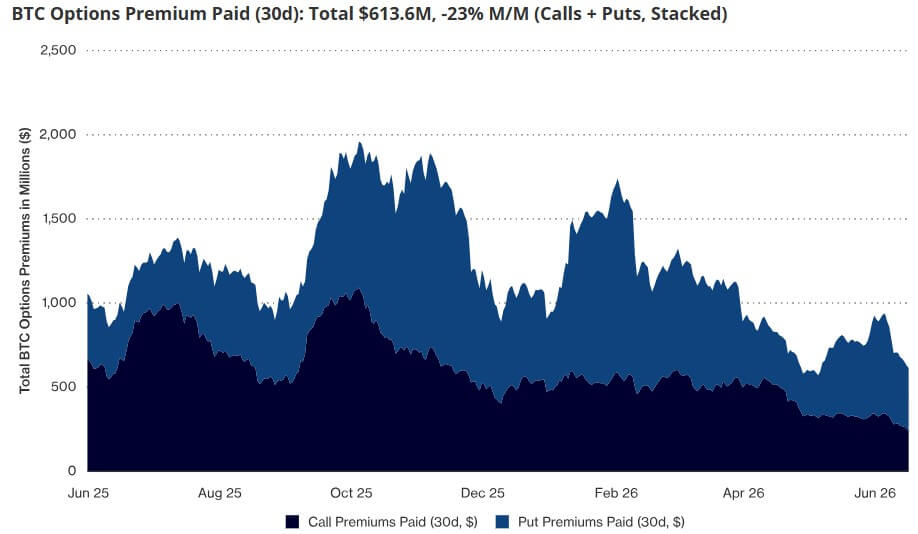
The cost of short-term downside protection also remains unusually high compared to bets on further upside, another sign that traders have not fully accepted the recovery.
We see a similar thing with futures positioning.
Average open interest in perpetual futures was about $29.4 billion, down from $35.7 billion two months ago. Funding rates remain positive, meaning traders are still paying slightly more to maintain bullish positions, but those rates remain below their historical averages.
Careful positioning goes both ways. While traders are not yet actively chasing Bitcoin’s rally, lower leverage also reduces the market’s exposure to forced liquidations that could turn a normal decline into a deep decline.
Long-term holders are keeping supply tight
Despite caution among active traders, most of Bitcoin’s old supply remains intact as the price recovers.
Approximately 12.2 million BTC, equivalent to 60.8% of the circulating supply, had not been moved for over a year. Six months ago, this percentage was 59.1%.
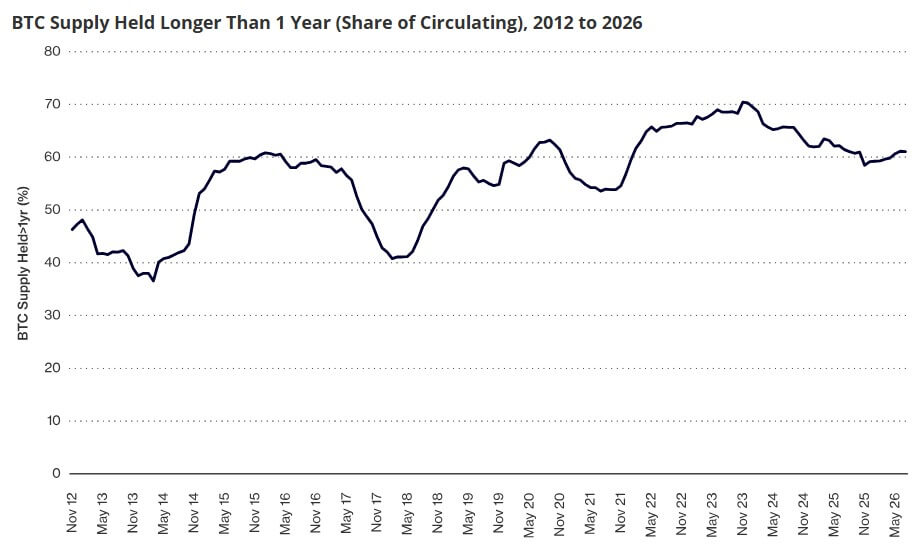
Another 3.55 million BTC remained untouched for 6-12 months. This means that approximately 78.5% of the Bitcoin supply has remained static for at least half a year.
This limit limits the amount of old Bitcoin that can return to the market even if the price increases.
However, there are signs that some holders are increasing their desire to sell. Exchange balances have increased by 26,674 BTC in the past month, with more coins now available for trading and some Bitcoins that have been held for 3 to 10 years starting to move.
These changes are currently too small to reverse the broader trend toward aging supply.
Historically, Van Eck found that periods where more than 60% of Bitcoin remained untouched for at least a year and Bitcoin’s share was still rising were followed by stronger-than-average returns.
While past performance provides no guarantee that this pattern will repeat, the continued reluctance of long-term holders to sell is a counterweight to the weakness activity and defensive positioning surrounding the recent rally.
ETF buyers are starting to return
Its limited supply is currently meeting early improvements in one of Bitcoin’s most important sources of demand.
The US Spot Bitcoin ETF recently recorded six consecutive days of net inflows totaling more than $930 million, the longest positive streak since early May.

This change followed a much weaker period in which U.S. investment products lost approximately 40,010 BTC (equivalent to approximately $2.4 billion) over the past 30 days.
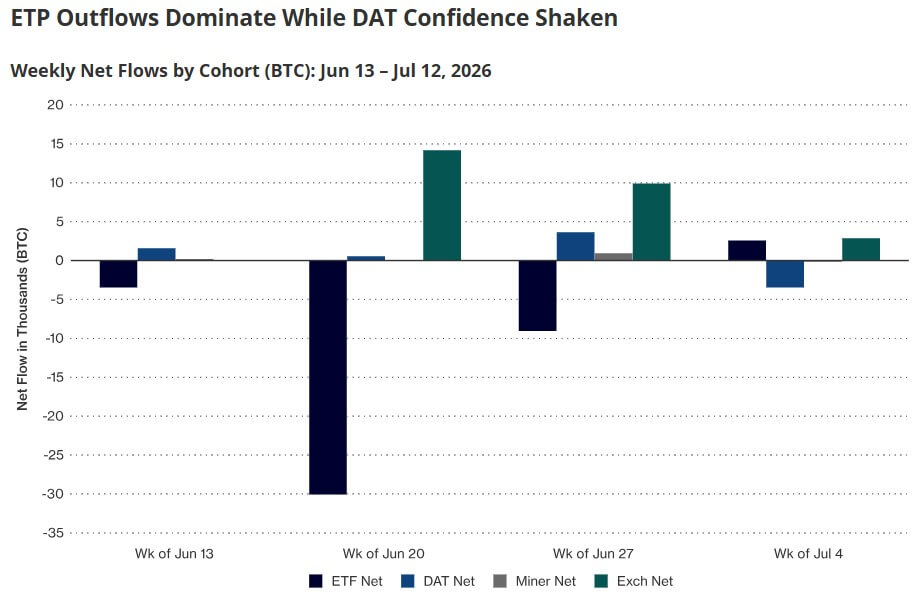
Other large buyers did little to offset these withdrawals. Treasuries of companies like Michael Saylor’s Strategy added approximately 2,343 BTC during the same period, while miners held an additional 1,204 BTC.
Still, recent ETF inflows remain modest compared to the size of previous withdrawals. However, the timing gives Bitcoin a new source of demand, just as readily available supply remains limited.
This combination helps explain how Bitcoin was able to climb above $66,000 even though some parts of the market were still acting cautiously.
Ultimately, the next market signal will depend on whether regular spot buyers start getting in on the action.
If that happens, the continued increase in BTC trading and buying could give the breakout the participation it previously lacked, prompting derivatives traders to trim some of their downside protection.
(Tag translation) Bitcoin


