


New data from Binance shows that artificial intelligence (AI) is emerging as a major player in global capital allocation, and its influence is extending to the crypto market.
The exchange reports that a significant portion of the activity on its platform is already driven by AI-powered tools that operate without direct human input.
In this regard, early Binance AI Pro usage data shared with Finbold on April 18 shows that 45.7% of platform interactions are now system-triggered rather than user-initiated.
These interactions are carried out through automated processes such as scheduled tasks, monitoring systems, and internal triggers, highlighting the growing role of persistent AI agents operating in the background.
The Binance report noted that AI is evolving from supportive “co-pilot” tools to agent-based systems that can monitor situations and make decisions. This change has a particularly significant impact on transactions where speed and efficiency are important.
Additionally, the report notes that crypto platforms are emerging as early adopters of this transition due to their structural advantages.
Specifically, unlike traditional finance, cryptocurrency markets operate 24/7, and on-chain data and programmable infrastructure enable AI to move quickly from insight to execution.
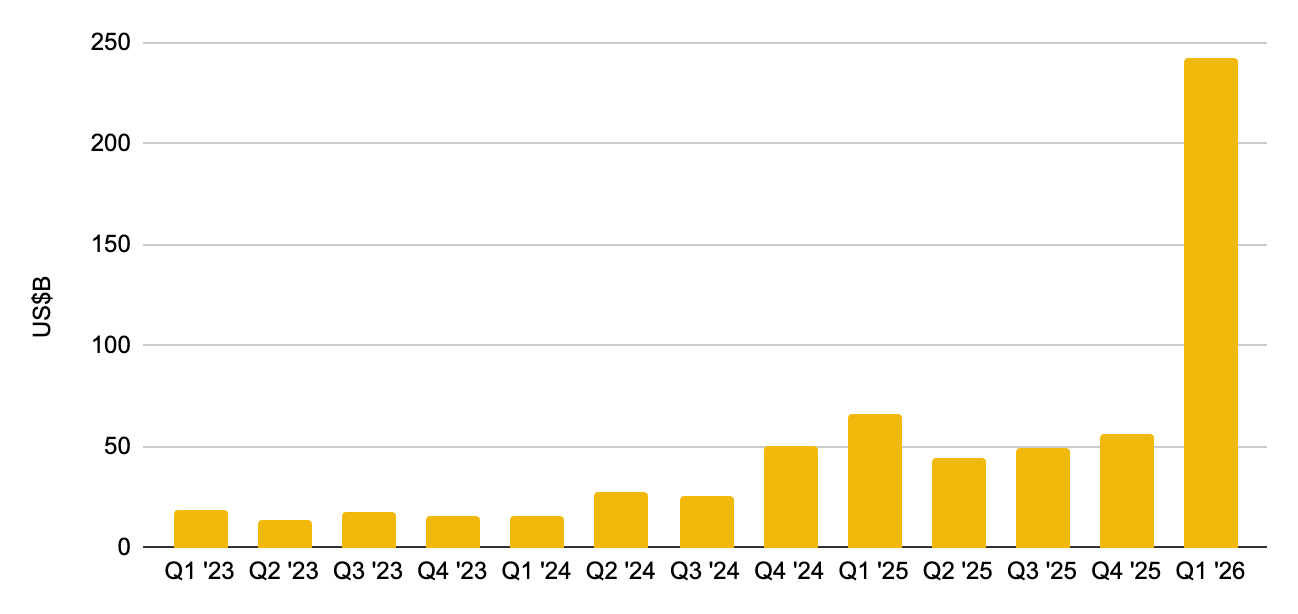
Interestingly, insights from research firm Gartner predict that global AI spending will reach $2.52 trillion in 2026, up 44% year over year. Meanwhile, Crunchbase estimates that AI accounted for about 80% of global venture funding, or about $242 billion, in the first quarter alone.
This concentration of capital is reshaping priorities across sectors, including cryptocurrencies.
overlap with investment
This shift is being reinforced by the increasing overlap between AI and crypto investments, given that 40% of crypto venture capital will go to AI-focused companies in 2025, up from 18% a year earlier, suggesting deeper integration into the sector, according to Silicon Valley Bank data.
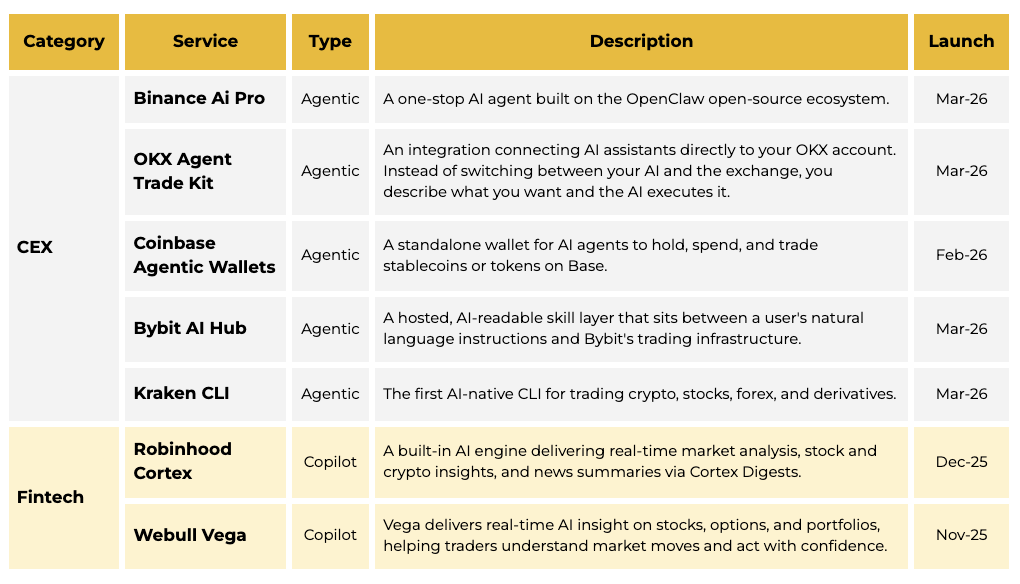
At the product level, exchanges and DeFi platforms are incorporating AI into trading workflows, unifying analysis, opportunity detection, and execution into a single automated process.
At the same time, advances in on-chain identities, payment rails, and decentralized protocols have enabled AI agents to operate full-stack and handle identities, funds transfers, and transactions autonomously.
Meanwhile, adoption remains uneven, with regulatory and legacy constraints limiting AI’s primary role to research and advisory roles in traditional finance, while crypto platforms are increasingly integrating AI directly into the execution layer.


