

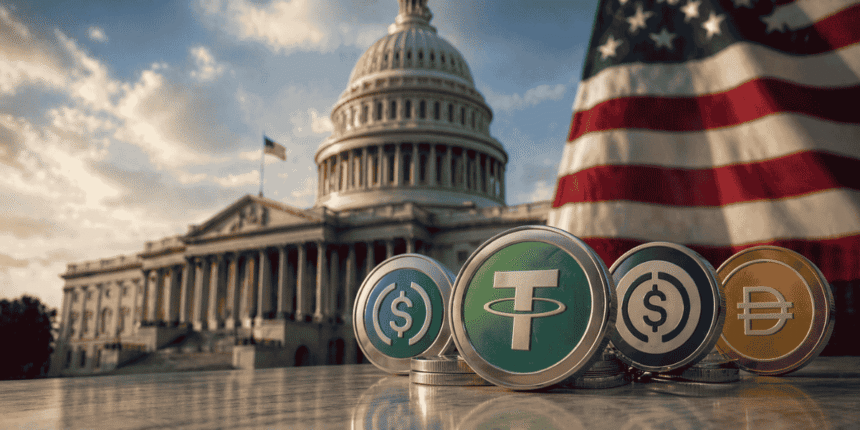
With less than 24 hours to go before the crucial voting process, more than 4,300 letters have been received in offices on Capitol Hill, and the nation’s major banking associations have sent out a flood of warnings.
This is a desperate attempt to block the provisions of the Transparency Act before the Banking Committee begins its final session on May 14th.
Organizations such as the American Bankers Association (ABA) and the Bank Policy Institute (BPI) They accuse Clarity’s current draft of opening the door to stablecoins. It actually functions as a savings account.
“The current language creates loopholes in the law, allowing these assets to compete directly with bank deposits,” the coalition warned, according to US media.
This concern is based on the fact that digital currencies exist. It offers similar returns to banks, but with more agility.it could lead to capital abandoning traditional systems to a large extent.
This movement of funds is something that banks do not interpret as a minor issue with their accounting balances. Rather, it means Every dollar you move into your digital wallet is one less dollar available to fund your mortgage. Or commercial loans, which would stifle the traditional economic engine.
However, this argument directly conflicts with the political imperative to avoid being left behind in the global technology race, especially when, as CriptoNoticias reports, stablecoins have already established themselves as essential bridges between the worlds of cash and digital assets.
The 309-page bill is the product of a delicate bipartisan agreement between Sens. Thom Tillis and Angela Alsobrooks, and attempts to walk a fine line. However, stablecoins are prohibited from paying bank-style interest, i.e. interest earned to users for simply leaving money in an account.
But this bill opens the door to activity-based compensation. This is a subtle difference, but it’s important. Because banks pay for customer loyalty, whereas the digital world can only pay for movement. For critics, this distinction is a play on words and does not eliminate the risk of capital flight.
high-handed political debate
In this scenario, the discussion becomes less technical and more electrical. That’s because President Donald Trump intervened harshly. In March 2026, he accused financial institutions of holding the law “hostage.” To protect record profits by saying Americans should make more with their money.
The US needs to approve the market structure as soon as possible. Americans should make more money with their money. Banks are making record profits and we have no intention of them undermining our strong crypto agenda, which will ultimately end up in China and other countries if we don’t resolve our transparency laws.
Donald Trump.
However, the clock is ticking and threats to the Transparency Act remain. Failure to do so on May 14 would not result in a final end to the regulation, but it would delay it for years (possibly until 2030, according to some warnings), leaving the U.S. in a fragmented regulatory environment without clear regulation of the digital asset industry.
In this way, the continued uncertainty that has been criticized by both the crypto industry and legislators is supported. The outcome will therefore not only define the regulatory framework for stablecoins in the United States, but also the country’s ability to lead the next generation of digital finance.
(Tag Translate) Banking and Insurance


