

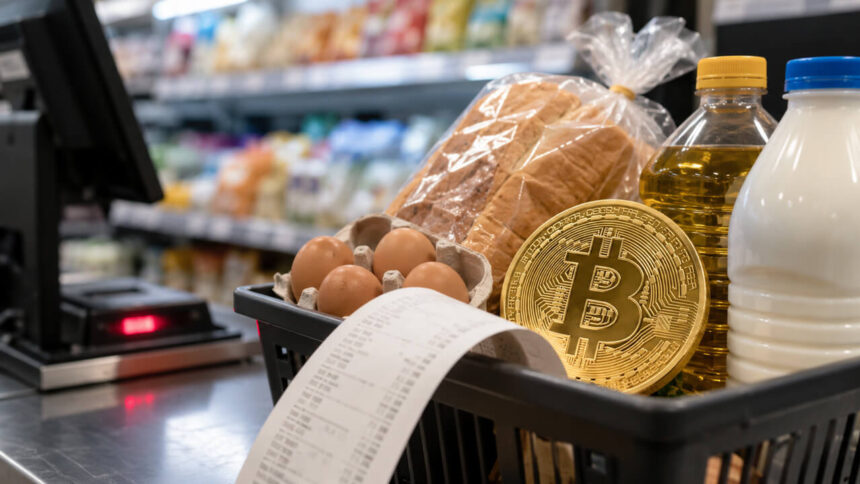
Bitcoin was designed as a hedge against inflation, but its price has fallen every time there has been an uptick in inflation reports over the past year, and Thursday’s data was no exception. The producer price index rose 1.1% in May, bringing the annual rate of increase to 6.5%, the fastest pace since November 2022 and well above the 0.7% monthly increase expected by economists.
Energy was hardest hit, with final demand goods rising 2.8%, the biggest monthly increase since the series began in December 2009, while energy prices rose 10.7% and gasoline soared 23.4% as oil supplies are at risk due to the Iran conflict. Even after excluding food, energy and trade services, the index rose 0.8% in the past month and 5.1% for the year, making it the fastest-rising core measure since October 2022.
Because PPI tracks transactions that consumers never see, most people could not explain what PPI measures. The Producer Price Index measures the average change in the price that U.S. producers receive for the goods, services, and construction they sell.
The CPI measures inflation from the buyer’s perspective, while the PPI measures inflation from the seller’s perspective. In other words, PPI tends to rise several weeks or months before households feel price pressure.
The Bureau of Labor Statistics constructs the index from a confidential probability-based sample of producers in 50 states and Washington, D.C., with almost complete coverage of mining and manufacturing, and significant coverage of service industries.
The reported figure is final demand PPI, which covers everything sold for private consumption, capital investment, government purchases and exports, while another set of intermediate demand indexes track inputs that businesses sell to each other.
PPI in 60 seconds
| question | answer |
|---|---|
| what does it mean | producer price index |
| Who issues it? | U.S. Bureau of Labor Statistics, monthly |
| What to track | the prices of goods, services, and construction received by U.S. producers; |
| Difference with CPI | CPI measures how much consumers pay. PPI measures what producers receive |
| Why it’s worth watching | May show inflationary pressures before reaching household prices |
| Why Bitcoin is important | Rising PPI weakens expectations for interest rate cuts and tightens liquidity expectations |
| what happened | PPI rose 1.1% in May, increasing the annual rate to 6.5%, and gasoline rose 23.4%. |
How does a wholesale price report affect my grocery bill or mortgage interest rate?
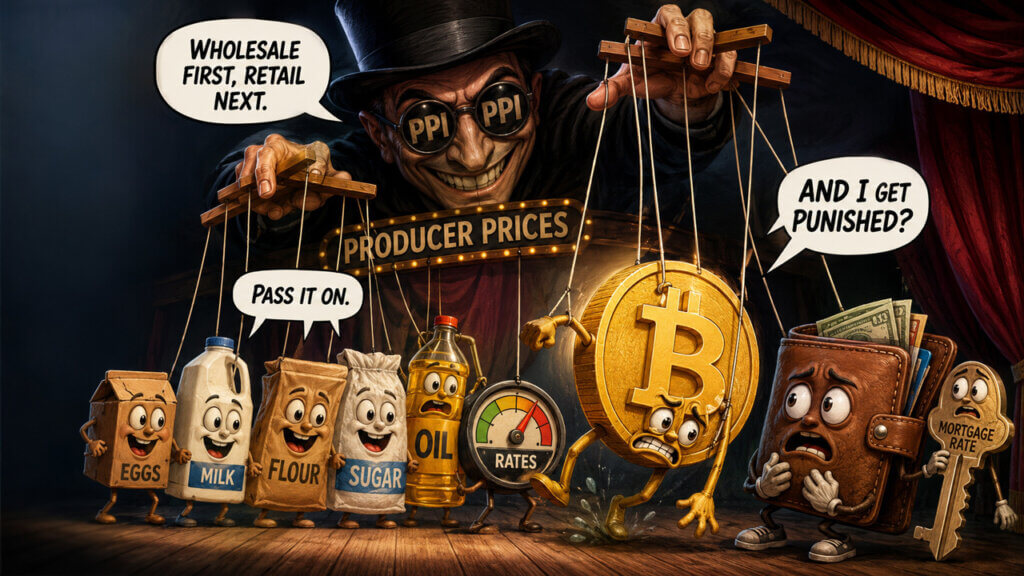
When producers receive a higher price, someone eventually has to pay for it. Companies facing a 23.4% rise in gasoline prices and a 15.7% rise in diesel prices can either absorb the blow through narrower profit margins, pass it on to customers, or split the difference.
The first option depresses profits, employment, and stock prices. The second is later displayed as shelf price, shipping charges, airfare, and shipping surcharges. May’s report shows that pass-through is already underway as price pressure extends beyond fuel.
Prices of processed goods sold between businesses rose 13.3% in the past 12 months, the largest annual increase since August 2022. This means that the costs that affect future consumer prices are rising faster than the prices consumers are paying now.
The relationship between PPI and CPI is not perfect. Taxes, import prices, retail margins, and company pricing strategies all sit between what producers receive and what shoppers pay, so even a strong PPI month doesn’t guarantee anything about next month’s consumer print.
Research by the Richmond Fed shows that producer prices flow into consumer prices with lags that vary widely by category. Energy moves quickly as refiners pass costs through to the pump within weeks, but services move slowly as wage contracts and leases reset on an annual cycle. Wednesday’s May CPI report already showed gasoline up 40.5% year-on-year, and Thursday’s producer statistics suggest there is still plenty of supply left in the pipeline.
No single report automatically triggers anything, but policy decisions depend on these numbers. Although the Fed targets a PCE price index, some PPI components are directly reflected in PCE calculations, so economists use producer data to predict the metrics the central bank actually monitors.
April’s PCE reading of 3.8% was already nearly twice the Fed’s 2% target before the May energy shock. Beyond monetary policy, PPI indices are written into long-term supply contracts as escalation clauses, introduced by statisticians to distinguish between real output growth and price increases, and utilized by politicians when discussing energy policy, rates, and spending. Producer inflation of 6.5% per year gives everyone in Washington fresh ammunition.
Bitcoin Holders Focus on PPI as Liquidity (and Lack of Liquidity) Determines Price
Wholesale inflation is related to decentralized assets like Bitcoin through interest rate expectations. Higher producer inflation makes it less likely that the Fed will cut interest rates. Rising interest rates make Treasury bills and money market funds more attractive. The dollar remains strong. And the pool of capital willing to chase volatile assets shrinks.
igcurrencynews has documented how Bitcoin is currently closely tracking its liquidity cycle and overtaking the halving as the primary price driver. That’s why government statistics on diesel fuel and wholesale margins can force producers to move assets that never make it to the factory gates.
The Federal Open Market Committee will meet on June 16th and 17th, the first time Kevin Warsh has chaired the committee since taking over from Jerome Powell in May, and market expectations are almost certain to hold the stock in the 3.50% to 3.75% range.
From January’s service inflation shock to March’s repricing towards zero probability of a rate cut, hopes for rate cuts have waned throughout the year, with Bitcoin falling to the low $60,000s from its October 2025 record, tracking that deterioration in tandem with a record streak of ETF outflows worth about $3.45 billion.
However, there are important nuances here that could work in Bitcoin’s favor in the long run. Persistent inflation is eroding the purchasing power of cash and bonds, and Bitcoin’s fixed supply is essentially built to solve that, with igcurrencynews arguing that Bitcoin is structured to thrive through a decade of stagflation. What we are seeing now is that while inflation supports the long-run theory, the policy response to inflation has a negative impact on short-run prices.
What happens next will determine which faction wins. Stay tuned to see if June CPI confirms the pass-through, whether the June 25th PCE announcement moves the Fed’s desired metrics further away from target, whether oil prices continue to rise with Iran headlines, and how Mr. Warsh frames the energy surge in his first press conference.
While a report will never settle the inflation debate, an asset marketed as inflation insurance has only been met with inflation warnings, and until the Fed can reliably commit to funding, that contradiction will likely continue to define Bitcoin in 2026.
(Tag Translation) Bitcoin


