

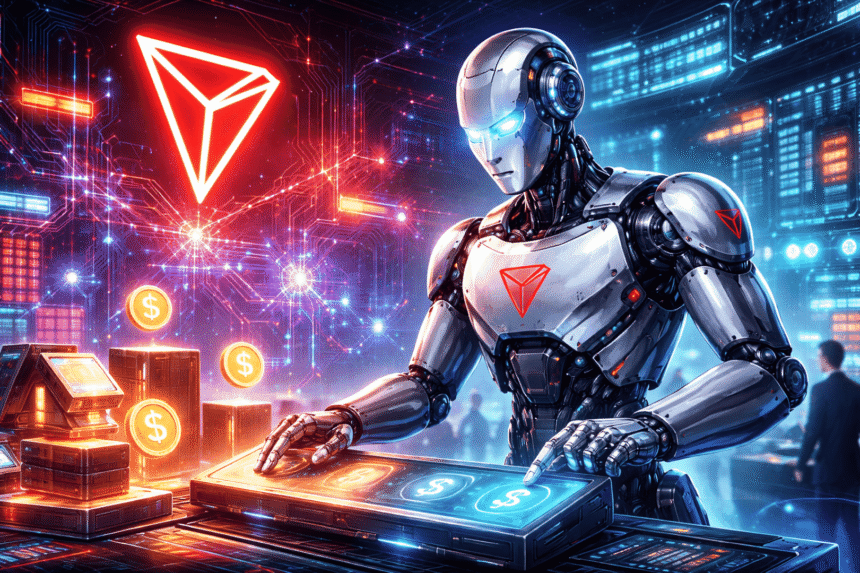
On March 23, this year, the TRON DAO organization announced that it would expand its artificial intelligence fund from $100 million to $1 billion. The aim is to raise capital and acquire early-stage companies developing infrastructure for artificial intelligence calls. agency economy (Economy based on AI agents).
According to the statement: The capital will focus on four main areas: Identity systems for AI agents, stablecoin-based payment networks, real-world asset tokenization (RWA), and tools for building autonomous financial systems. This effort aims to position itself in an emerging segment where AI agents can interact economically without traditional intermediaries.
The basis for the expansion of the fund is Papers proposed by organizations in 2023predicted the fusion of artificial intelligence and “blockchain technology.” Under this premise, TRON DAO argues that autonomous agents require a programmable, permissionless financial infrastructure to operate, including fully on-chain identity, payment, and ownership mechanisms.
Focus on stablecoins and tokenization
In a press release, TRON stated that the stablecoin is currently The most viable form of money for transactions between agents: Although they do not have access to traditional banking services, they can interact with wallets, making these assets an alternative for automated payments and transactions.
The organization also predicts that with the support of AI tools, individuals or small teams will be able to manage economic operations with greater autonomy. Use a simpler payment infrastructure. Complementing this, asset tokenization allows assets to be managed in a programmable, piecemeal manner and made available in real-time through cryptocurrency networks.
Points to note are: These types of solutions are not limited to TRON. As reported by CriptoNoticias, companies such as Visa are already considering payment services for autonomous agents, while Stripe recently launched a new standard that expands the possibilities for agents to interact with financial systems and process automated transactions.
These efforts demonstrate that the “agent economy” is creating diverse ecosystems and standards beyond specific networks.
Still, mass deployment of autonomous agents requires the following: It faces technical and regulatory challenges. The legal framework for tokenized assets and automated payments is still evolving, and interoperability between different payment standards and AI wallets will be key for this economy to function effectively.
With this expansion, TRON DAO aims to position itself in an emerging ecosystem where various autonomous payment standards and protocols begin to integrate before economic interaction with autonomous agents expands at scale.
(Tag to translate) Blockchain


