

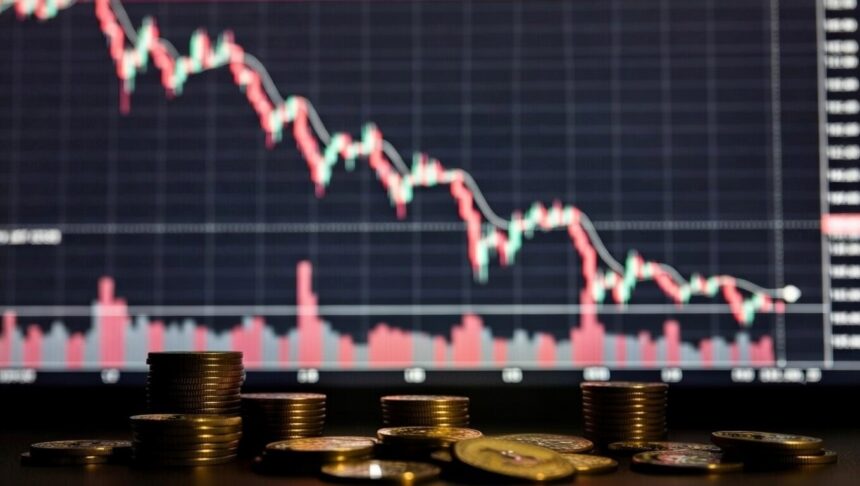
The Bitcoin (BTC) market has been depressed for three months, with its price reaching an all-time high of $126,000 (USD). With the current price hovering around $90,000, the focus of analysis has shifted to the central question of who is driving this decline.
According to a recent report by Novaque Research, created from on-chain data provided by the CryptoQuant platform, selling pressure Not significantly derived from a single group of participants.
“The recent Bitcoin selloff has reignited important questions for investors. desk “Institutionally, is this a capitulation of miners, a mass sale of whales, or something more subtle?” he points out, but on this point the flow data points to a controlled early extinguishment of the bear market, rather than a chaotic liquidation.
After a violent surrender, the miners calmed down
One of the first focuses of the research is on the behavior of miners. To assess this, you can look at the Minor Position Index (MPI). This is a metric that measures whether miners are selling more or less Bitcoin compared to the annual average.
MPI rose to +2 to +3 levels several times during the highs of $110,000 and $120,000. This “indicates that miners have aggressively monetized their inventory at that level,” Novaque Research explains. but, There is a clear change in behavior after that..
Since the fourth quarter, MPI has compressed to about 0 and has recently been near -1.5. This means that “miners are currently selling below their annual average,” reducing selling pressure on the market.
This view is supported by observing the aggregate net flows of miners. “There was a significant drop-off until mid-2025, but after that the number of impressions is much lower, close to zero,” the analytics firm highlighted. The conclusion is simple: “Miners are already supplying the market. They are not marginal forced sellers at this stage.”
Stocks on exchanges are tight
Another important element of the analysis is the evolution of the exchange’s Bitcoin reserves. This is a metric used to evaluate the supply available for sale. According to on-chain data, The trend is still decreasing..
This suggests that even after the adjustment, “exchange structural spot inventories remain tight,” Novak Research said. This occurs even though net flows have shifted from persistent outflows to occasional small inflows.
In his opinion, this action “suggests some kind of re-exposure and hedging strategy, but not a wholesale exit from the market in general.”
Active whales with moderate distribution
The behavior of whales, i.e. the addresses of investors with more than 1,000 BTC, is also one of the key points of analysis. This can be seen by the percentage of these holders on the exchange. This measures the proportion of large deposits in the total.
This indicator is close to the upper end of its recent range, 0.4 to 0.6. In other words, Whales monopolize small inflows to exchanges.
“Absolute reserves are well below previous peaks,” but this means the observed behavior corresponds to “a tactical, price-sensitive distribution rather than a complete capitulation,” he elaborates.
In conclusion, “miners who had already reduced their risk and opportunistic whales are selling in a bull market,” Novaque Research summarizes. However, the pressure is not as great as stock exchanges remain tight.
“This combination indicates an erratic rebound due to strong supply pressure, rather than a liquidity vacuum due to miner selling typically seen in the early stages of a bear market,” he cautioned.
In this sense, Sales for actors such as Whales and Miners are a concern, although to a lesser extent. Because they are following a huge surrender on their part. If these parties do not resume their accumulation strategies, the potential for price declines becomes more severe.
However, other experts remain optimistic about Bitcoin unless selling pressure increases. As reported by CriptoNoticias, one of the factors driving such expectations is that currencies typically appreciate after a sustained rally in gold like the one we are currently seeing.
(Tag Translation) Analysis and Research


