

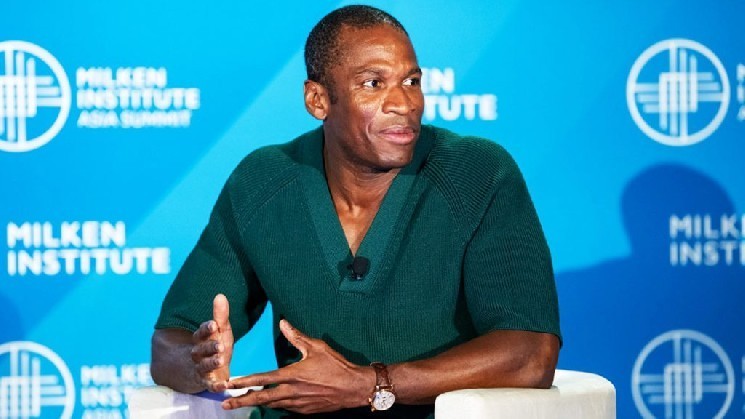
BitMEX co-founder and crypto investor Arthur Hayes has laid out a new scenario that could trigger Bitcoin’s next rally.
According to Hayes, the Fed’s actions to bail out Japan’s troubled market, presented as “currency intervention,” could push up the price of Bitcoin.
In his latest assessment, Hayes argued that the Fed could print dollars, buy Japanese yen, and use that yen to buy Japanese government bonds (JGBs). He said such measures would expand the Fed’s balance sheet and amount to, in effect, a new round of quantitative easing.
“Bitcoin will rise as the Fed’s balance sheet grows,” Hayes said, criticizing those who try to time the price with short-term, highly leveraged trades, while arguing that over the long term, the value of Bitcoin and “high-quality altcoins” will rise mechanically relative to fiat currencies. Hayes previously predicted that Bitcoin would be “squeezing” towards above $110,000.
While gold and commodity prices have soared to record highs, Bitcoin has hovered around $90,000 despite Trump’s return to the White House and pressure on the Fed to raise interest rates, Hayes said. He interpreted the situation as a potential trigger for the Fed to take action, and suggested Japan’s bond market crisis could be a contributing factor. “Bitcoin needs healthy financial expansion to break out of this stagnation,” he said.
Hayes said Japan’s financial markets are sounding the alarm. The sharp depreciation of the yen against the dollar and the rapid rise in Japanese government bond yields indicate a decline in investor confidence. Hayes points out that because Japan is a net importer of energy, the weaker yen is also contributing to inflation, and argues that falling bond prices are causing large unrealized losses for the Bank of Japan.
Hayes noted that Japan holds about $2.4 trillion in U.S. debt. He said if Japanese government bond yields continue to rise, Japan could be forced to sell U.S. bonds to buy its own bonds, increasing U.S. borrowing costs. He noted that this is a scenario the Trump administration would like to avoid.
U.S. Treasury Secretary Scott Bessent could begin the process through the Exchange Stability Fund (ESF), which allows foreign exchange market intervention without requiring Congressional approval, Hayes said. But Hayes pointed out that the Treasury Department does not have the authority to print money, and said the ultimate decision-maker would be the Fed.
*This is not investment advice.


