

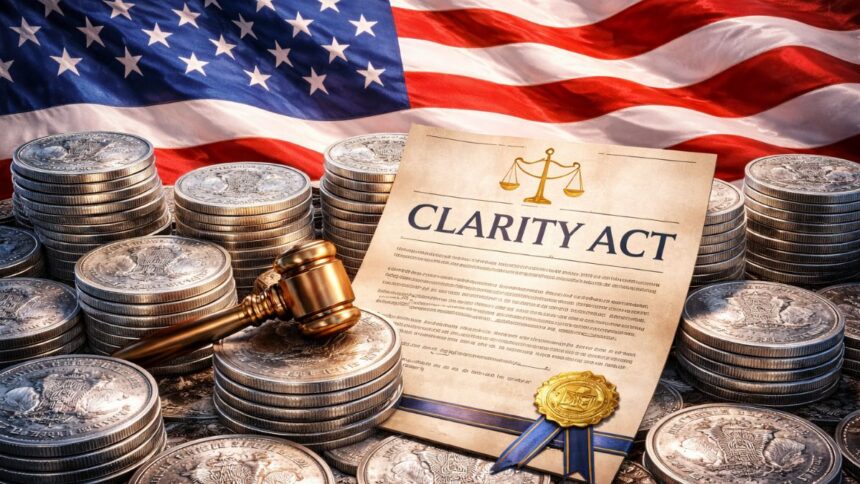
Patrick Witt, executive director of President Donald Trump’s Digital Assets Advisory Council, said in a Feb. 13 interview that the Clarity Act project is partially moving forward in the Senate, stressing that the legislation would protect the industry from “a future Gary Gensler or, God forbid, Elizabeth Warren (along with) Treasury Secretary.”
The mention of Gary Gensler is no coincidence. The former head of the Securities and Exchange Commission (SEC) was recognized by many in the digital asset ecosystem as: aggressive regulatorafter filing lawsuits against exchanges and projects under the claim that a large number of crypto assets are unregistered securities, as explained by CriptoNoticias.
For Witt, clear legislation would prevent future authorities from doing so. Reinterpret the legal framework and apply similar measures.
The Clarity Act, on the other hand, is a US bill that aims to: Precise rules from institutions regulating each market segment (SEC or Commodity Futures Trading Commission, CFTC) in addition to setting guidelines for stablecoins and giving protection to developers.
Witt noted that Congress passed the House version last year. The Senate is now working on its own, he asserted.
Witt said the Agriculture Committee portion (related to the CFTC) is already moving forward, but the Banking Committee portion (related to the SEC) has remained on hold since the vote was postponed in January.
Witt says that once that obstacle is overcome, Both versions need to be adjusted before final vote.
In this regard, he claimed that the project includes the following: “Clear jurisdiction between the SEC and the CFTC” And, in his opinion, essential regulatory protections to bring stability to the industry in the face of future political changes.
Pressure from political windows and banks
On February 4, CriptoNoticias reported that Witt had assured President Donald Trump that he would sign the Clarity Act on April 3, but the adviser warned about the timing of the legislation: “We are in a race against time. There is a window here, but it will close soon.”.
Regarding stablecoins, he explained that this discussion involves both retail and institutional banks.
As stablecoins backed by Treasury bills increasingly add liquidity to the Treasury market, major banks are realizing what an opportunity this is.
Patrick Witt, White House Cryptocurrency Advisor.
After the interview, Witt reinforced his position on X by saying: “There are trillions of dollars of institutional investors waiting to get into this space.. “Regulatory clarity is key,” he argued, which would make laws like the Clarity Act a decisive factor in attracting huge investments into the crypto market.
Similarly, he noted that the traditional financial sector perceives the sector’s growth as a disruptive force, saying, “Cryptocurrency is a new product and somewhat of a threat to community banks, global systemic banks, and large corporations.”
The future of the Transparency Act will depend on Congress’ ability to reach an agreement before the political “window” that Witt referred to closes.
For now, The project is under negotiation in the Senate.Meanwhile, the White House maintains that the regulatory framework is key to strengthening the development of the U.S. cryptocurrency market.
(Tag Translate) Cryptocurrency


