

A meeting of representatives from the banking and cryptocurrency industries held at the White House on February 2 revealed deep-rooted differences between the two, particularly regarding the rewards and interest payments that stablecoins offer.
Far from consolidating positions, this event emphasized the following points: There is an urgent need to find common ground by the end of February.a self-imposed deadline by the Trump administration to advance regulation of digital assets.
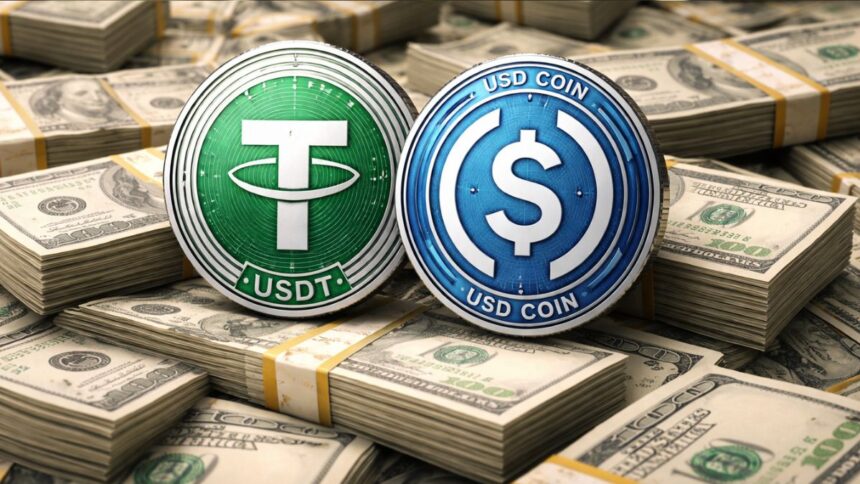
There is currently no consensus on the rewards that crypto companies should offer to users. Manage your USDC or USDT stablecoinsas reported by CriptoNoticias shortly after the meeting. This impasse not only postpones regulatory clarity, but also highlights the philosophical gap between two financial worlds with seemingly contradictory visions.
Patrick Witt, executive director of the Trump administration’s Presidential Advisory Council on Digital Assets, expected to lead the conversation and chart a path toward cooperation. He called the session “constructive, fact-based and solutions-focused.”
However, there are voices of dissatisfaction among virtual currency companies. Industry insiders pointed to the strictness of bank officials, who said: They avoided discussing concrete solutionsHe reiterated the need for a regulatory framework that prioritizes “supporting local lending and the safety and soundness of the financial system.”
Banks veto rewarded stablecoins
Major banking associations, including the American Bankers Association (ABA) and the Bank Policy Institute (BPI), issued a statement after the meeting saying: We reaffirmed our uncompromising stance..
Their central argument is that stablecoin returns represent an “existential threat” to their business model. They argue that these rewards allow crypto platforms to directly compete with traditional bank deposits. In his opinion, it could divert liquidity from the system, resulting in Banks’ ability to lend to the real economy is impaired.
They also present research warning that hundreds of billions of dollars in deposits and loans could be curtailed if restrictions similar to those applied to banking operations are not applied.
The bank added that although the law explicitly prohibits direct payment of fees, the digital asset industry has found shortcuts to do so through exchanges and other cryptocurrency platforms.
Cryptocurrency companies defend their positions
In the other corner, the cryptocurrency industry is passionately defending stablecoin rewards such as: A manifestation of superior efficiency What these digital assets offer.
Stablecoin rewards are not a threat to banking. This proves that blockchain infrastructure can provide better capital efficiency. The real question is whether to build it in the U.S. with proper oversight or move it overseas.
Mike Belshe, CEO of BitGo.
Executives from Coinbase and other crypto sector companies who attended the meeting emphasized that banning stablecoin rewards is an “anti-competitive” measure that will only serve to scare away innovation. They suggest that capital will move to other more flexible jurisdictions, such as Singapore, where managed returns are a reality.
There is a widespread false narrative that GENIUS Act stablecoins pose systemic risks. They are structured like the money market funds that failed in 2008 and were hit by the coronavirus crisis in 2020, and it is argued that we should expect the same to happen in future periods of stress. However, it is quite the opposite, and stablecoins are the future of refuge.
Faryar Shirzad, Chief Policy Officer at Coinbase, said:
Crypto industry announces ban on third-party compensation This is contrary to the original intent of the GENIUS law. This prohibited direct remuneration by stablecoin issuers, but it was clearly maintained by design. Possible incentives from the platform and affiliates. This comes as a negotiated commitment to increase competition in digital payments.
Groups such as the Blockchain Association and Coinbase argue that extending the bank’s proposed ban would harm consumers by crowding out traditional providers, reducing real competition in the payments ecosystem, and limiting more attractive options to low-performing bank deposits.
At the geopolitical level, the industry warns that tough US restrictions could give a decisive advantage to international competitors, especially China, which has begun offering benefits to accelerate mass adoption of the digital yuan (e-CNY).
Shirzad and other executives said this could erode the dollar’s hegemony in digital assets. Accelerating global tokenization outside of US jurisdictionDespite currently holding a dominant position in stablecoins such as USDC and USDT, the United States is being left behind in the race for the future of digital money.
The regulatory clock is ticking
This collision of narratives focused on maintaining the status quo and narratives focused on the innovations that digital assets offer places users in an expected position. Millions of people, stablecoin owners, They can benefit from compensation ranging from 3% to 5% per year. That’s far higher than the interest rate on many traditional savings accounts.
However, this promise of high returns comes with regulatory uncertainty and inherent risks if a balance is not struck between protecting consumers and fostering innovation.
Despite the apparent impasse, there are glimmers of hope for a resolution, with pressure coming from the White House to reach a compromise by the end of the month.
If no agreement is reached to advance the legislative proposal, it will shape it. The Senate could paralyze the structure of the cryptocurrency market In an election year. These facts result in delays in legal certainty and the risk of flight of activities related to digital assets outside the United States.
The February 2nd meeting was far from the end. The dead end became even more obvious. This will unite and separate these two financial giants represented by the crypto industry and the traditional banking sector. Therefore, March 2026 will be crucial in determining whether presidential mediation can bridge the gap, or whether the rift between crypto companies and banks will deepen further.
(Tag translation) Cryptocurrency


