

Cryptocurrency trading terminal Nexa, formerly known as InsiDeX, is shutting down just one year after being acquired by decentralized exchange Bluefin due to what the company calls “very low” trading volume on the Sui blockchain.
In a Feb. 10 post to X, the team said that “only a few coins are seeing decent activity” on Sui, adding that there are few real opportunities left for traders and that it was built for high-speed trading and active markets, conditions that have not appeared before.
“We are truly saddened to shut down Nexa, as we were successful in building a product that was once actually the most used trading suite on Sui. Unfortunately, the market Nexa built never really materialized,” the team wrote.
The closure follows months in which Nexa has been promoting points-based rewards and other engagement schemes, but its campaigns were silent before the closure.
The move highlights widespread weaknesses across Sui’s DeFi ecosystem. As of February 12, 2026, Sui’s total value locked (TVL) was approximately $561 million, down approximately 78% from its peak of $2.6 billion in October 2025, according to DefiLlama data.
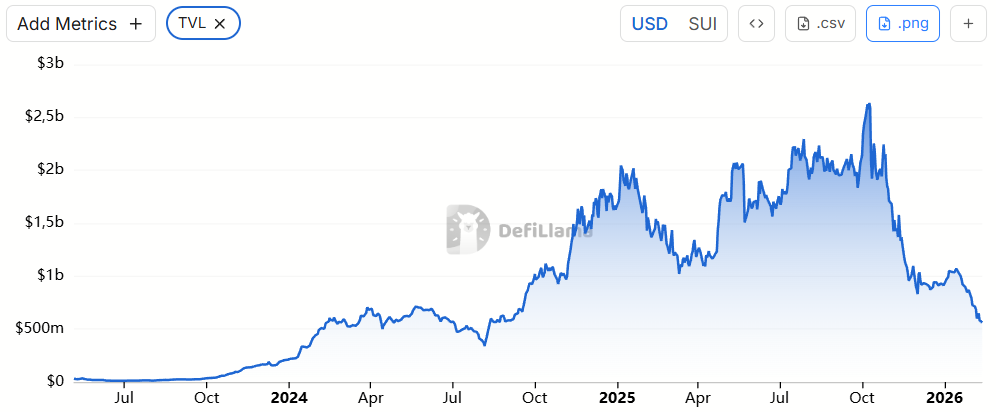
Sui TVL – DefiLlama
DEX trading volume also declined, dropping by about 70% from $22.3 billion in October to about $6.8 billion in January. Sui’s native token SUI has also fallen about 50% to $0.93 in the last month, according to data from CoinGecko.
Additionally, the start of 2026 was difficult for the Sui blockchain as it suffered a 6-hour outage, halting block production. The team later explained that the problem was a bug in the network’s consensus system, which led to disagreements over data between validators and caused transactions to be temporarily frozen.
But Sui isn’t the only network facing challenges amid declining liquidity, with similar stories playing out at rival chains like Aptos. As The Defiant reported earlier this month, Merkle Trade, the largest perpetual DEX by volume on Aptos, announced it would scale back its operations despite processing nearly $30 billion in cumulative trades as network-wide TVL also continues to decline.


