

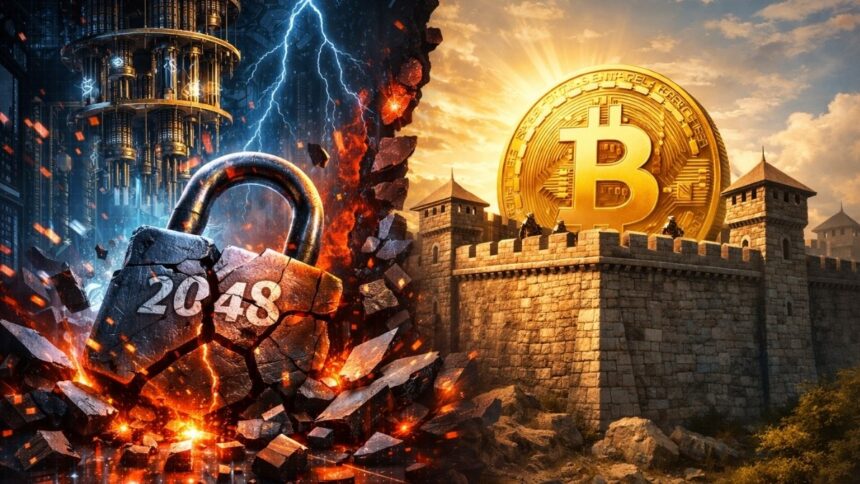
The Iceberg Quantum company has announced a quantum architecture that can compromise RSA-2048 encryption with 1/10th less hardware.
The RSA-2048 protocol currently protects the integrity of most communications on the Internet. Web servers use this standard to establish connections Secure security using HTTPS protocol. This technology also secures access to banking portals and international financial transactions. Electronic passport systems and legal digital signatures also rely on this cryptographic pillar.
A study published on February 12 details how to optimize this process using a model called Pinnacle. this system Reduces the need for quantum resources Perform bulk decryption tasks. According to the study, this innovation could allow cryptography to be solved using 10 times less hardware than estimated. The team claims to have factorized an RSA-2048 encryption key and demonstrated the feasibility of this new architecture, ensuring that only 100,000 physical qubits are required.
In this sense, quantum architecture refers to a way of building hardware rather than a new type of decoding algorithm.
Previously, scientists estimated that cracking an RSA key would require between 2 million and 20 million qubits. The Pinnacle architecture uses a quantum low-density parity check (QLDPC) code to accomplish this technological feat. This method optimizes error handling According to the published paper, it can lead to significant savings in quantum memory. Advances in technology bring us closer to building machines capable of breaching global digital security.
The technology industry currently faces compressed timelines for updating defenses against quantum attacks. These discoveries will accelerate the necessary transition to new post-quantum cryptographic standards.
How quantum advances will impact Bitcoin
Bitcoin does not use RSA keys to secure users’ funds on the blockchain. of The network is based on elliptic curve cryptography It complies with a standard called secp256k1. This mathematical design provides a different security structure than those used by banks and websites. Therefore, Iceberg Quantum’s technological advances have no direct impact on the network.
Hacking a Bitcoin key requires approximately 10 million physical qubits using currently known technology. According to new research, this number is equivalent to 100 times the hardware required to break RSA encryption. Bitcoin Demonstrates Greater Resilience Considering the hardware optimizations presented by the researchers.
However, the urgency of post-quantum protection has already led developers to propose improvements to the protocols that will serve as protection against ultimate threats. One of these proposals is BIP-360, reported by CriptoNoticias. It proposes creating a new type of address in Bitcoin that can hide its public address even after a payment has been made.


