


Bitcoin is on track to match the joint record for six consecutive months of losses, which was set only once between August 2018 and January 2019, according to data from Coinglass.
Currently at $66,600, BTC needs to rise just over 1% over the next 15 hours to close above the $67,300 level at the beginning of the month.
Bitcoin fell 4% in October, 18% in November, and 3% in December, according to data from Coinglass. The downward trend continues through 2026, with prices falling 10% in January, 15% in February, and now about 1% in March.
The last time Bitcoin recorded a six-month straight decline was between August 2018 and January 2019. That period was followed by five consecutive months of gains, providing a modest historical precedent for a potential recovery for Bitcoin bulls.
Downside risks still remain
However, unlike the 2019 experience, technical and macro conditions suggest that pressure may continue.
According to Glassnode data, Bitcoin remains above key long-term support levels, including the 200-week moving average of $59,268 and realized price (based on average on-chain costs) of $54,177. In previous bear markets, Bitcoin typically fell below both levels and stayed there for long periods of time.
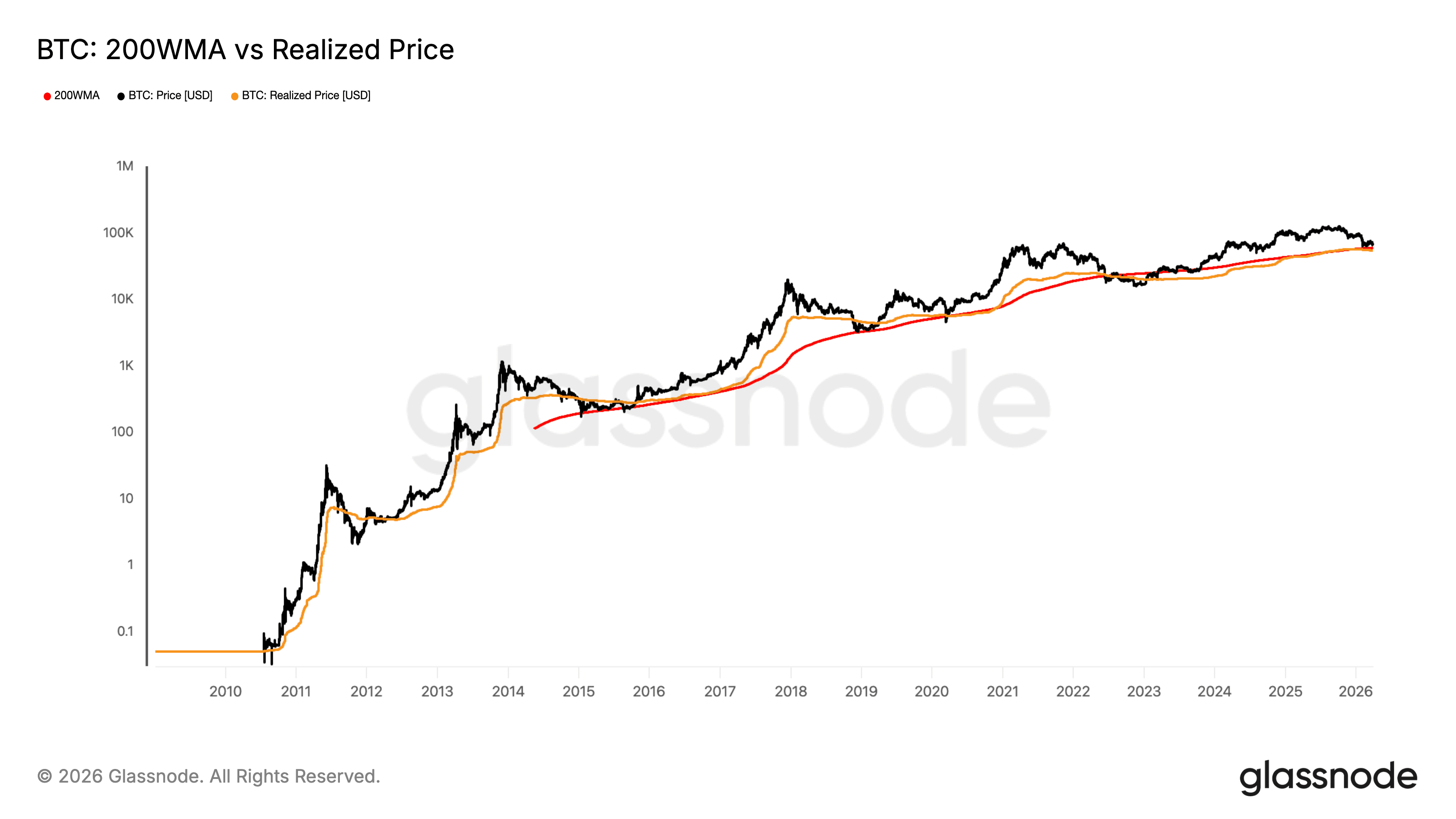
The macro environment also continues to be a headwind. Ongoing conflict in the Middle East has kept oil prices above $100 a barrel for more than a month, complicating central bank policy decisions on whether to cut interest rates or tighten further. At the same time, new concerns about the risks of quantum computing have added further uncertainty.
One potential bright spot is that Bitcoin has rallied slightly since the outbreak of the Middle East conflict, suggesting some resilience despite the broader risk-off environment.


