

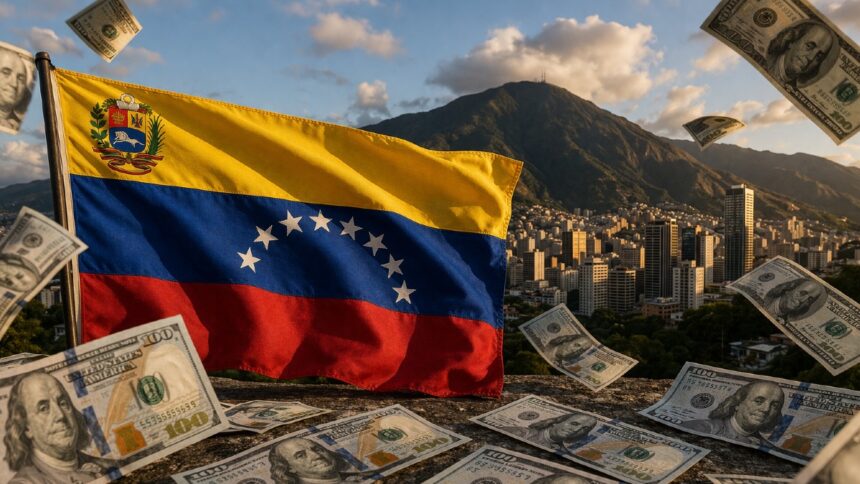
The debate over the formal adoption of the US dollar as legal tender in Venezuela has resurfaced. Economist Asdrubal Oliveros says official dollarization of Venezuela’s economy is a potential possibility and should not be ruled out, given the critical need to halt decades of financial instability and loss of purchasing power.
For Oliveros, a proposal to formally dollarize the country emerges After more than 40 years of high inflation and the inability of the authorities to maintain the value of the bolivar. Oliveros argues that the great advantage of this foreign currency (in bank and electronic form) is its ability to quickly lower and stabilize prices, a sensitive issue for national dynamics.
“I don’t think it’s something that can be decided at this point, but it’s something that can’t be ruled out in the future,” he said. In his opinion, probably within the next few months Further signs are emerging that suggest a decision on this issue.
However, Oliveros warned that this would be difficult to reverse and would reduce the competitiveness of manufacturing and industrial sectors in the medium term.
It is important to weigh the two, and for most Venezuelans, being able to regain purchasing power and having confidence in inflation is likely more important than competitiveness. Therefore, this debate is far from over, and in the coming months we are likely to see more news and signals suggesting discussion and decisions on this issue. You have to be careful.
Asdrubal Oliveros, economist.
Despite Oliveros’ analysis, other experts believe the measures are insufficient without fundamental changes. Analyst Daniel Arees told CriptoNoticias in early March that any economic measures would amount to little more than “cold water” unless there is “reinstitutionalization of the country and true independence of power.”
Arraez argues that official dollarization does not resolve structural distortions such as high prices based on regional standards and institutional mistrust. It further warned that capital flows would continue to be restricted under the current system. “The dollar will continue to go through the central bank, and the central bank will allocate the amount of dollars circulating in the market,” he argued.
Although the political debate focuses on the US currency, local markets have already adopted the dollar de facto. Since 2018, the Venezuelan economy (albeit on the consumer side) It is already being handled in that foreign currency. Additionally, many prices for goods and services in the country are charged in greenbacks for reference.
Meanwhile, the use of the dollar-pegged USD Tether (USDT) stablecoin has also increased sharply in Venezuela. This was to facilitate cross-border business, internal trade, and a safe place of value.
(Tag translation) Cryptocurrency


