

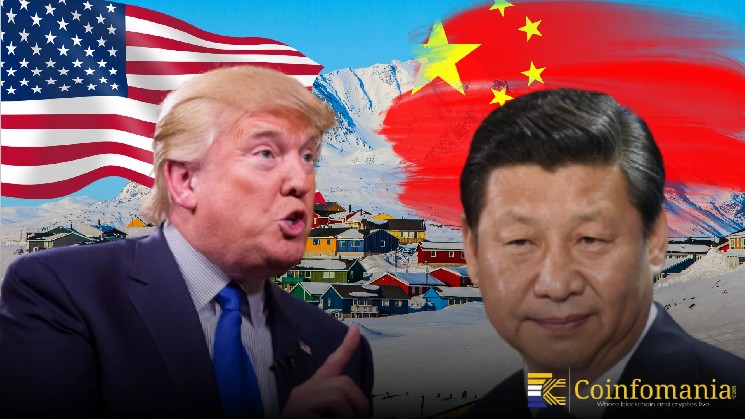
U.S. trade tensions have flared up again after the Chinese government publicly criticized U.S. tariff threats targeting Europe. The remarks followed comments related to Greenland’s strategic importance. Chinese officials have warned that trade coercion will destabilize global markets and undermine cooperation. The sharp reaction signals an increase in geopolitical frictions that go beyond bilateral disputes.
The conflict adds a new layer to already fragile global trade relations. The threat of US tariffs aimed at Europe has raised concerns across Asia and Europe. China called the move unilateral pressure that undermines international norms. Officials urged major economies to avoid weaponizing their trade policies.
Greenland’s geopolitics is now at the center of this growing conflict. The Arctic region gains strategic value due to its resources and shipping routes. China views the threat of tariffs related to territorial influence as a dangerous precedent. This attitude reflects a broader anxiety about the power politics that shape economic policy.
Just in: 🇨🇳🇺🇸 China condemns President Trump’s tariff threat to Europe over Greenland – Nikkei Shimbun. pic.twitter.com/7sIy5gQqtn
— Whale Insider (@WhaleInsider) January 24, 2026
Escalating trade tensions extend beyond Washington and Beijing
Trade tensions between China and the US are no longer limited to bilateral disagreements. Beijing believes the U.S. government is using tariffs as leverage across the region. Europe faces pressure despite its independent policy framework. Chinese analysts have warned that this strategy risks disrupting global supply chains.
The threat of U.S. tariffs on Greenland has heightened concerns of economic retaliation. Trade experts say such tactics create uncertainty for exporters and investors. Markets are slow to react to unpredictable policy signals. China insists that cooperation yields better results than confrontation.
European leaders are also closely monitoring the situation. Many are concerned about collateral damage from disputes unrelated to Europe’s trade actions. China emphasizes that third parties should not be used as negotiating tools. The message reinforces Beijing’s call for stability and predictability.
Why Greenland became a strategic flashpoint
Greenland’s geopolitics is a major source of current tensions. The island has vast mineral resources and strategic access to the Arctic Circle. World powers are increasingly competing for influence in the region. China has made diplomatic and economic investments to expand its presence in the Arctic.
Washington views Greenland through a national security lens. Perceived challenges to U.S. influence provoke defensive responses. China considers the threat of tariffs related to territorial disputes to be excessive. Beijing insists that economic measures should not force geopolitical advantage.
As the Arctic ice melts, new trade routes open up. These routes reduce transit times between Asia and Europe. China considers this development to be crucial for future trade efficiency. Greenland’s geopolitics therefore directly intersects with the trade tensions between China and the United States.
China’s message to Europe and the world economy
China called on Europe to resist external economic pressure. Officials stressed that open markets benefit all participants. The threat of U.S. tariffs undermines trust among allies and partners. China positions itself as a champion of multilateral trade principles.
The Chinese government also warned of long-term consequences. Tariff expansion often leads to retaliation and lower growth. When major economies ignore consensus, world institutions suffer. Trade tensions between China and the US are already straining confidence across the market.
What this means for global trade stability
The trade tensions between China and the United States now reflect a broader systemic conflict. The threat of geopolitically related tariffs signals a shift away from economic logic. China argues that this trend risks long-term damage to the trade body. Stability requires restraint on the part of all great powers.
Greenland’s geopolitics exemplifies how strategic competition spills over into commerce. Economic tools now serve political purposes. China has warned that this approach undermines trust and cooperation. This warning resonates with countries that rely on predictable trade.
The coming months may test diplomatic resilience. Europe needs to balance alliance commitments with economic interests. China continues to oppose coercive trade measures. Amid heightened uncertainty, global markets await clarity.


