


Bitcoin ended the first quarter of 2026 with its weakest start in nearly a decade, posting a large double-digit loss.
The decline was Bitcoin’s worst first-quarter performance since 2018 and raises new concerns about the cryptocurrency’s near-term outlook.
Important points
- Bitcoin ended the first quarter of 2026 down 22%, its weakest start in nearly a decade.
- nevertheless $BTC It started the year at $87,500 but steadily declined, ending the quarter at $68,233.
- Escalating tensions in the Middle East put further pressure on Bitcoin prices throughout the quarter.
- Despite the current weakness, historical trends indicate that April is a generally bullish month for Bitcoin.
Bitcoin records worst first-quarter performance in eight years
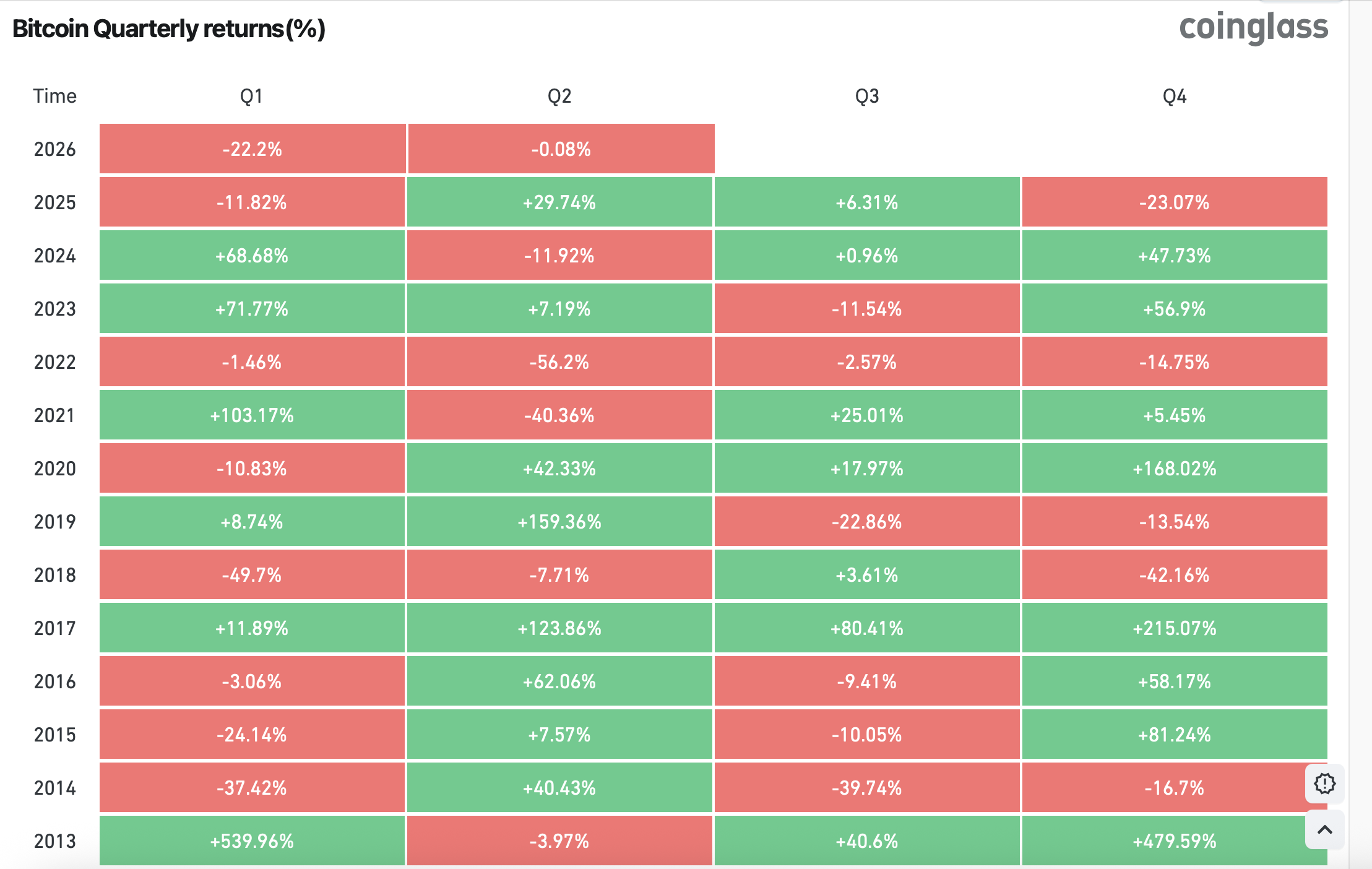
According to Coinglass data, Bitcoin fell 22% in the first quarter of 2026, the steepest drop for a first quarter since 2018, when it plunged nearly 49.7%. By way of background, Bitcoin has had mixed quarterly performance since 2018.
The asset rose 8.74% in 2019, fell 10.83% in 2020, and rose 103% in 2021. It then declined 1.46% in 2022 before rebounding strongly with gains of 71% and 68% in 2023 and 2024, respectively.
However, the momentum weakened again in 2025 with a decline of 11.82%, and an even larger decline of 22.2% was recorded in the first quarter of 2026.
Middle East war will affect Bitcoin price in Q1 2026
Overall, the economic downturn reflects a rocky start to the year caused by increased volatility and changing investor sentiment. Initially, Bitcoin showed strength, rising from $87,500 to nearly $95,000 at the beginning of the quarter.
However, it soon reversed course and fell steadily, dropping to $60,000 on February 6th. The price briefly recovered to around $70,000 in the second half of the month, but bearish pressure returned due to geopolitical tensions in the Middle East following the assassination of Iranian Supreme Leader Ali Khamenei, and the price fell to $63,000.
Meanwhile, the continuation of the conflict further weighed on Bitcoin throughout March, causing sharp price fluctuations. As a result, assets ended the quarter at $68,233, locking in a 22% loss.
$BTC see fresh dips
Moreover, these geopolitical tensions continued into the second quarter. Bitcoin faced fresh selling pressure yesterday after US President Donald Trump signaled a shift from previous peace efforts and hinted at further military action in the coming weeks.
Amid this rally, Bitcoin fell by 3.13% to $66,700 within 24 hours. At the same time, the broader cryptocurrency market slumped, with Ethereum, BNB, and XRP each recording losses of around 3% to 4%.
Despite the economic downturn, traders remain optimistic as Bitcoin historically had a strong April. According to data from Coinglass, Bitcoin gained an average of 11.94% in April, with a median monthly return of 5.04%. This suggests that the month has often brought positive momentum to this asset.
However, like last quarter, it remains unclear whether Bitcoin will end the month in the black, as the ongoing conflict in the Middle East could continue to weigh on Bitcoin’s performance.


