

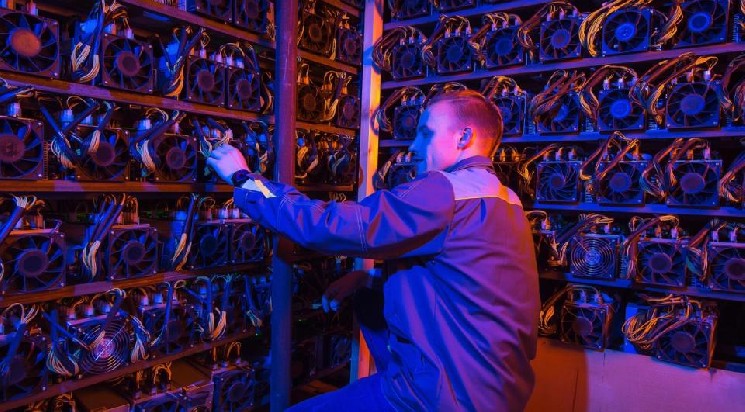
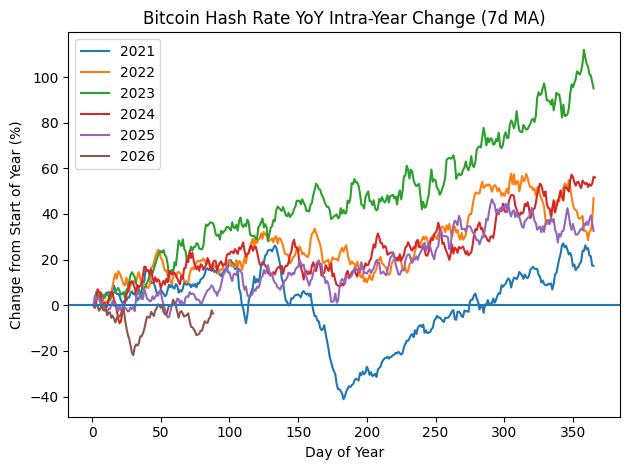
Bitcoin’s hashrate, the total computing power that secures the network, fell in the first quarter for the first time in six years. It is currently down about 4% since the beginning of the year, hovering around 1 zettahash per second (ZH/s).
Over the past five years, this speed has skyrocketed from around 100 exahashes per second (EH/s) to a 10x increase, according to data from Glassnode. Every year, this metric rose in the first quarter and ended the year with strong growth of more than 10%. In 2022, this number will almost double.
AI pivot
The changes in 2026 reflect the changing economic conditions of the Bitcoin mining sector as a whole. Production costs are close to $90,000 per Bitcoin, and the spot price is close to $67,000, so margins are negative. In response, many publicly traded miners are switching to artificial intelligence and high-performance computing infrastructure, where profits are higher and more predictable.
This transition will be financed by bond issuance and Bitcoin sales, reducing reinvestment in Bitcoin mining. As a result, hashrate growth will be more sensitive to crypto prices, and falling prices are likely to cause further declines as smaller players exit.
Decentralization may be more important than absolute size, although a reduction in hashrate may raise concerns about network security. Listed U.S. miners account for more than 40% of the world’s hashrate, and a decline in their influence could make the network more geographically dispersed. In that sense, current changes may ultimately support decentralization.
Despite the slowdown, CoinShares projects the hashrate to grow to around 1.8 ZH/s by the end of 2026, conditional on Bitcoin recovering towards $100,000.
read more: The end of Bitcoin “HODL”: Public miners focus on AI, signs of increased BTC sales


