



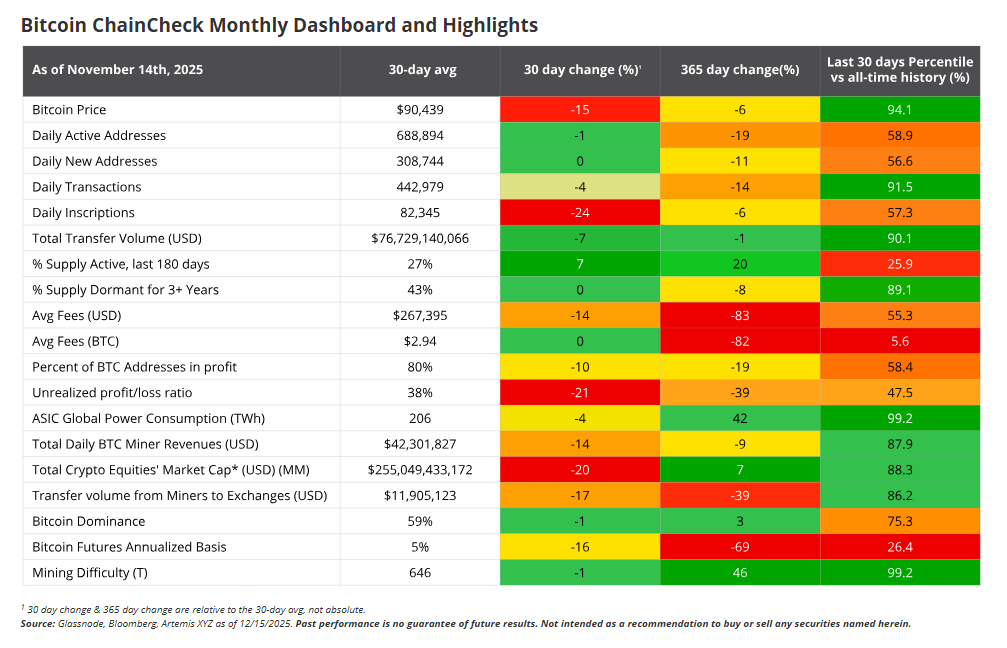
Bitcoin’s hashrate fell 4% in the month ending December 15, according to VanEck analysts. This move caught the attention of market observers, as past instances of hashrate declines often preceded price increases.
VanEck’s Matt Sigel and Patrick Bush point to a historical pattern. Over the past 30 days, when the hash rate has fallen, Bitcoin’s 90-day forward return has been positive 65% of the time, compared to 54% when the hash rate has risen. Numbers matter here, and traders treat them as part of the evidence mix.
Hashrate compression can signal recovery
Reports have shown that longer spears appear better to bulls. As hashrate decreases and remains low, recovery potential improves over a wider range. Over the 180 days following 90 days of negative hashrate growth, Bitcoin returned 77%, with an average gain of 72%.
Source: VanEck
The math is clear and the patterns are consistent enough for investors to take notice. Miner economics also adds to the story. The breakeven electricity price for the 2022 Bitmain S19 XP fell nearly 36%, from $0.12 per kilowatt-hour in December 2024 to $0.077 per kWh by mid-December. These changes are squeezing margins and forcing marginal operators to rethink their equipment.
Miner exit, market surveillance
Some capacity has left the network. VanEck linked the recent 4% decline to the closure of about 1.3 gigawatts of mining capacity in China. Analysts also warn that Bitcoin’s capacity could shrink due to increased demand for AI computing, a trend that could wipe out 10% of the network’s hashrate.
This could redistribute mining activities and focus operations where power and policy are aligned. At the same time, support for mining has not disappeared globally. Up to 13 countries are supporting mining activities, including Russia, Japan, France, El Salvador, Bhutan, Iran, UAE, Oman, Ethiopia, Argentina and Kenya, according to the report.
Prices and market conditions
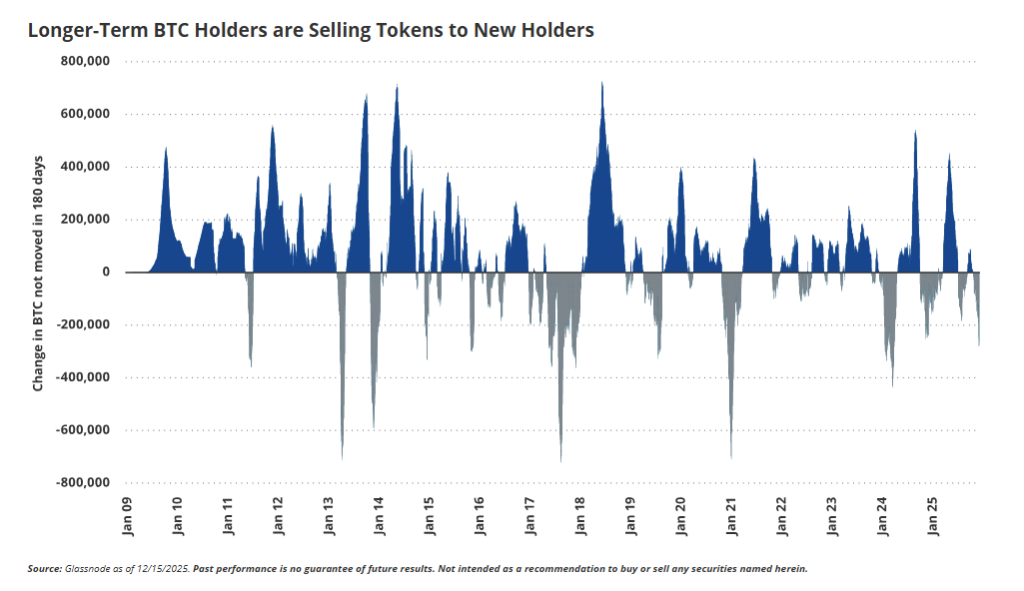
Bitcoin is trading near $88,600, down nearly 30% from its all-time high of $126,080 on October 6. Markets were quiet toward the end of the year and lack of liquidity can hide real momentum.
Source: VanEck
BTC was steadily monitored near $89,000 in recent reports and remained range-bound as traders weighed supply and demand signals. Moving between different assets is also important. Gold rose above $4,400 an ounce, while silver touched $69.44 an ounce, moves that some investors see as part of a broader safe-haven bid.
Data points suggest cautious optimism. Miners’ surrender has historically served as a countersignal. Miner exits are weakened, difficulty levels are adjusted, and surviving operators face less short-term selling pressure. That sequence could set the stage for price stabilization and profits over several months.
Featured image from Pixabay, chart from TradingView
editing process for focuses on providing thoroughly researched, accurate, and unbiased content. We adhere to strict sourcing standards, and each page is diligently reviewed by our team of top technology experts and seasoned editors. This process ensures the integrity, relevance, and value of the content for readers.


