



Bitcoin hashing power increased difficulty by about 15% on Friday, reaching just over 144 trillion, according to data from CoinWarz. The move reverses a 10% decline following widespread power outages in parts of the United States.
The numbers are blunt. During bad weather, the machine went quiet, then came back online, and the protocol rebalanced itself.
Winter Power Outage and Rebound
Foundry USA’s pool saw a significant increase in compute performance, dropping to around 198 EH/s before rising from around 400 EH/s. Many operators in affected areas will temporarily suspend operations during the winter storm to protect equipment and help the power grid, according to the report.
Some spaces hosting miners have been coordinated with utilities. Power is conserved. Power has been redirected.
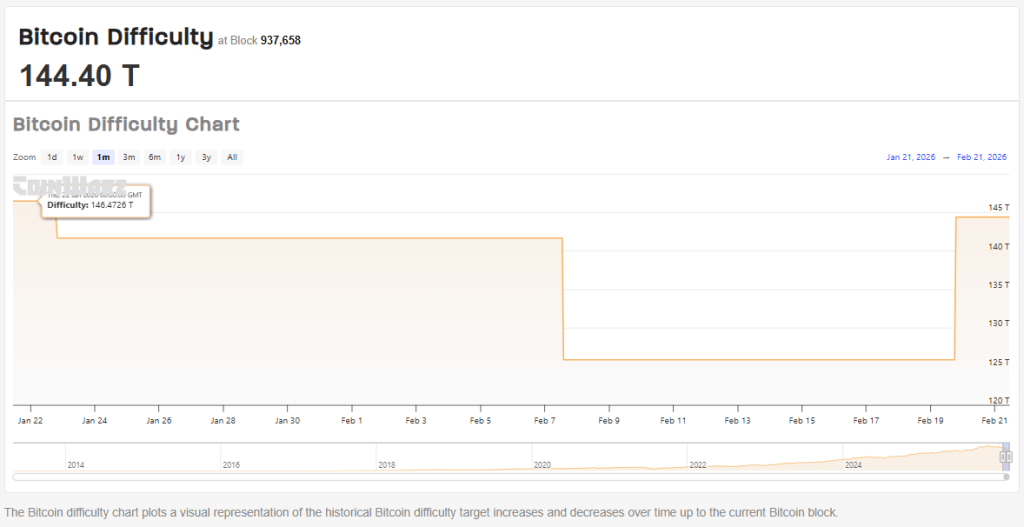
Bitcoin mining difficulty graph. Source: CoinWarz
Flexible power trading has changed the game
Several miners did more than just pause operations, according to the report. LM Funding America reported that it paid curtailment fees to help offset lost mining time by reducing machinery and sending contracted power back to the grid.
Canaan Inc. also said its U.S. site has engaged in demand response moves with local partners. These measures are one of the reasons why many facilities can be taken offline when the grid needs relief and restarted when conditions improve.
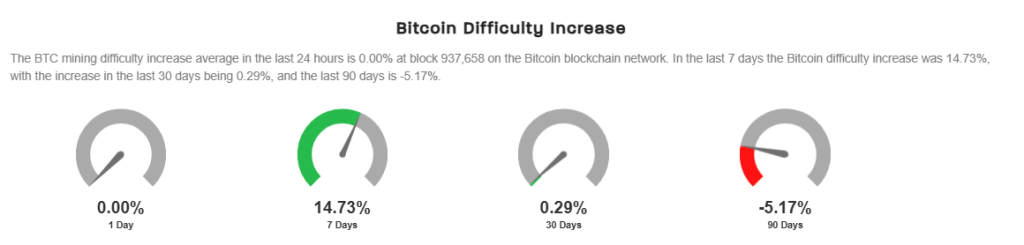
Source: CoinWarz
What Higher Difficulty Means
Bitcoin’s difficulty is designed to reset every 2,016 blocks to keep the average block time close to the 10-minute target. As more hash power is returned, the difficulty of the algorithm increases. This makes the network harder to attack and increases the work required to earn block rewards.
For miners, higher difficulty levels mean less Bitcoin earned per unit of compute, reducing margins for equipment that is older or has higher electricity bills.
Price action continues to be tied to the headlines.
Bitcoin traded near $68,000 as the market reacted to increased geopolitical tensions, particularly between the United States and Iran. The deal felt cautious. The volume is lighter. Prices rallied and then plateaued in headline-driven flows, showing investor sentiment remains swayed by global news.
At the same time, network indicators continue to move below the surface. This is a reminder that technical and macro factors can move in different directions.
The United States currently supplies a significant portion of global hash power, according to the Cambridge Center for Alternative Finance. This means that local events, weather, and power grid policies in the United States are critical to global security and the miner economy.
Some companies have begun to treat mining as a flexible load that can stabilize the grid in stressful situations, creating new revenue streams beyond pure block rewards.
Politics and market atmosphere
Politician statements and geopolitical movements add to the friction. Mentions of U.S. President Donald Trump in recent headlines have been associated with uneasy uncertainty in markets. Geopolitics can reduce risk appetite and keep cryptocurrency prices within a range.
The difficulty rebound itself did not trigger a large price increase. Instead, it reinforced the simple truth that while the protocol handled the shock, miners felt the pressure.
Featured image from Pexels, chart from TradingView
editing process for focuses on providing thoroughly researched, accurate, and unbiased content. We adhere to strict sourcing standards and each page undergoes diligent review by our team of top technology experts and seasoned editors. This process ensures the integrity, relevance, and value of the content for readers.


