

Panama’s Bitcoin (BTC) and cryptocurrency ecosystem is facing a crisis of trust arising from the conflict between digital adoption and an institutional system that does not yet know how to handle it. Commerce between people (peer-to-peer or P2P) is being consolidated as a tool for economic freedom, but for those who facilitate these transactions, their activities represent a minefield of legal and financial risks.
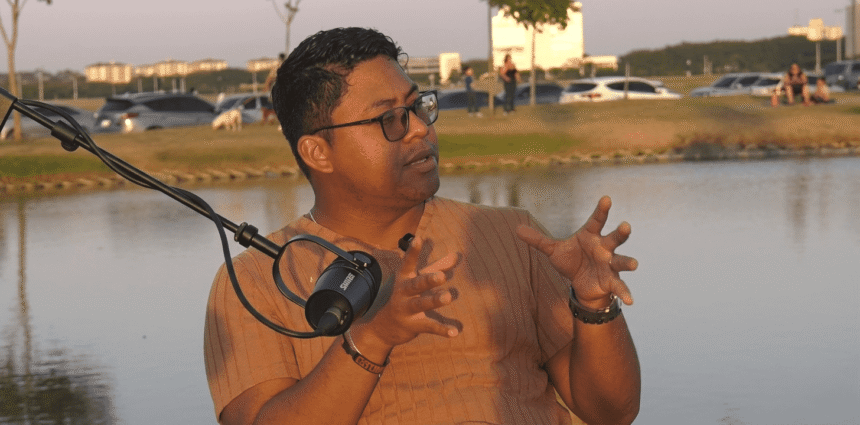
This reality was documented in a recent episode of the Digital and Blockchain Chamber of Commerce podcast, where Jonathan Arosemena, a merchant with five years of experience, stated: He spoke about the judicial ordeal he went through after being unwittingly used as a go-between by a criminal organization. International.
Their case reflects how the lack of specific regulation and lack of technical training by authorities is “hurting” legitimate operators.
Jonathan said in the podcast that he is a P2P trader on Binance. The company receives payments in dollars for sales of digital assets, primarily USDT (Tether), on its platform in a Panamanian bank account.
Now, he is making a strong case by pointing out this. Traders on P2P Bitcoin and cryptocurrency platforms are usually the ultimate victims of scams. He didn’t commit it. In his story, he describes how he was involved in an investigation by the Prosecutor’s Office regarding the execution of transactions derived from illegal funds obtained by third parties through identity theft.
I have had to go to the prosecutor’s office several times because I received money from victims of identity theft. The money they paid me was dirty money, but I had no way of knowing it at the time. I usually sold USDT through Binance P2P. In the end, the bank closed my account and the public prosecutor’s office called me as if I had participated in the fraud, when in reality I was the final recipient of the dirty money without knowing it.
Jonathan Arosemena.
“It’s the school I still pay tuition for.” “This was the most expensive path of my life,” he said after explaining that he lost nearly $50,000 between settlement payments, fines, and legal fees to avoid incarceration.
According to testimony, the central issue is that The inability of authorities to trace crimes to the real culprits. Given the complexity of tracking foreign criminal groups, the Panamanian judiciary typically chooses the simplest method. This makes local beneficiaries responsible for the funds.
“The prosecutor’s office could have done more. They had the intellectual property and all the data, but at the end of the day, it’s like I’m ‘X’ and I’m nobody. You took the money, you’re going to pay,” Jonathan lamented.
To date, neither the Panama Public Prosecutor’s Office nor Panama’s major banks have issued any official statement detailing the specific reasons behind the blocking and closure of accounts related to P2P cryptocurrency transactions.
Bank walls and regulatory “gray zones” against virtual currencies
Add to this scenario the defensive posture of traditional banks. Entities such as Banco General are chosen by users in specialized forums for their “zero tolerance” policy regarding links with crypto assets.
Banks operate in strict compliance with anti-money laundering regulations. They prefer to proactively close accounts rather than risk an audit. P2P operations.
There is implicit institutional support for this behavior. A technical document from the Panama Banking Supervision Authority (SBP) recommends tightening controls over virtual assets, as the country does not yet have a framework for virtual asset service providers (VASPs).
Without clear rules, traders can fall into a trap. Therefore, if we formalize it, The bank refused because it was “high risk.”; and if it operates in the shadows, it has no protection before the law.
For the trade union sector, the solution is not to ban, but to train. As highlighted in the conversation, the traceability offered by crypto networks and the collaboration that platforms like Binance offer authorities are tools that prosecutors’ offices have yet to fully exploit.
Until this knowledge gap is filled, P2P commerce in Panama will remain a legitimate activity in practice; It’s dangerous in court.
This regulatory context is also reflected in Panama’s supervised digital platforms. As CriptoNoticias recently reported, Zinli has sparked numerous complaints among crypto users for its proactive account blocking.
As of this writing, the company has not issued a detailed public statement, but it is clear that these actions are in response to the same atmosphere of caution that prevails in Panama’s financial system.
In the absence of a specific regulatory framework for crypto-assets, supervised entities choose to apply strict anti-money laundering and customer knowledge controls to reduce risk.
(Tag to translate) Cryptocurrency


