

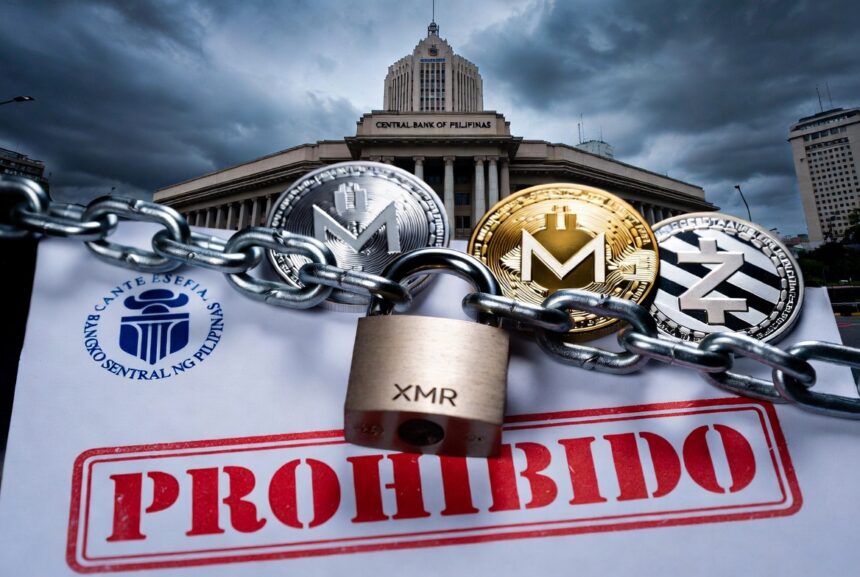
The Central Bank of the Philippines is stepping up its crackdown on privacy-first cryptocurrencies. Through Memorandum M-2026-023, the company prohibits licensed virtual asset service providers (VASPs) from listing or supporting “anonymity-enhancing virtual assets.” Among them, monero (XMR) and zcash (ZEC) stand out.
This measure primarily addresses the difficulties posed by these currencies. Compliant with international AML (anti-money laundering) standardsAccording to Philippine officials, CFT (Combating the Financing of Terrorism) and FATF travel rules.
Authorities argue that the opacity of cryptocurrencies such as Monero and Zcash makes it difficult to trace transactions and increases the risk of fraud.
The memorandum requires regulated exchanges to conduct rigorous due diligence before listing tokens, evaluating six key pillars such as issuer background, market maturity, transparency and liquidity, and ongoing monitoring with an obligation to list high-risk assets.
The Philippines, one of the most active crypto markets in Southeast Asia, aims to “balance innovation” with consumer protection and financial system integrity.
It is important for Filipino users to note the following: They can continue to hold these currencies through self-custody or P2P operationsHowever, it is no longer easy to buy and sell on local regulated platforms, reducing liquidity and accessibility.
The measure has reignited the debate between economic security and the right to privacy. Regulators have defended the ban as a necessary measure against organized crime and money laundering.
On the contrary, critics in the crypto community see this as an attack on financial privacy and a move towards full state surveillance, especially given the growth of CBDCs, as reported by CriptoNoticias since 2018. The central dilemma is: how far should states go in the name of security?
This decision is not an isolated one. In the last few months, Other regulators have taken similar steps. In January 2026, Dubai Financial Services Authority (DFSA) banned privacy cryptocurrencies on regulated platforms.
In the same month, the Financial Intelligence Unit of India (FIU-IND) ordered registered exchanges to delist Monero, Zcash, and other privacy coins for non-compliance with AML/CFT regulations. The Philippines will therefore join the reintroduced regulatory stream in 2026.
The BSP decision is Global trends towards privacy coins. Although intended to reduce risk, it also limits the options of those who value financial privacy. The Philippine case has once again brought to the fore the persistent conflict between state control and individual freedom in the digital asset ecosystem.
(Tag to translate) Cryptocurrency


