


Bitcoin spot exchange traded funds (ETFs) have fallen out of favor with investors.
As of June 9, the total net assets across the 11 spot ETFs were $77.58 billion. This is the same level as immediately after President Donald Trump won the presidential election in early November 2024.
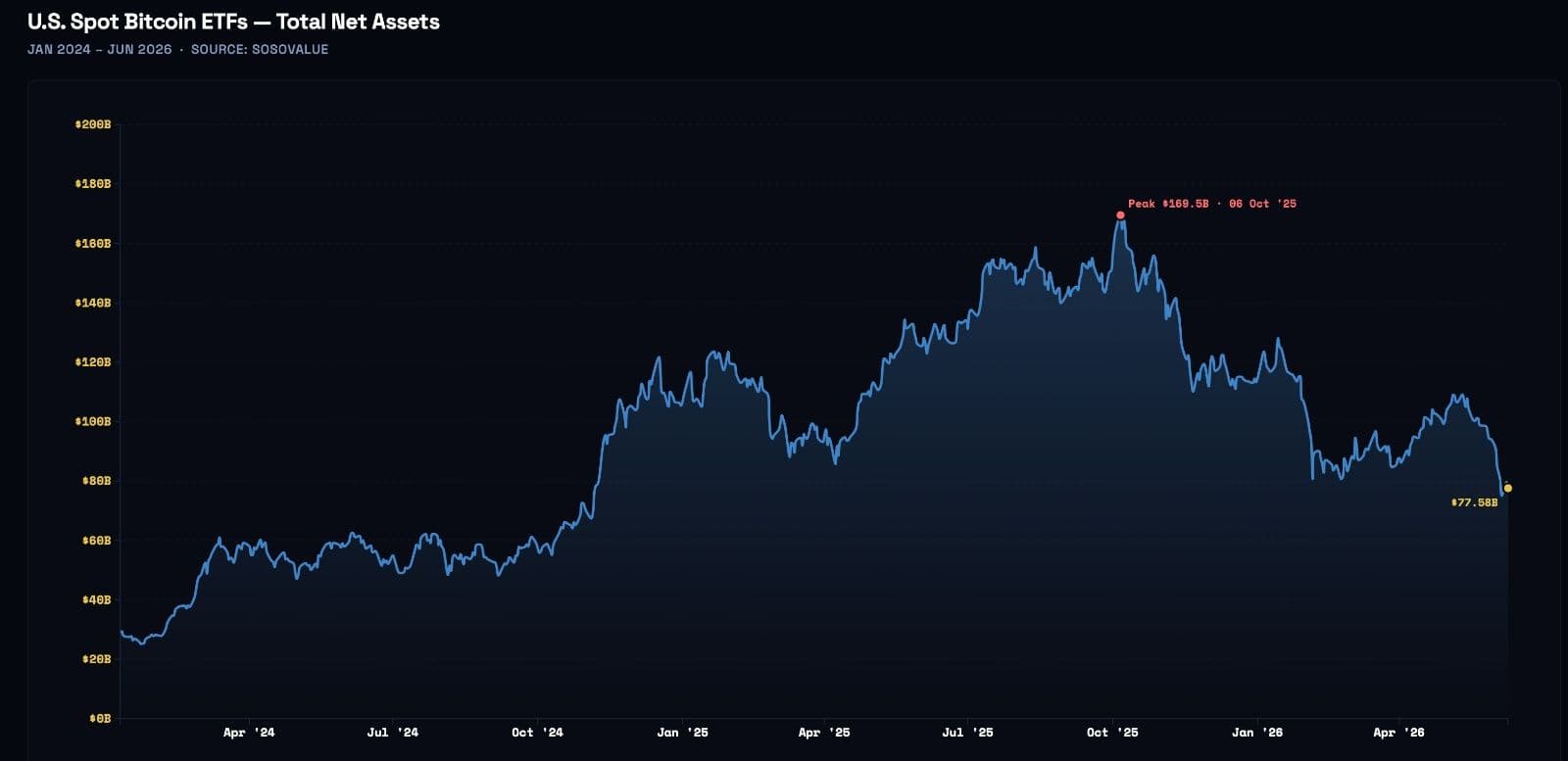
This doesn’t mean the ETF didn’t grow during the 19 months. Expectations that Trump will follow through on his campaign promise to loosen cryptocurrency regulations led to a rally in Bitcoin, along with ETF assets. His total net worth exceeded $90 billion within a week of his election victory, reaching an all-time high of $169.54 billion in October 2025.
But since then, those post-election gains have been wiped out, even as the Securities and Exchange Commission (SEC) dropped several high-profile enforcement actions under the Trump administration. The United States has established a strategic Bitcoin reserve, and furthermore, the Digital Asset Market Transparency Act is moving forward in Washington, which would establish jurisdictional boundaries between the SEC and CFTC and provide legal leverage to the industry.
In other words, even though the regulatory environment is more favorable than ever, the investor reaction is to exit and net assets are declining.
These ETFs recorded net outflows of more than $5 billion in four weeks. Cumulative net inflows since its inception peaked at $62.77 billion in October 2025, when Bitcoin hit its highest price, but have since declined by nearly $9 billion to $53.77 billion, the lowest level since August last year.
Analysts blame recent ETF outflows on macro factors, particularly rising inflation.
“ETF outflows reflect near-term pressures as inflation drives the Fed’s hawkish leanings, while on-chain supply tightening remains in place,” Binance Research said in a report shared with CoinDesk.
Ophelia Snyder, a market analyst and former co-founder of 21Shares, said AI and other trending areas in financial markets are driving money out of cryptocurrencies.
“ETFs are being drained as investors become increasingly distracted by other narratives competing for attention and capital, such as AI, SpaceX, and other high-profile growth stories. Markets continue to be volatile around geopolitics, the Strait of Hormuz, U.S. jobs data, inflation, and broader macroeconomic uncertainty,” he said in an email.


