

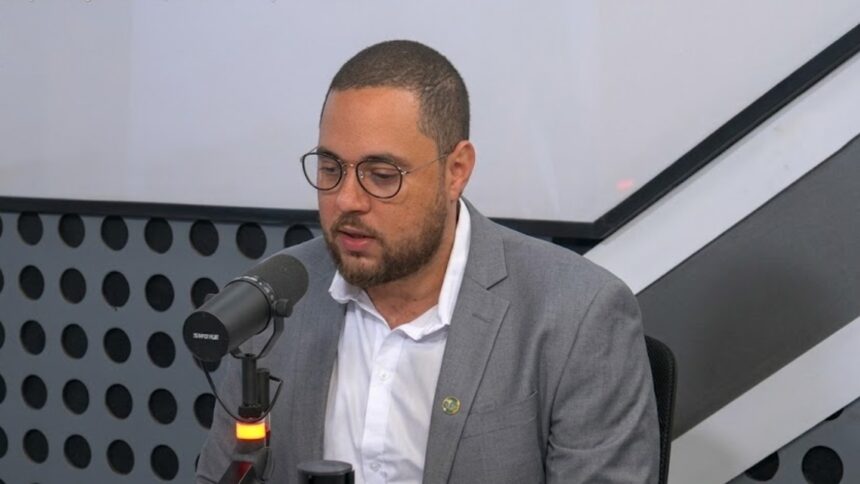
The Dominican Republic’s House of Representatives has made progress in recent days in debating a legislative proposal to regulate the use and trading of virtual currencies in the country.
And unlike policies applied in other countries in the region, such as El Salvador, the bill’s promoters stress that the initiative aims to establish a framework of transparency and traceability based on the principle of strict optionality, eliminating any commercial obligations to citizens.
Pedro Vital, founder of the Bitcoin Dominicana organization, said in a podcast on Tuesday, June 2, that the project directly seeks to circumvent the strategies being applied in the Central American country to increase the adoption of Bitcoin (BTC).
Thus, he recalled, in El Salvador, “They did what we use as an example of what not to do.” This seeks to facilitate the introduction of this field for which there is no training base for the public. In his words, El Salvador’s mistake was “imposing the situation without educating them.”
Vital detailed a scenario in El Salvador, where they created a centralized national wallet called Chivo, into which all citizens deposited $30 in BTC. In his opinion, the distribution strategy is: He placed capital “under the umbrella of ignorance.”
In view of this experience, the technical representative emphasized the position of the new Dominica project, stating that “this is voluntary.” “In other words, we don’t want the Dominican Republic to take on anything it doesn’t want in this proposal,” he warned.
The origins of this bill can be found in the academic work of Argenis García del Rosario, a judge and public law expert.
As reported by CriptoNoticias, after being formally introduced in Congress by Congressman Carlos de Pérez in March of this year, the document received support and technical advice from the Bitcoin Dominicana organization and was subsequently supplemented with a second parallel initiative in the House of Representatives. This sparked parliamentary debate in the committee responsible for the analysis.
Vice Prime Minister Carlos de Pérez, who joined the podcast, highlighted the evolution of the working group and the impact of expert advice on the Dominican Republic’s Congress.
“Above all there is a lot of dynamics and energy that Bitcoin Dominicana and Pedro Vital have injected into this project, and next Monday, June 8th, we will be holding a working session with about eight experts,” De Pérez declared.
The meeting, the second of its kind following this week’s meeting of members of the House of Commons Finance Committee, was attended by representatives of Tether Limited, the issuer of the market’s largest stablecoin USDT, the media reported.
The congressman also highlighted the international projections of the proposal, noting that “the Bitcoin Dominicana people have injected some parameters that we have not seen before” and that they have “placed our project and supported it” on a global platform for discussion about digital currencies.
The regulatory framework being developed does not alter the status of the Dominican peso as the sole legal tender as provided for in the Constitution of the Dominican Republic. In this regard, Mr. de Pérez emphasized that “virtual currencies are not intended to replace the Dominican peso, as the Constitution of the Republic states that the Dominican peso is legal tender.”
The lawmaker also equated the coexistence of digital currencies with the now common use of foreign currency in local commerce. Especially to pay rent, car purchases, and other belongings. The lawmaker argued that the situation with the peso “does not mean that the dollar, euro and other national currencies do not interact in our environment.”
Meanwhile, Mr. de Pérez stressed that despite the interest shown by members of Congress to learn, the project faces organized resistance from the Central Bank of the Dominican Republic. maintain an opposing position In the face of attempts to regulate digital assets.
But defenders of the law argue that the digital ecosystem already operates within the country’s economic reality and red tape is necessary. De Peres concluded that the current market “needs state support with regulations that are transparent and traceable and allow this digital ecosystem to continue to grow, because that is the reality.”
“It will continue to be done, even if it has to be done under the table,” he stressed.
(Tag Translate)Bitcoin (BTC)


