

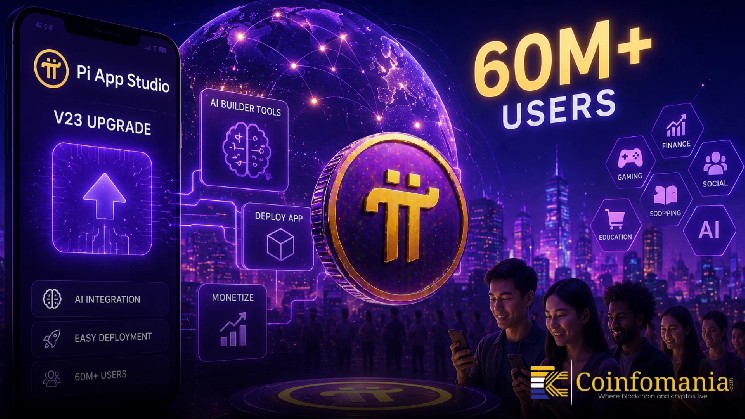
Pi Network is further pushing AI-powered app development after rolling out a major update to Pi App Studio. Shortly after, a complex V23 node upgrade entered its final deployment stage. Today’s latest Pi Network news centers around two major developments. One is the widespread migration of mainnet nodes to Protocol V23, and the other is new workflows that allow creators to connect to AI-generated apps. It integrates directly into Pi’s ecosystem of over 60 million passionate users.
Big kudos to the mainnet node operators who upgraded to v23.
Currently, most major nodes have been upgraded and the protocol will move to v23 soon.
This was one of the most difficult upgrades to date as it involved upgrading and optimizing multiple subsystems.
— Pi Network (@PiCoreTeam) May 20, 2026
This update positions Pi App Studio as a distribution layer for the growing “vibe coding” movement. Developers and non-technical creators can use AI tools to quickly build applications without traditional software engineering experience. At the time of writing, PI is trading around $0.1476, according to Pi Network Price 2026 data. It has fallen about 3.3% in the past 24 hours.
Pi Network completes one of its most difficult upgrades
According to the Pi Core team, most major mainnet node operators have now successfully upgraded to V23. The protocol is expected to be fully transitioned in the next phase. The migration was much more complex than previous upgrades because it required simultaneous infrastructure changes across multiple systems, including:
- Protocol 22 → 23
- Ubuntu 20 → 24
- PostgreSQL 12 → 16
This upgrade also included extensive internal data reprocessing. Additionally, subsystem optimizations are designed to improve node stability, scalability, and long-term infrastructure performance. Community developers describe V23 as a foundational step toward broader ecosystem functionality. This includes future smart contract deployment and decentralized application expansion.
Pi App Studio targets AI creators and indie developers
The bigger announcement focuses on the launch of Pi Network App Studio. Pi Network now allows creators to use external AI coding tools, including platforms like Claude Code, Replit, Cursor, Codex, and Lovable. The aim is to convert AI-generated apps directly into Pi apps through a simplified integration process.
Instead of manually rebuilding infrastructure, authors can reportedly use pre-built AI prompts that automatically integrate:
- Pi SDK support
- Pi sign-in system
- Wallet function
- Payment integration
- Compliance requirements
The Pi Core Team said the entire integration process can take as little as two minutes, depending on the complexity of the app. This move directly addresses one of the biggest issues facing AI-generated applications: distribution. While AI tools have made it much easier to create apps, attracting real users remains difficult for independent builders. Pi Network seeks to position its ecosystem as the missing connection between AI-generated products and an active user base.
Why Pi’s 60 million user base matters
Pi claims its ecosystem includes more than 60 million passionate pioneers. In addition to integrated payments, decentralized human infrastructure, KYC verification systems, SDKs, and platform-level monetization tools. This creates a potentially attractive environment for developers looking for instant user access rather than building audience infrastructure from scratch. The platform also believes that AI-generated applications can extend their utility across the Pi ecosystem itself. Additional activities are being created for wallets, payments and decentralized services.
Community reaction remains mixed
Despite the excitement surrounding the launch of Pi App Studio, community reaction remains divided. Supporters believe this update is a meaningful step toward real-world utility and developer adoption. However, critics continue to point out unresolved concerns regarding KYC approvals, delays in mainnet expectations, and long-term token value performance. Still, the combination of the V23 upgrade and AI-focused app distribution strategy signals a broader change in Pi Network’s roadmap. We are moving beyond mining mechanisms towards growing ecosystem infrastructure and applications.


