


The public Bitcoin mining sector is facing a massive structural identity crisis. For many years, the company’s strategy was simple. The plan was to buy millions of dollars of computer equipment, mine Bitcoin, and stack it on the balance sheet in order to generate long-term profits.
Now, that rigid infrastructure model is crumbling under its own weight. Mathematical reality is cruel. The global competition to mine Bitcoin’s total network hashrate has already reached an all-time high of 1.25 Zh/s in the second half of 2025, and remains at a high level of 958.01 EH/s in the first half of 2026.
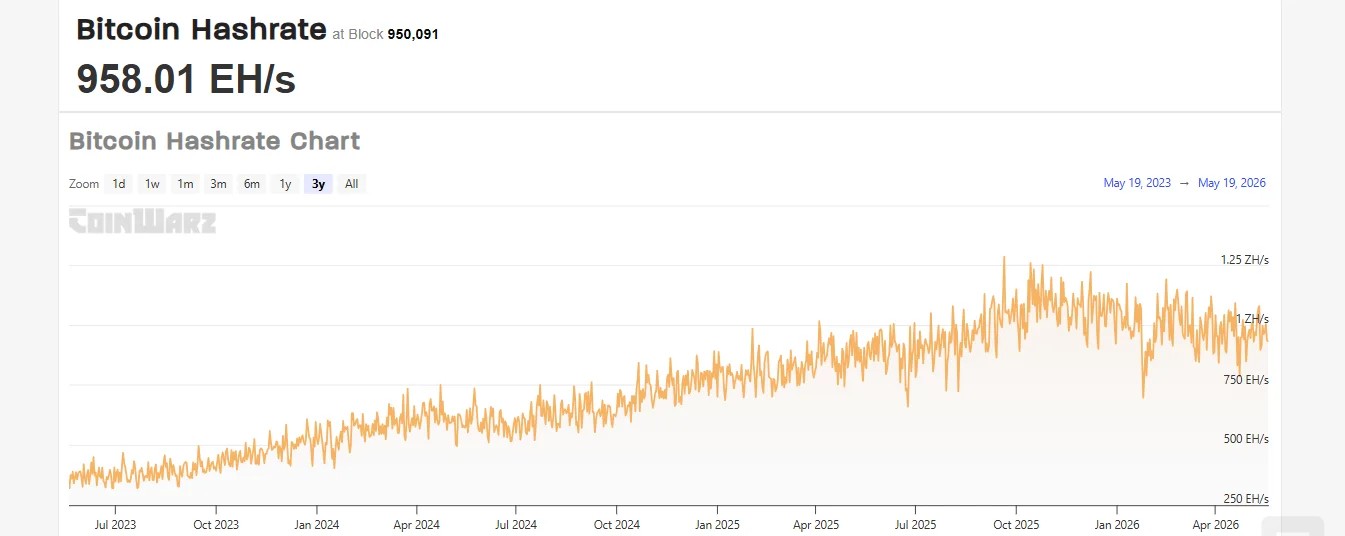
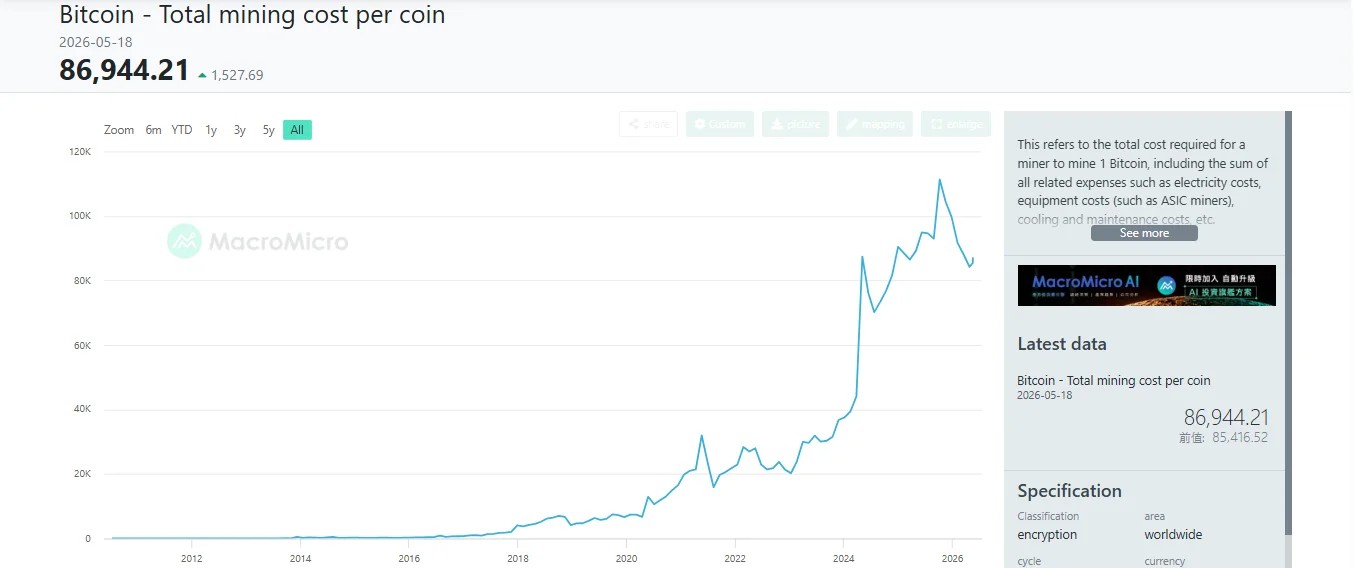
At the same time, the industry’s core profitability metric, daily revenue per unit of computing power, has plummeted by more than 90% since 2021. According to hashrate index data, this value has fallen from a peak of $0.400 in 2021 to just $0.035 per 1 TH/sec/day. As network difficulty increases, the total cost for a corporate miner to produce one Bitcoin has risen to an estimated $86,944.
When rigid infrastructure turns into a trap for capital
Traditional public mining companies have built their entire operations around a single coin, which leaves them with no flexibility when profit margins disappear. They cannot easily switch their machines to mine other things.
This vulnerability has been highlighted in the secondary hardware market. The latest top-of-the-line Bitmain Bitcoin mining machines, like the s19 model, have a manufacturer price of $2,511. However, on secondary markets like Alibaba, old and used Bitmain s19 models are being sold off for as low as $99. Expensive equipment turns into a heavily depreciating liability the moment mining competition outweighs it.
In order to survive, major companies are being forced to aggressively sell off the very assets they were supposed to accumulate. This money is being used to fund expensive and desperate transformations to AI data centers.
The numbers are staggering. MARA Holdings, one of the industry giants, held 53,822. $BTC By May 19, the stockpile had dwindled to just 35,303. $BTC. The company liquidated approximately $1.5 billion worth of Bitcoin in a single quarter to cover operational costs and fund a massive transition to AI digital infrastructure.
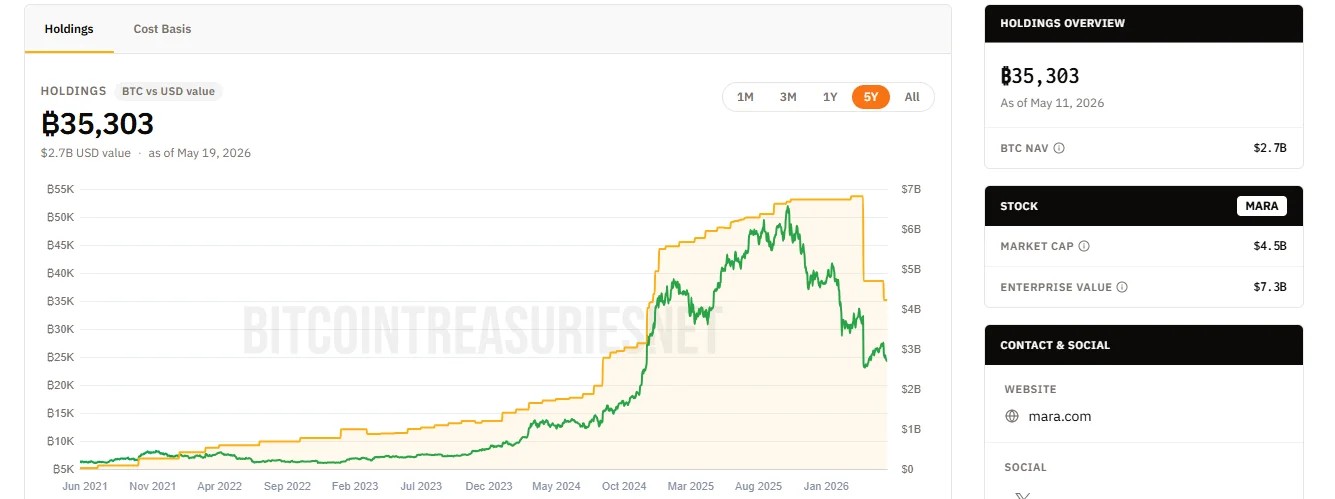
When the biggest companies in business throw away their core assets just to keep the lights on, you know it’s a fundamental design flaw. In other words, rigid infrastructure creates financial vulnerabilities.
The rise of multi-network agility
While the old guard is selling reserves to pay for equipment upgrades, an alternative, more nimble approach is proving effective. The future of mining may not belong to the largest single-coin fleet, but to the most flexible fleet.
Rather than locking capital into rigid hardware, next-generation infrastructure operators are building adaptable frameworks. A clear example is HashNet, led by founder and CEO Ian Issa.
The biggest Bitcoin miners are abandoning the businesses they built and liquidating their reserves just to stay in business. This happens when you build your infrastructure around one coin and one outcome. We built HashNet to solve this structural flaw. Our Alpha Engine switches algorithms in 12ms to get the best returns.
— Ian Issa, HashNet Founder and CEO
HashNet has a global footprint of over $300 million in six separate cryptocurrencies and four independent algorithms simultaneously. Rather than betting on a single network’s difficulty metric, proprietary software layers like the Alpha Engine dynamically assess market profitability in real-time, according to the website.
In the event of a significant price increase on an alternative Proof-of-Work network, HashNet’s system will automatically power it to capture that higher yield window. Automated software switches connections in just 12 milliseconds, with no loss of computing efficiency.
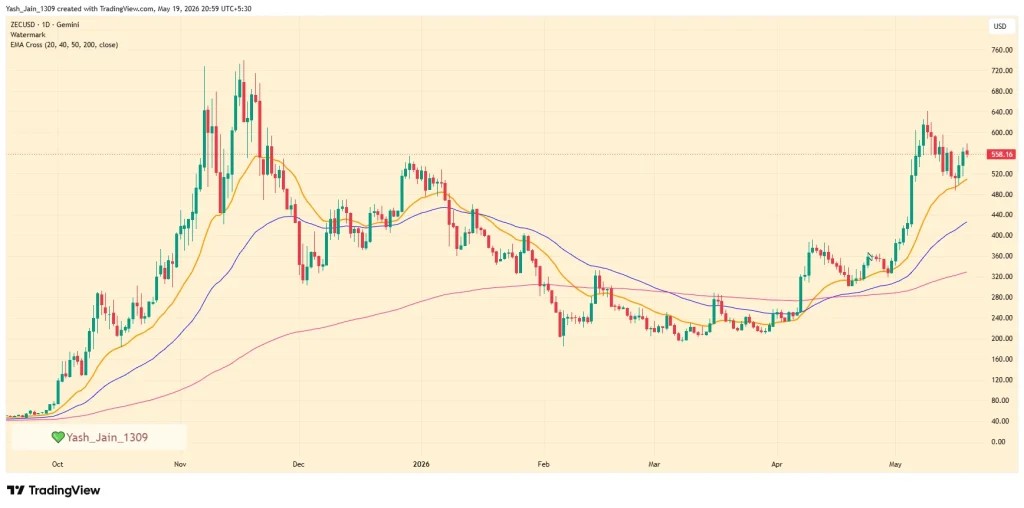
We have vividly seen this dynamic play out during the late 2025 altcoin cycle. Zcash (ZEC) underwent a major network upgrade that restructured its economic model, causing a massive 1,900% price increase from September to November.
While Bitcoin-only miners were locked in a race on razor-thin margins, HashNet’s automated routing was capturing the entire movement. In early 2026, agility paid off again, with Zcash posting another 119.5% uptime ahead of its next major technology upgrade.
HashNet effectively insulates asset accumulation from Bitcoin’s cutthroat network competition by mining the most profitable computational loops, automatically converting the proceeds to Bitcoin, and distributing payments to clients every 8 hours.
Conclusion: Accumulators and Liquidators
The crypto mining landscape is divided into two camps. On the one side stand the strait-laced giants, forced to act as sellers of Bitcoin in order to survive brutal margin squeezes and fund the transformation to AI. The other is an agile programmatic network that uses computational fluidity to capture alternative profit cycles and automatically compound those profits back into profits. $BTC.
As long as production costs remain elevated, the structural advantage belongs to flexible capital. The strategy to survive will not be the strategy that creates the biggest cage, but the strategy that creates the quickest exit.


