

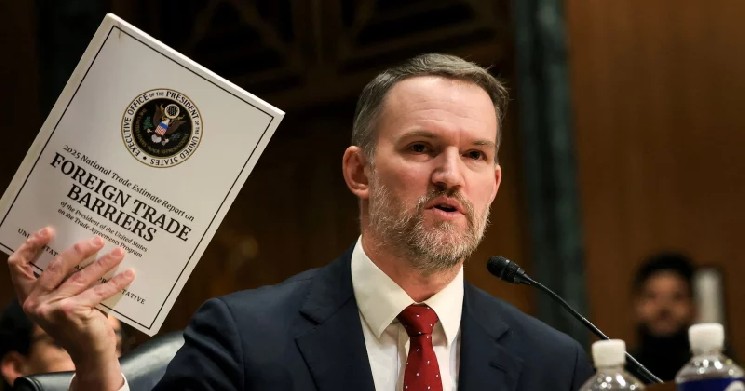
President Trump is pushing for additional tariffs and has directed U.S. Trade Representative Greer to tighten trade barriers. The move signals a deepening commitment to the protectionist strategy that has defined his economic policy and is already having ripples in markets far beyond traditional manufacturing.
For the cryptocurrency industry, “increasing tariffs” leads to very specific problems. Most of the hardware that powers Bitcoin mining and blockchain infrastructure comes from overseas. And when import costs rise, someone has to eat the difference.
what is actually happening
President Trump has called on the United States to impose additional tariffs in a broad trade stance that specifically targets Chinese goods. His previous proposals would have raised taxes on Chinese imports to as high as 60% to protect domestic industry. The instructions to USTR Greer suggest that this is no longer just campaign rhetoric. We are moving towards policy.
This is not the first time the tariff lever has been pulled. When President Trump imposed tariffs in 2018, the cost of importing electronic equipment rose by about 15%. This is not an abstract statistic for crypto miners. ASIC miners, GPUs, and the specialized chips that power proof-of-work networks are disproportionately manufactured in Asia, with China at the center of the supply chain.
Here’s the problem. According to an analysis by Decrypt, the price of crypto mining hardware increased by an estimated 10-12% following the introduction of the previous tariffs. New and potentially more expensive missions could further increase these costs.
Bitcoin prices have already fallen 3% following President Trump’s recent tariff remarks, a modest decline by crypto standards but reflecting real concerns about what tightening trade barriers will mean for the industry’s cost structure.
Why crypto miners should pay attention
The Block’s Sarah Jennings emphasized that under the new tariffs, the cost of cryptocurrency mining in the US could become significantly higher, pushing operations overseas. This is the irony of protectionist trade policies being applied to globally decentralized industries. Although we try to keep jobs and manufacturing domestic, economic pressures push real activity to jurisdictions with cheaper access to hardware.
Integration risk is real. Small-scale mining operations operating on thin margins do not have the balance sheets to absorb sudden increases in equipment costs. The likely outcome is that only the best-capitalized companies will survive, further concentrating an industry already tilted toward the dominance of institutional investors.
There is a counterargument worth noting. In theory, tariffs could accelerate domestic manufacturing of mining hardware and blockchain technology components. CoinDesk analysts say this is a potential sign of hope, suggesting it could create opportunities for U.S. crypto companies willing to invest in domestic supply chains.
Broad market implications for crypto investors
The initial market reaction of Bitcoin’s 3% decline reflects the tension between these two realities. Traders are pricing in the possibility that supply chain disruptions could slow network growth, delay hardware upgrades, and generally increase the cost of doing business with cryptocurrencies.
An important variable for investors to monitor is speed of implementation. Tariff negotiations during the campaign will moderate the market. An actual executive order with specific rates and schedules would move them dramatically. The gap between President Trump’s instructions to Gurrear and the release of the official tariff schedule is the real source of volatility.


